

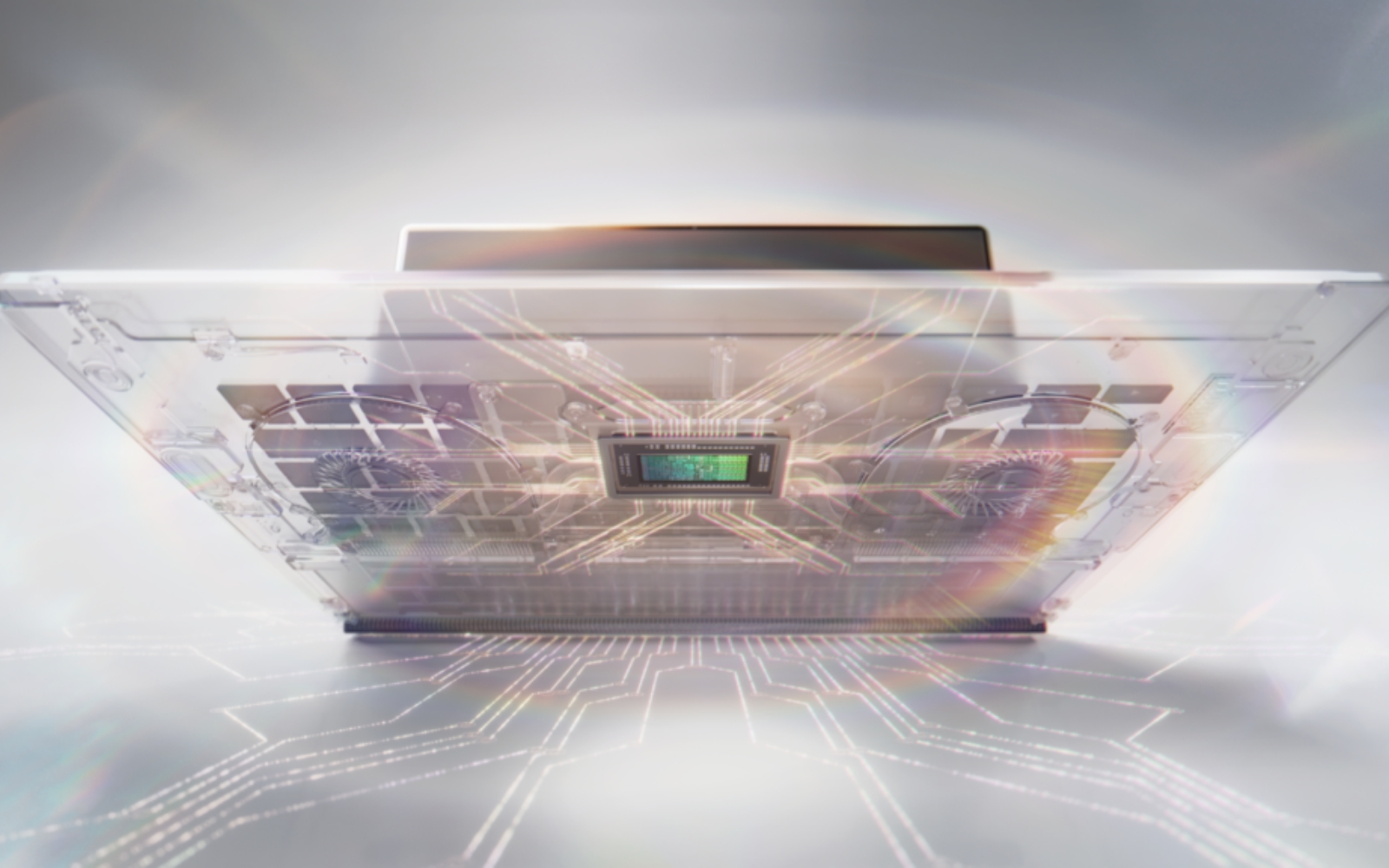
Nvidia has finally unveiled the company’s first “superchip”, called RTX Spark, aimed at delivering what CEO Jensen Huang has been calling a ‘shift in today’s computing environment’. On-device AI is at the core of how Nvidia envisions we’ll use computers in the future, and it hopes you’ll be using its new RTX Spark to do it… not that you have much choice at the moment.
“The PC is being reinvented,” said Huang. “For forty years, you launched apps. Click. Type. With RTX Spark and Microsoft Windows, you ask — and the PC does the work. RTX Spark brings everything NVIDIA has built — CUDA, RTX, our AI platform — into a single superchip. Local agents. Frontier models. Creative workflows. RTX games. All on a laptop. This is the new PC. The personal AI computer.”
Nvidia lights the RTX Spark
It shouldn’t be surprising that the company that has almost single-handedly driven the AI boom over the last four years, and therefore has the most to lose, is betting big on AI going forward. However, this announcement marks a slight change in direction from the feckless expansion of AI data centres. We’re quite sure the insatiable need for large-scale ‘AI compute’ won’t be going anywhere, but now there’ll be a new breed of laptops that you can’t afford.
But putting that aside for a moment to nerd out, on paper, the RTX Spark does seem genuinely impressive. It is a combination of a Blackwell-generation graphics processing unit (GPU), paired with an Nvidia-TSMC co-designed ‘Grace’ CPU. The two are connected by Nvidia’s internal chip-to-chip NVLink-C2C interconnect.
For specs, you’re looking at 6,144 CUDA cores, 20 CPU cores, up to 128GB of unified memory, and up to a petaflop of AI performance. For reference, Nvidia’s most powerful mobile consumer GPU, the RTX 5090 Mobile, has 10,496 CUDA cores and only 24GB of on-board VRAM.
RTX Spark PCs
The CPU that Nvidia co-designed with chipmaking giant TSMC is based on ARM, the same instruction set that the chip in your smartphone uses, Apple uses for its M-series chips, and that Qualcomm brought to Windows with its Snapdragon X chips.
Nvidia and Microsoft have been working closely on this to bring about the “personal AI computer” era. That work includes new security features and a special runtime for autonomous agents, called OpenShell. This is meant to “ensure agents run safely and under full user control”. In other words, the sensitive personal information on your PC should stay where it is. If it is sent to the cloud, the personal bits should be masked.
Windows on ARM has come a long way with Qualcomm’s Snapdragon chips. There were initial compatibility issues with trying to make software built for the x86 instruction set work with ARM chips. But these days, the most popular programs have native ARM versions, while the Prism compatibility layer has steadily improved.
The actual machines sporting Nvidia’s new chips are expected later this year. Microsoft has announced the Surface Laptop Ultra. Asus will deliver RTX Spark-powered ProArt machines, and Dell, HP, Lenovo, and MSI all have something cooking. Whether they will be priced as PCs meant for a ‘new era’ remains to be seen.