
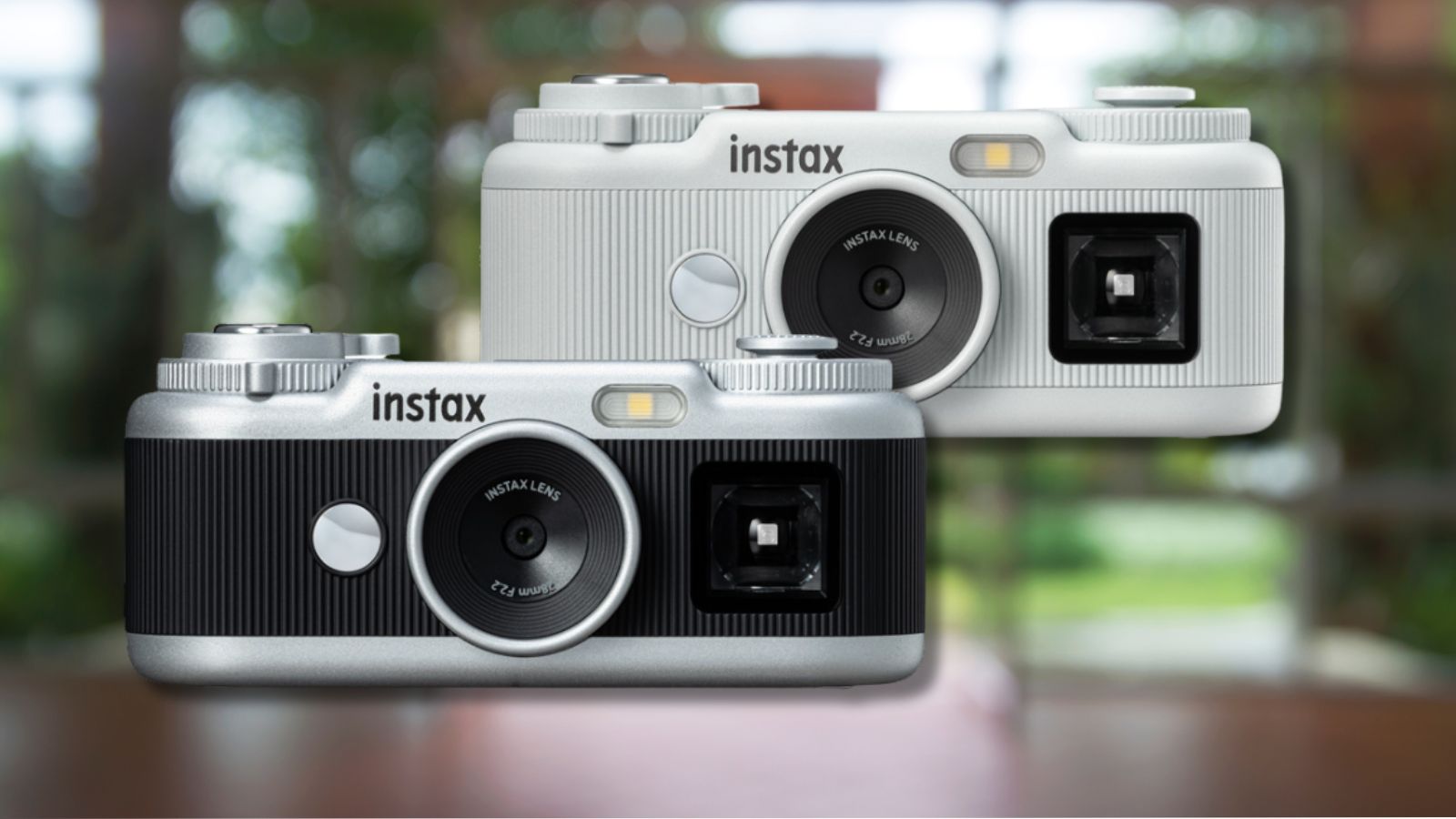
Fujifilm’s newly announced Instax Pal 2 compact camera is a weird-looking critter, unless you lived through the 1980s. The compact shooter features a very retro aesthetic, but includes modern camera tech, all somehow crammed into an 87-gram body.
The Japanese company is no stranger to South African shores. Most recently, it announced its newest Instax Mini 13 for the country. It’s also no stranger to trying something weird, as the Instax Mini Evo Cinema can attest. The Instax Pal 2 is also likely to find its adherents once it arrives in (and then departs from) Fuji’s native country.
Instax Pal 2: Better Pals
The Pal 2 really is compact, measuring just 37 x 42 x 92.3mm. Inside, it’s packing an f/2.2 28mm lens in front of a CMOS sensor capable of 3,776 × 2,832 images. It’ll also snap 1,280 × 960 shots, if you need something as compact as the camera is. These are saved to microSD storage, with the Instax Pal 2 supporting cards up to 2TB in size. That sized card could well cost more than the camera itself, but it’s hard to tell with Fuji’s more interesting cameras.
Despite its size, the Pal 2 uses physical controls. A shutter button, control dial, and a 1.3in LCD are squished into the teeny little body. Many of the functions are automatic, with ISO support up to 1600, exposure control from -2 EV to +2 EV, and a shutter speed of up to 1/8000 of a second. These can be manually adjusted, if needed.
USB-C is used to charge the Instax Pal 2’s internal battery. It’ll also work as an option for image transfer, if Bluetooth 5.3 doesn’t do it for you. Fuji’s software will let users apply at least 30 different visual effects on the camera itself. Finally, it supports instant printing, if you happen to have one of Fuji’s portable photo printers with you. The company also announced a new Instax Link Wide 2 unit, if you don’t already have one of its older units.
Don’t be too concerned about the cost just yet. Fuji’s newest take on a compact camera has been announced for Japan so far, but even that country doesn’t have a solid price. That will surface before its 9 October launch date, after which we’ll have some idea of SA’s equivalent.