
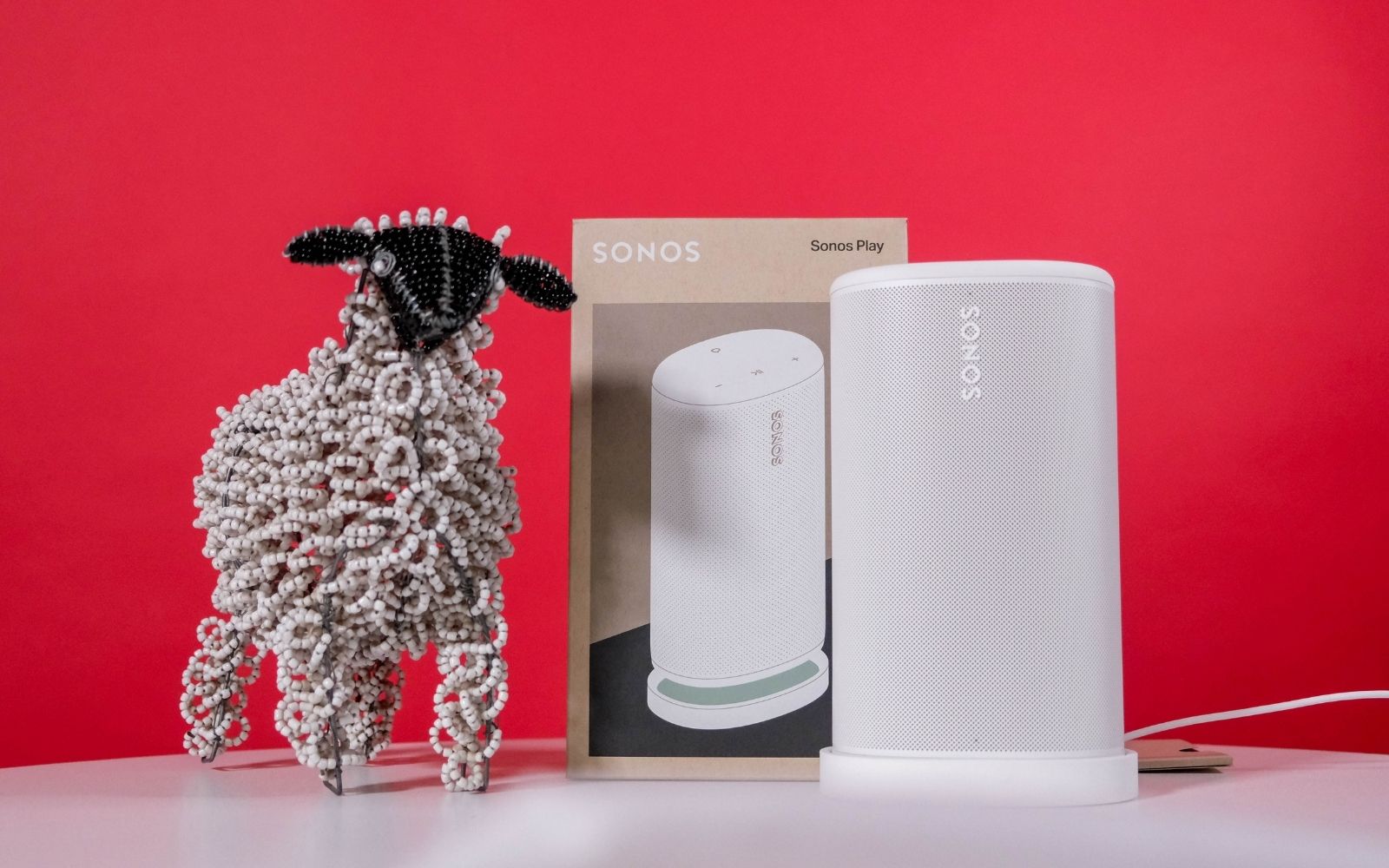
The Sonos Play proved itself to be a well-performing, versatile portable speaker. It makes the most sense if you already have other Sonos speakers around your home, or if you're looking for a lower-priced point of entry to the ecosystem. But if you just need a portable Bluetooth speaker and don't care about Wi-Fi streaming, you should look elsewhere.
-
Design
-
Performance
-
Features
-
Value
While the Sonos Play borrows its name from the American audio company’s previous Play:1, Play:3, and Play:5 range, that’s about all they have in common. The Play is the portable middle child, fitting between the Toblerone-esque Roam 2 and the Move 2 in Sonos’ portable speaker range. That’s true on paper and in its execution.
If you’re looking for a well-made, decent-sounding speaker that has the versatility and feature set to survive trips outdoors, the Sonos Play fits that role well. If you already have a few Sonos speakers around your house, the Play will slot right into your existing system with the added bonus of being easier to carry to your Sonos-less rooms. For those reasons, it makes an even better entry point into Sonos’ ecosystem than the Move 2.
But if you’re not really interested in Wi-Fi streaming and just want a decent Bluetooth speaker, other dedicated options cost less than the R9,000 the Sonos Play asks for, without sacrificing much.
Built to last
The Sonos Play, as with any other product from the company in the last six years, is exceedingly well-built. Sonos has honed its minimalist, utilitarian design language to a fine point. From the start of the unboxing experience to any time you lay your hands on it, you’re reminded that this is a premium device. Glance at your invoice if you need further reminding.
The rubber coating on the base of this 1.3kg speaker means it’s less likely to slip, but other areas, like the top, tend to hold onto fluff that will need to be brushed, picked, or rinsed off — thanks, IP67 rating. We can’t speak to how long it will last if it lives in direct sunlight, or if you’re keen on habitually caressing it.
That IP67 rating means it will survive outside in the rain, or even a dip in the pool. Although Sonos don’t recommend playing music underwater. It also says the Play is drop-resistant, but we didn’t have a chance to test that.
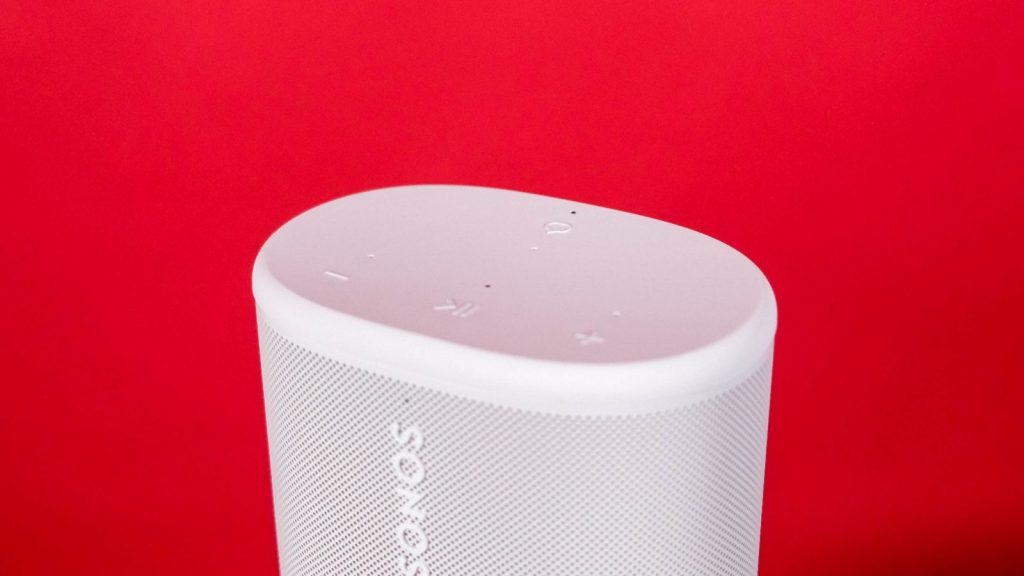
Being a Sonos speaker means a lot of how you’ll interact with it can be done through the app. When that isn’t an option, the Play has a few physical buttons up top for basic controls. Play/pause, volume up and down, and a button to mute/unmute a voice assistant are present.
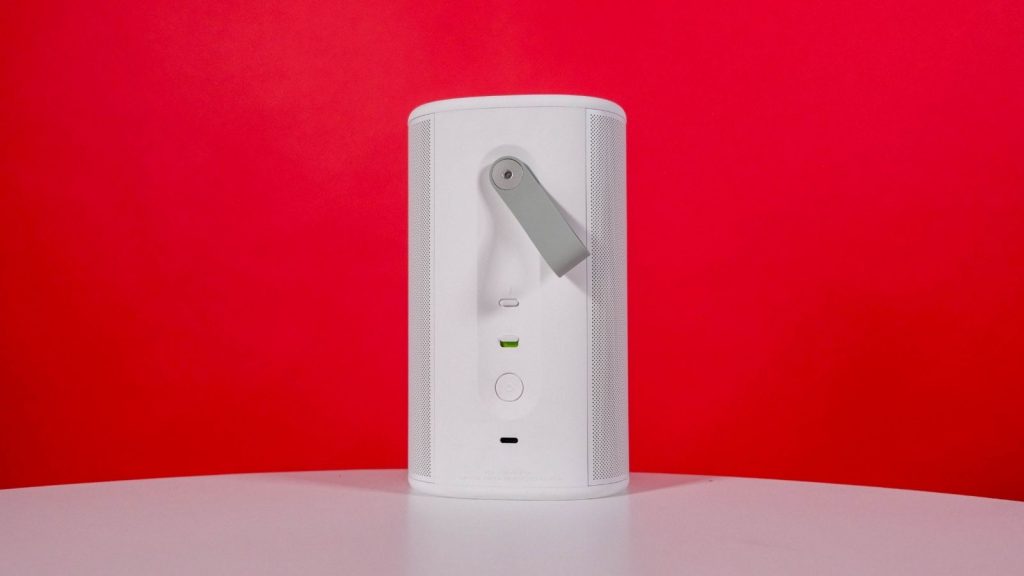
You’ll find a removable ‘utility loop’ around the back that should make transport a little easier. Also behind are the Bluetooth pairing button, a physical microphone kill-switch, the large power button, and a USB-C port.
Pay up, now pay more
That USB-C port plays many roles. You can charge the Play if you’re away from the included charging cradle. You can use it to charge something else, like your smartphone. Or you can plug in one of Sonos’ laughably expensive adapters.
This one costs around R1,200 and adds a wired Ethernet connection for increased network stability and a 3.5mm aux line-in for connecting a suitable audio source. This one costs about half as much and drops the Ethernet connection. When you’re already paying R9,000, having to pay extra to use the built-in features feels like a slap in the face.
You’ll also need to purchase a separate charging adapter if you don’t already have a spare. The included charging cradle terminates in USB-C and requires at least 18W to charge the Play. Thankfully, any adapter should work; you don’t need the expensive Sonos-branded adapter.
Staying power
Sonos has somehow managed to cram as much battery life into the Play as it did in the much larger Move 2. It claims you’ll get 24 hours of listening time from the Play, but that will depend on your listening habits. If, like us, you enjoy your music loud, then you should expect less play time.
Over multiple sessions with the volume set at around 50 (sometimes higher), we managed a respectable 18 hours of cumulative listening. That’s several hours short of the quoted 24, but it’s still fairly decent for a speaker this size. Especially considering the quality of its output. Charging back up to full is almost frictionless; just plonk it back on its cradle.
Listen here
The Sonos Play is most at home connected to your Wi-Fi and streaming music from one of the many supported services. Apple AirPlay 2, Spotify Connect, and Tidal Connect are supported for connecting to the Play via those respective apps.
Alternatively, you can stream Apple Music, Spotify, Tidal, or YouTube Music through the Sonos app itself, provided you’ve connected the service to your Sonos system. Deezer is also supported for its three or four users out there. The Play will stream files up to 24-bit/48kHz over Wi-Fi from services that support it.
While Bluetooth 5.3 is supported, it’s limited to the SBC or AAC codecs. No LDAC or aptX support, unfortunately.
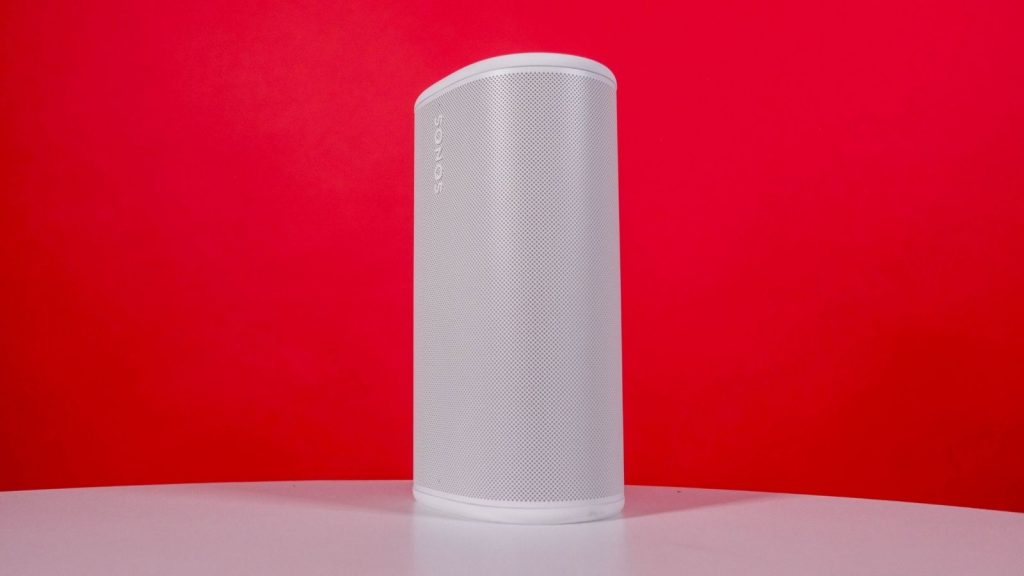
If you crack open the Play, you’ll find three Class H amps powering a pair of angled tweeters and a single mid-woofer. There are also a few far-field microphones that use beamforming and multichannel echo cancellation to listen for voice commands if you’ve set that up. Or you can physically disable them with the switch on the back.
Those mics are also what allow for Sonos’ automatic TruePlay calibration. As long as they’re enabled, the Play will constantly adjust its output based on where you place it. While we kept it disabled for most of our review, when it’s on, the changes are subtle and usually make a positive difference. The Play will need to be connected to Wi-Fi for that feature to work properly. That is true for most of the features in the Sonos app.
The angled tweeters handle high-frequency response and mean the Play manages better stereo separation than other single-enclosure speakers, like the Roam 2. The mid-woofer handles midrange and bass.
As for how it sounds, the Play provides some width to its mixes but won’t hold a candle to any stereo pair. You could always buy another Play and pair them up in the app or over Bluetooth. But you’re probably not too concerned about width if you’re looking at the Play.
The Play can feel a little light in the low end. It doesn’t have a lot of oomph, but there’s enough upper bass that the bassline of I Want You Back by The Jackson 5 is still present and groovy. It offers a rather balanced mid-range, so podcasts sounded smooth and natural, as did Chris Jones’ vocals in Long After You’re Gone.
Conversely, the treble sounded a little pushed back, or recessed, to our ears. As a result, we missed some of the bell-clarity that we enjoy in the first few minutes of Mike Oldfield’s Tubular Bells – Pt. 1, and the tinkle and fizz in the first few seconds of Daft Punk’s Lose Yourself to Dance. The recessed treble also meant that Michael Jackson’s Billie Jean didn’t make our ears bleed at higher volumes.
Sonos Play verdict
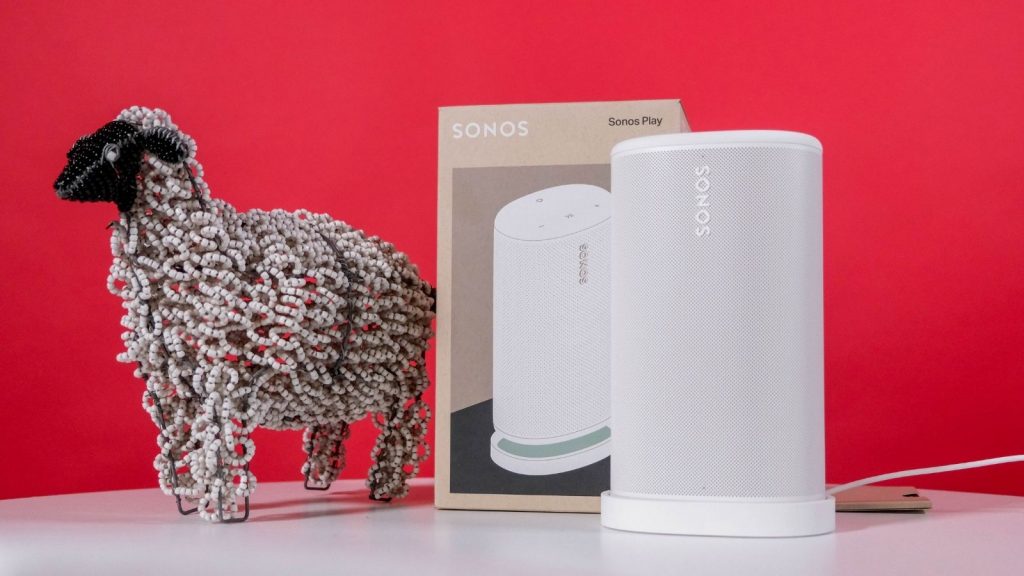
The Sonos Play won’t top either list of the best Bluetooth or smart speakers, but the fact that it features on both should be enough for folks looking for a single speaker to fill both duties. It’s got plenty of features and is also a decent, if pricey, point of entry to the Sonos ecosystem.
If you’re leaning more to one side of the portable or permanent speaker scale, Sonos offers the Roam 2 and Era 100, both of which are cheaper than the Play. The Roam 2 trades versatility and price for a speaker that will (probably) fit in your pocket.
If sound is a priority for you, the Era 100 offers better oomph in the low-end, more detail, and better dynamics throughout the mix. There’s also the Era 100 SL if you aren’t interested in TruePlay or voice assistants.