
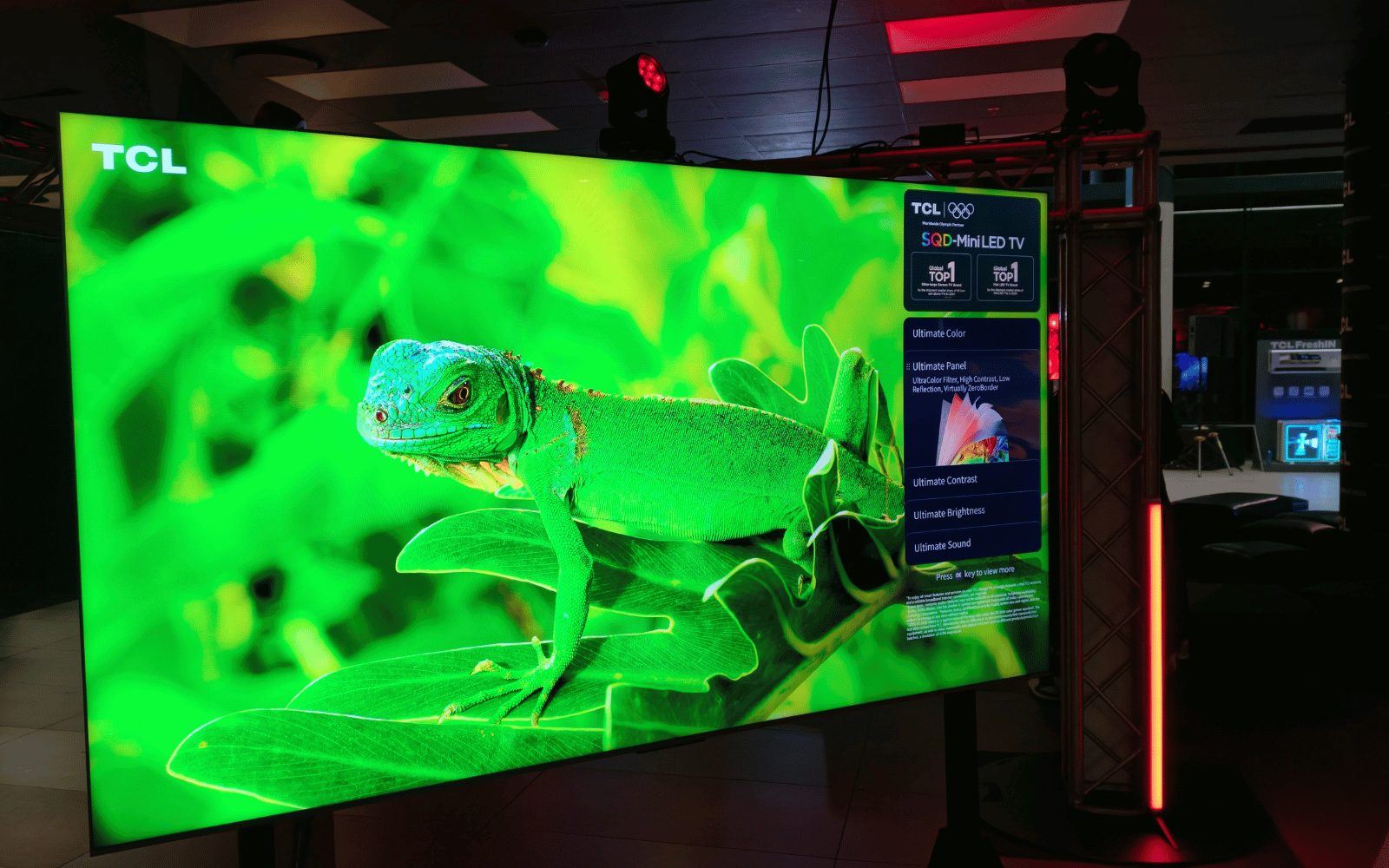
Recently, TCL announced its new crop of SQD-MiniLED TVs inbound for South Africa. At the launch event, it showed off the C7L and C8L, which, on the surface, seemed to be the usual iterative updates to the same C-series sets it brought to the country last year, minus the C6 model.
But beneath the surface, the new sets are packing upgraded tech we thought was worth unpacking. Before we can get to where we’re going, we need to understand where we’ve come from. Here’s an overview of the current TV landscape. Fair warning, this could get nerdy.
What’s cracking with TVs these days?
There are really only two types of flat-screen TVs. Technically three, but plasma TVs died out around 2014, so we’ll focus on the other two — backlit and self-lit, or LCD and OLED.
Most folks are familiar with LCD TVs. Generally, these use an LED (light-emitting diode) backlight layer, sending blue light through a conversion layer to make it white, then through the LC (liquid crystal) layer. This layer blocks the light where the dark parts of the picture go, and allows more or less light through for the bits you can see. That light then travels through colour filters so the green bits look green, the red bits look red… you get the idea.
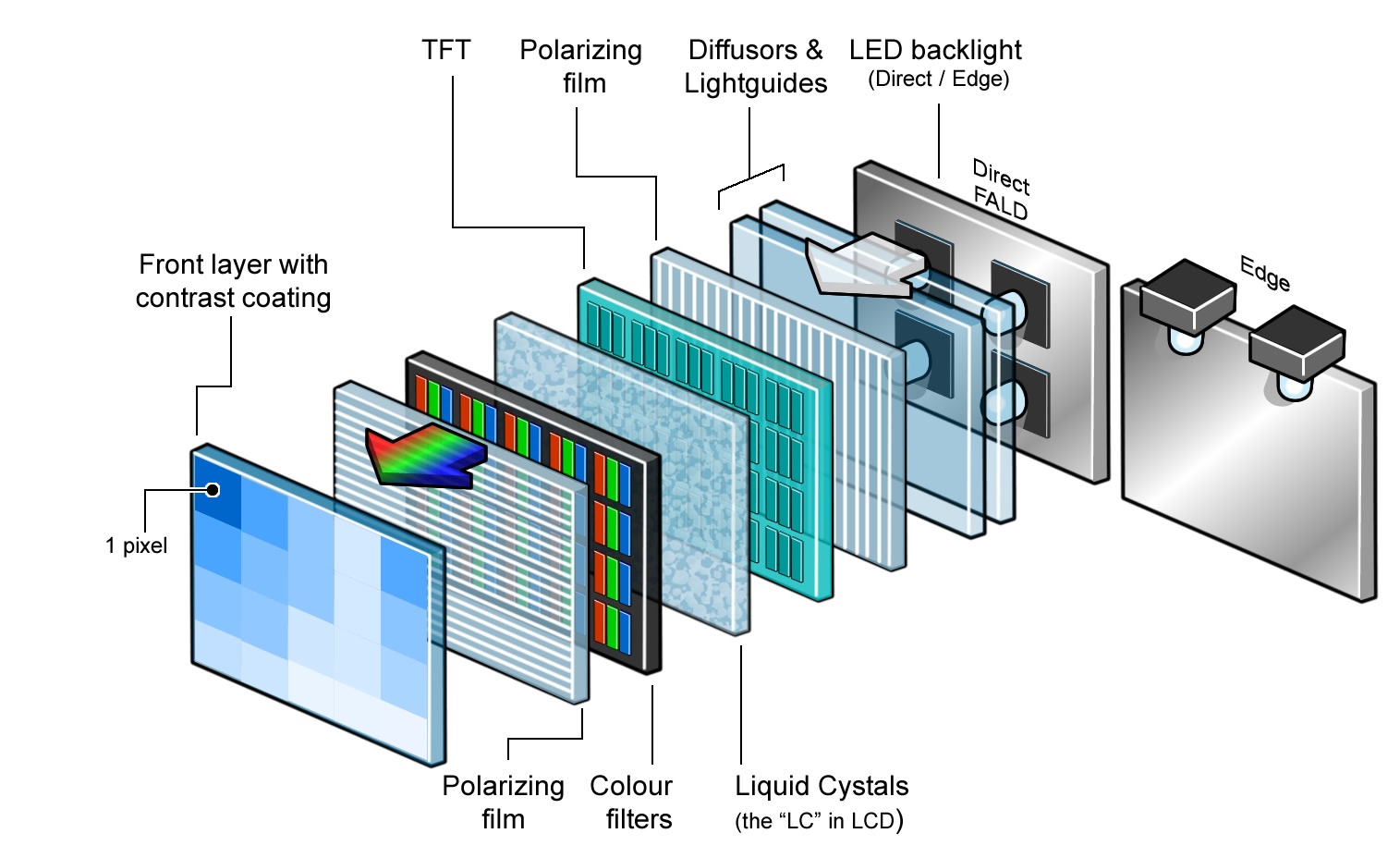
Quantum dot (QD) and MiniLED TVs operate similarly, with one or two differences that usually mean better picture quality. QD TVs (also called Neo QLED, QNED, ULED, or Triluminos, depending on the manufacturer) ditch the conversion layer and add a quantum dot layer, which converts blue light directly into other colours for better colour accuracy, especially with HDR content.
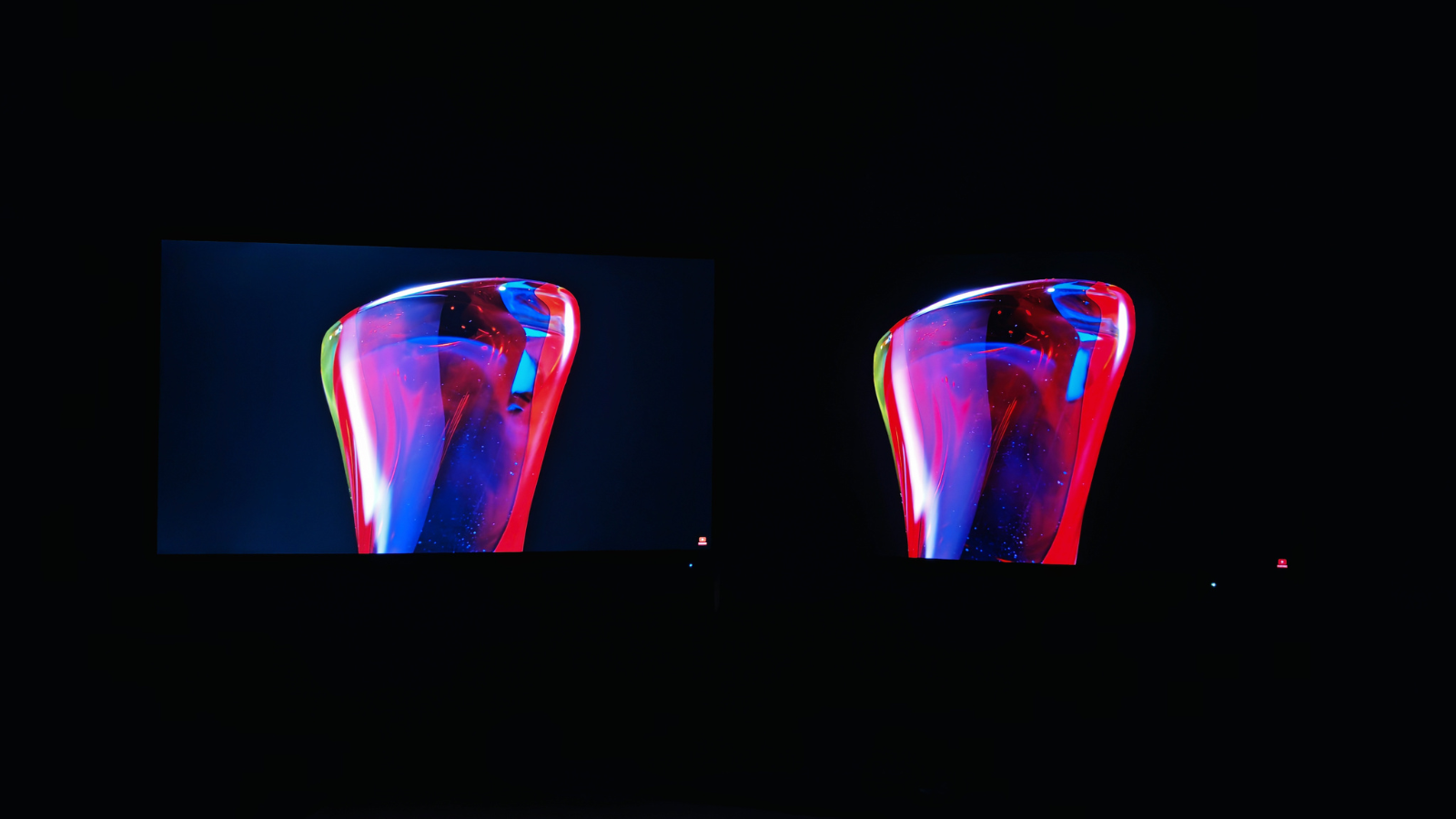
Then, there are MiniLED TVs. The LEDs in the backlight layer have been shrunk, and there are hundreds or even thousands more of them. This gives the TV much better control over its lighting (see picture above), allowing for improved contrast, deeper blacks, and reduced haloing in dark scenes. These are usually among the best LCD-based TVs currently available, especially when combined with quantum dots — QD-MiniLED. Well, until recently.
We can do better
Here’s where the RGB-LED-based TVs come in. Samsung and LG have both shown off new TVs in this category. They’re marketed as ‘MicroRGB’ due to the size of the RGB optical modules, obviously. These TVs skip the backlight conversion step entirely and produce the colour at the source. But they still need an LCD panel to translate what shapes those colours should be.
This is also where TCL’s new SQD-MiniLED TVs come in. As the name implies, they use a backlight layer made up of mini LEDs arranged in a grid. The LEDs aren’t quite as small as those in ‘Micro RGB’ TVs, and they still only emit a single colour and need the LCD layer to function.
Here, the extra pizzazz comes from enhancements to the quantum dot layer, now called ‘Super Quantum Dot’ because the dots are even smaller. We’re not talking about a huge difference in size here; 1 nanometre is supposed to be small. But a reduction from 2nm is still a 50% reduction, and it makes a visible difference to the result.
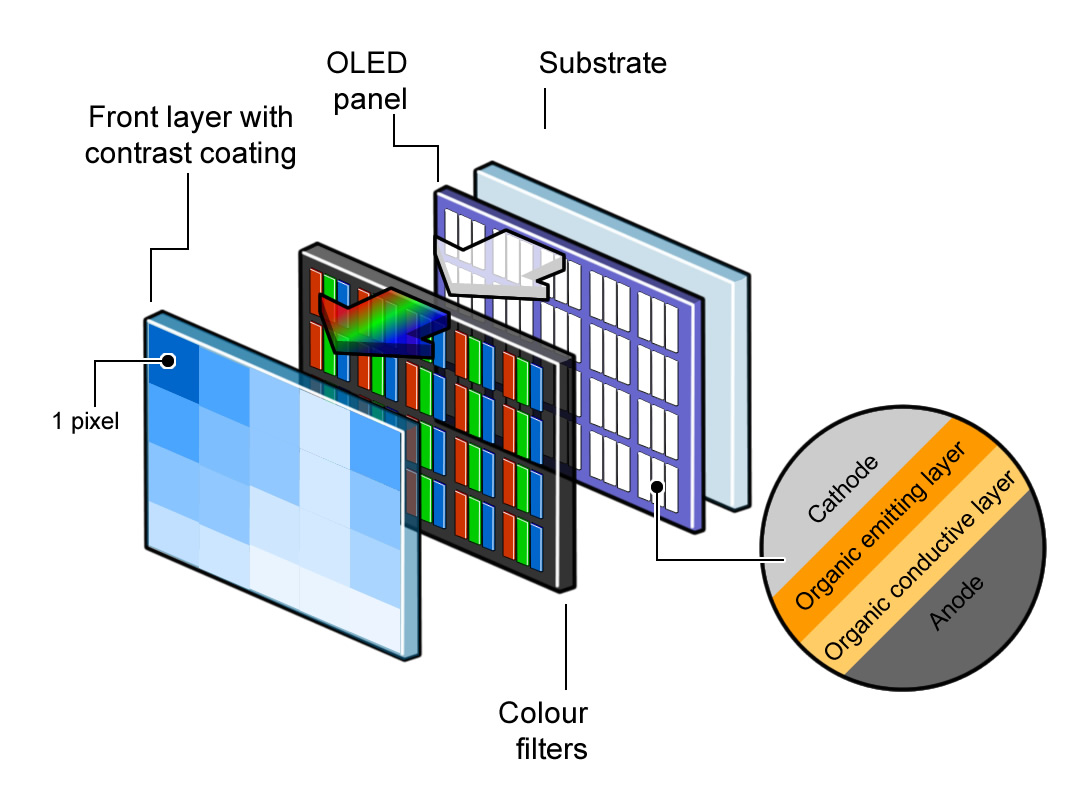
Finally, we arrive at the pinnacle of display technology (so far) — OLED. These TVs operate on a fundamentally different level. Instead of a backlight layer consisting of LEDs, a conversion layer, reflectors, diffusers, and polarisers, you get a thin layer of organic material that glows when hit with electricity. This is why OLED TVs can be as thin as they are.
Within the OLED camp, two types use slightly different methods. WOLED TVs use a white emissive layer with separate colour filters, while QD-OLED TVs use a blue emissive layer and a quantum dot film to produce the pretty pictures. OLED TVs are not without their flaws, but if you’re after the best picture quality available, OLED is your best bet.
What’s so super about ‘Super Quantum Dots’?
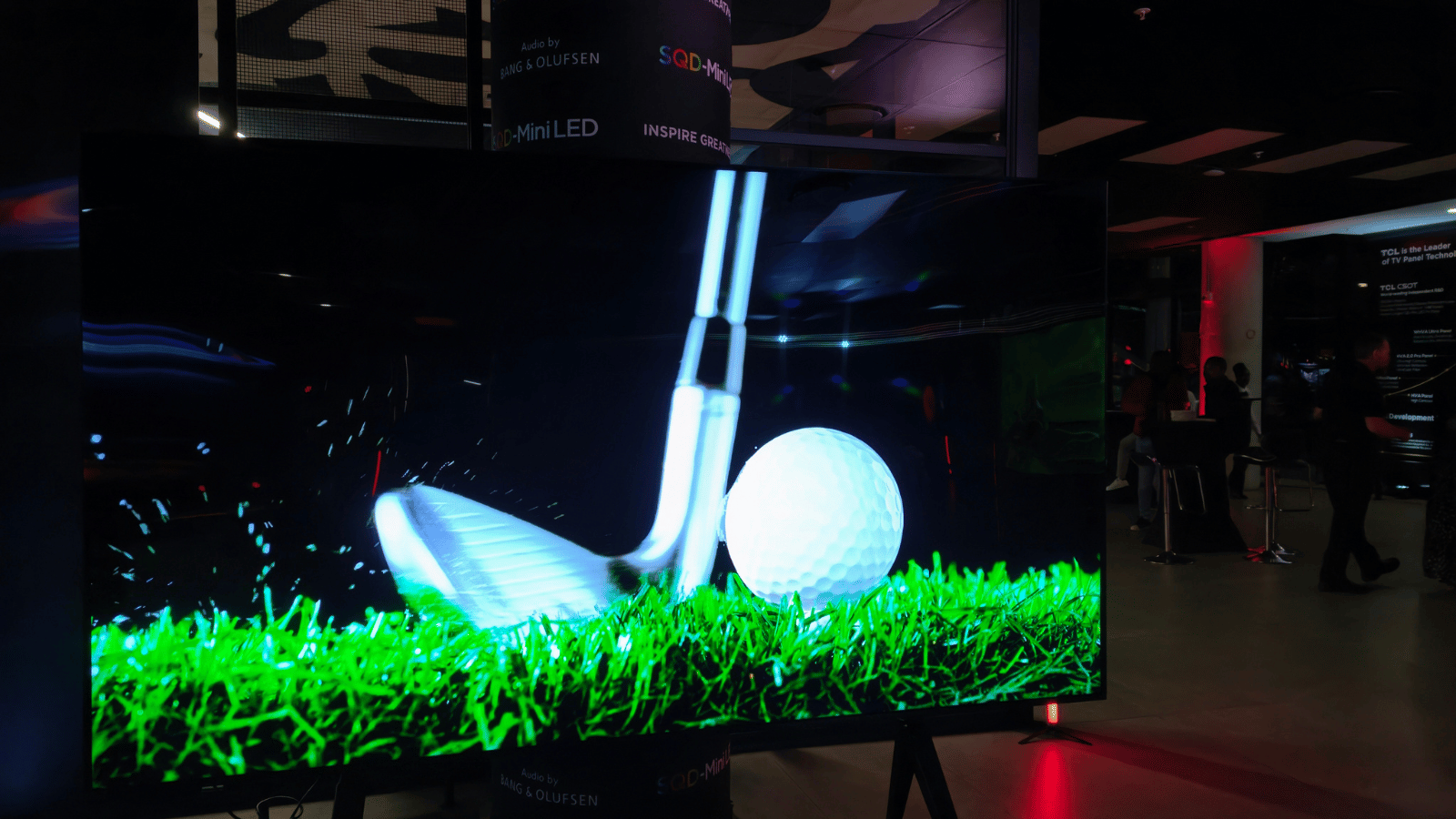
While OLED is still the superior display technology, that isn’t to say everyone should run out and buy one. They’re usually the most expensive when comparing TVs of the same size. They also risk burn-in (permanent image retention due to uneven wear), although this isn’t much of a concern with modern OLED TVs and their advanced mitigation features (if you keep them on).
Still, most folks will happily forgo some picture quality if it means they can get a bigger TV for their budget. That’s why LCD-based TVs are still around, with technologies like QD-MiniLED and MicroRGB getting them closer than ever to OLED performance.
While most of the industry is pushing RGB MiniLED TVs this year, TCL reckons its SQD-MiniLED TVs are the next best thing. They can get much brighter than OLED TVs, ideal if you want to place one in a brightly lit room and not worry about the little ones watching cartoons (or whatever kids watch these days). Even forgetting to turn it off shouldn’t be an issue.
Read More: A sports fan’s TV buyers guide: Here’s what to look out for
TCL also claims its new TVs can achieve 100% of the BT.2020 colour gamut. That’s the internationally agreed-upon set of rules that defines things like resolution, frame rates, and colour primaries. TCL isn’t the first company to make this claim, and it won’t be the last. All you need to know is that the wider the coverage of the gamut, the more colours can be accurately displayed.
There’s a lot more to it than that, but the marketing departments only want you to care about the big percentage number, and that theirs is bigger than the competition. Take that with a grain of salt. Despite the dubious marketing claims, this is still new technology, and that’s enough to get us excited. Hopefully, it won’t be too long before we can take a closer look at TCL’s new SQD-MiniLED TVs.