
Over the weekend, Honor’s Lightning humanoid robot beat the human record for a half-marathon. Any student of science fiction would be forgiven for thinking that the robotic future is here. Heck, even fantasy fans have been exposed to the idea that robotic workers would be a disaster for human labour. Terry Pratchett’s Feet of Clay and Making Money both tackle the idea from different perspectives.
In the first, golems are favoured as employees because they don’t argue, have a high initial cost but never stop working, and do the jobs that humans don’t like. Even the idea that these robot analogues might one day pose a threat if they gain independence crops up. In Making Money, a massive army of golems poses a serious threat to the economic structure of Pratchett’s fiction universe. These problems are neatly resolved, as only fiction can manage, but these choices might well face humanity in the near future.
Software skills
There’s no denying that humanoid robots have come a long way. I’ve followed the progress of Boston Dynamics’ Atlas since its inception. From a clunky ‘bot tethered to a laboratory power source to eventual deployment in an industrial setting, Atlas has had quite a journey. Unitree’s recent successes in this niche have been similarly impressive, at least visually.
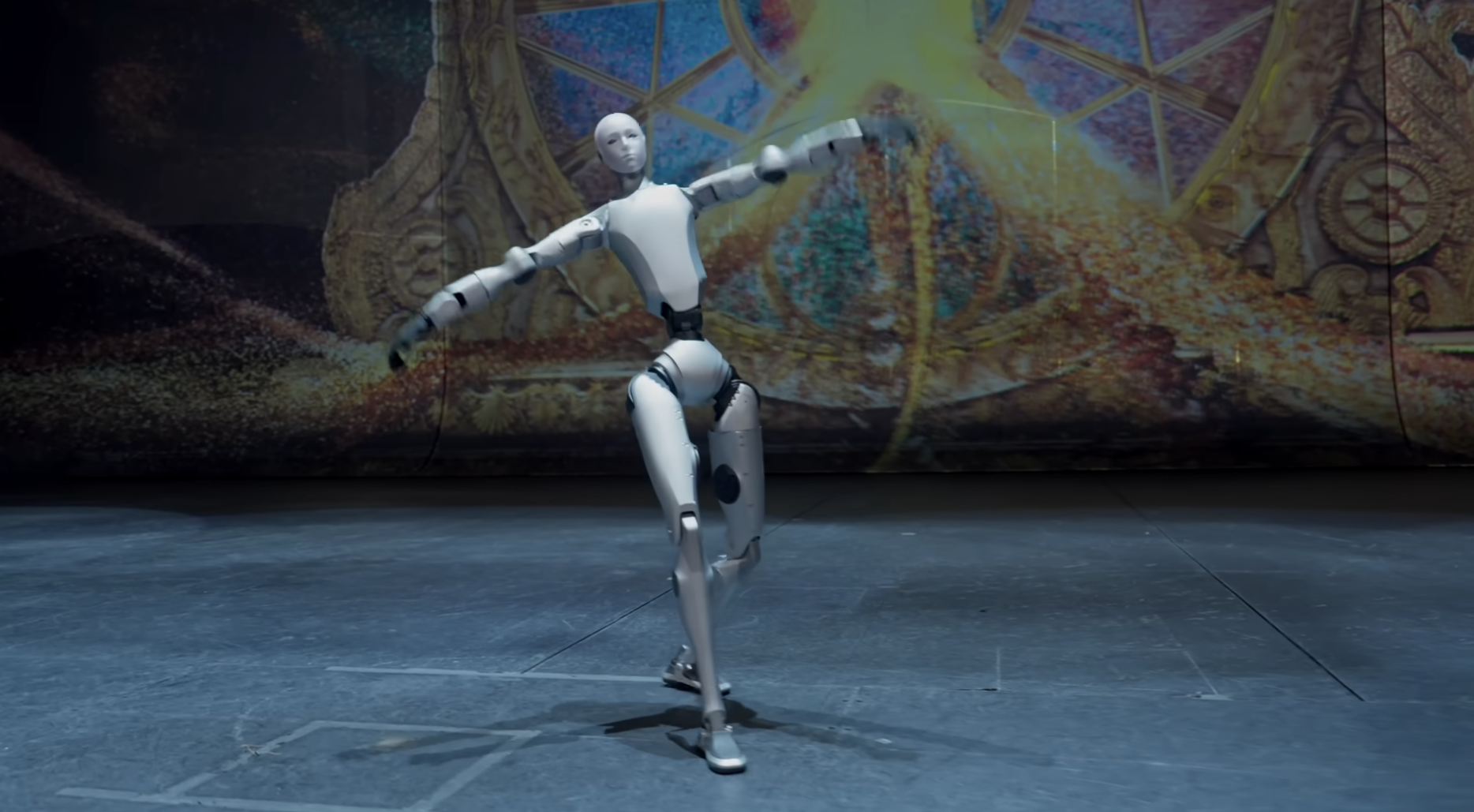
The Chinese company has taught its robots semi-autonomous martial arts, ballet, and enough choreography to put on a live show. But each of these, and many other humanoid robot feats, is mostly marketing. There’s a ton of engineering involved, true. But these visual blowouts are to drive interest rather than make you worried. Even counting the deployment of a humanoid robot (or two) to Ukraine, a robot revolution is a long way off.
Most of the truly mind-blowing demonstrations aren’t too different from the choreographed drone shows you can see in China. They’re an indication of what’s possible. There are potential threat indicators — drone swarms, for example, can be directly built from the entertainment aspect. They look good, but require practise, planning, and, likely, many takes to get a working video going. They’re not too dissimilar from Red Bull’s best videos in that respect. They look seamless. They’re not.
Hardware hassles
Yes, robots can be sent into factories to sort or pack orders. They can even load themselves onto trucks. Functioning speeds are picking up, but they’re not at the point where they’re able to transition from one task to another without extensive training. Humanoid robots (and robots in general) tend to be purpose-developed. Giving them cameras and image recognition lets them behave less ant-like, but you can’t hand an Amazon-bot a broom and tell it to clean up a mess. Not without significant engineering involvement. Honor’s Lightning robot is a perfect illustration.
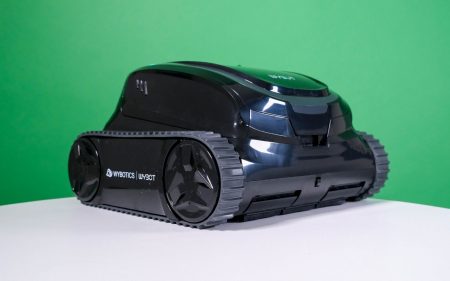
The Lightning humanoid robot may have shaved minutes off humanity’s best time, but it didn’t do it alone. Even the next record, and there will be one, isn’t going to be achieved by the robot. Lightning was followed by a chase car of engineers, who had to assist on at least one occasion when it went off the rails. Telemetry had to be monitored, and programming followed. Even simple robots, like the humble vacuum cleaner, conk out for no reason that makes sense to humans. They just… stop working.
Obviously, overcoming those limitations is the stated aim of any company making robotic humanoids (even if it’s a silly design). But getting these creations to that point will take a lot more effort before they’re ubiquitous. The recent leaps are impressive/scary/worrying, but they’re all still a long way from versatile. That is when humanoid robots become legitimately threatening to the average person.
Handling humanoid robots
If this form factor was fully weaponised… that’s a simpler hurdle to clear. Take an existing robot chassis, slap on some armour, a weapon and ammo, a larger battery, and a targeting system, and you can call it a day. Okay, fine, give your own soldiers an identifying electronic tag if you care about collateral damage. Even then, your war machine will make mistakes. Even so, it’s easy to send mostly-stupid human-shaped tech into battle. It could be done tomorrow, if it were cost-effective. Dubiously ethical, sure, but it’s already possible with what the world possesses now.
But that’s still a case of ‘purpose-built’. It’s a single-use robot. Mostly infantry. Some could be programmed to respond to fallen soldiers, too, though that’s a much higher bar to clear. The decision-making process is more complex than ‘shoot anything moving that isn’t wearing a tag’. And sending these same humanoids into the greater world and replacing humans en masse is a much more extensive obstacle.
Companies are trying, sure. They’re likely to succeed given a long enough timeline. But that timeline is further off than it looks from the available marketing materials. Pre-programmed motions are not autonomous actions, and even the available range of autonomy requires supervision. It’s a rare human (though they do exist) who will get stuck in a corner without explanation and need rescuing.
One day
Motion is getting better. Demonstrations are getting better. Implementations are being tested. But a transition from a human-based physical workforce to a robotic one relies on a much more intelligent machine than has been demonstrated so far. It’s a lot like artificial intelligence in that sense.
Humanoid robots are extremely capable in some areas (most of the time), but they’re not able to task switch the way flesh and blood does. Until that day turns up — and it’s not impossible that it will — humans are going to be a better choice for just about any task. Remotely setting up a lunar or Martian base using humanoid robots is likely to turn up before we have a completely robotic workforce roaming the retail wastes.