
Chinese robot makers have most of the human world in their sights. Yes, Unitree is doing all sorts of interesting things (mostly with marketing), but a company called GigaAI is reportedly sending its ‘bots into homes in China.
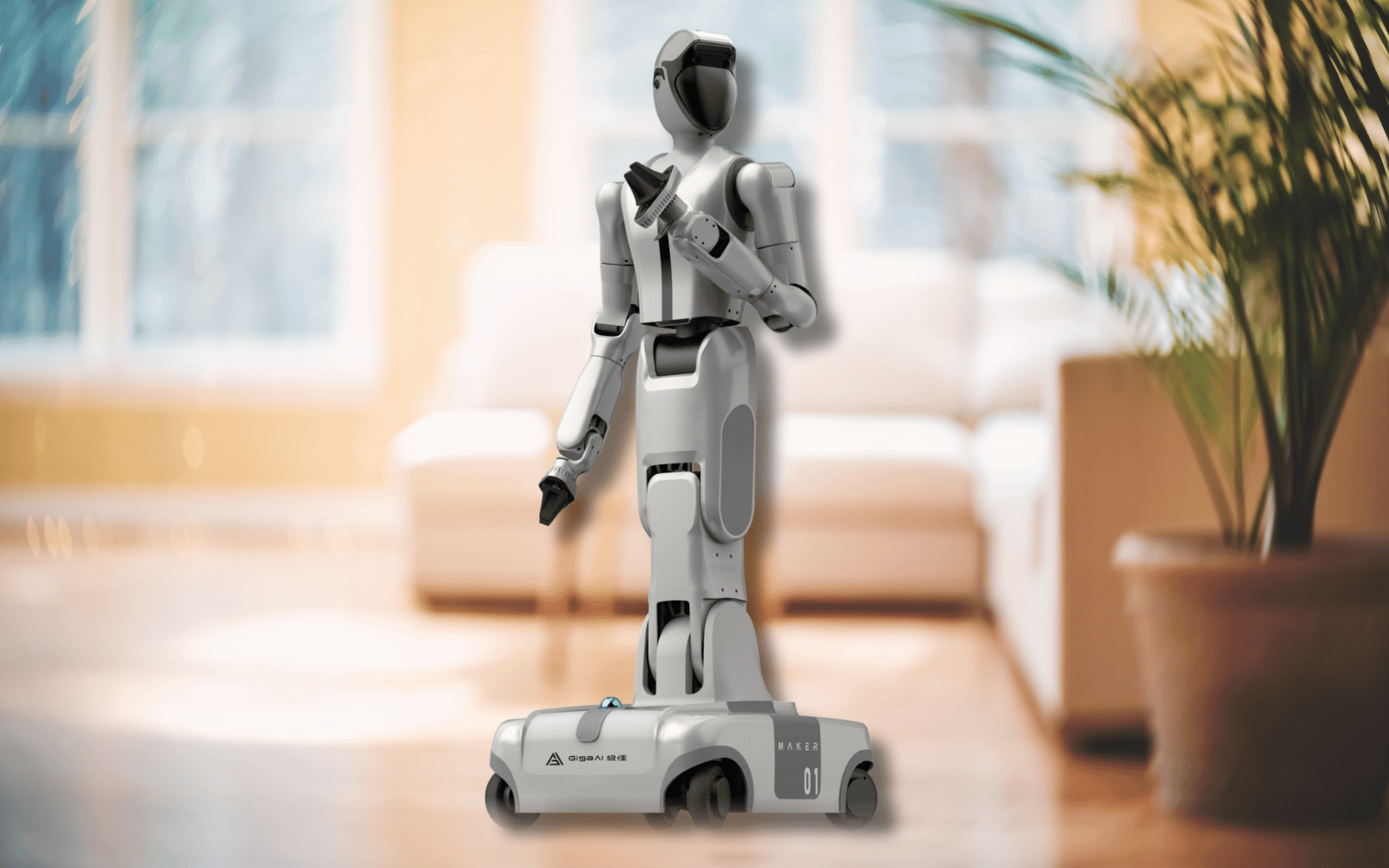
The assistant in question is called the SeeLight S1, according to reports. We tried to track down more accurate information about it, but ran into two problems. First, there are several companies called GigaAI, and most of them aren’t this specific Chinese outfit. Second, the Beijing-based company only lists the (extremely similar-looking) Maker H01 on its website.
Robot home invasion
The report, via the South China Morning Post, reckons that 100 of GigaAI’s robots will enter service in homes. These are consistently described as the SeeLight S1, and these ‘bots are supposedly doing… well, the sort of things we saw them doing in I, Robot. The good things, obviously. The whole ‘overthrow humanity’ bit will have to wait for a firmware update.
These critters are supposed to be easy enough to train, with a month’s practise seeing them performing chores. Cleaning tablets, loading dishes, and packing away washing are just a few of the tasks the S1 can execute.
GigaAI co-founder Zhu Zheng is quoted as saying that “[SeeLight S1] is not completing pre-written scripts. The robot forms a complete loop from perception, to understanding, and to action. A user can give it a natural-language command, and it can interpret the request, plan the necessary steps, control its body to carry them out, and continue learning through real-world use.”
Beyond that, though, there’s little information about what this wheel-based humanoid is capable of. Even the Maker H01 listing we discovered is vague on specifics. GigaAI talks a fair bit about “physical AGI”, but doesn’t give strength, weight, or capability information.
As for when the robots will start working, that will apparently wait until later this year. The SeeLight S2 is expected in Q3 2026. After that, Zhu said, “Trial programs will be opened to real households in the third quarter, including homes with elderly residents, children, and varying domestic needs, enabling the robot to be tested and refined in real-world scenarios.”