
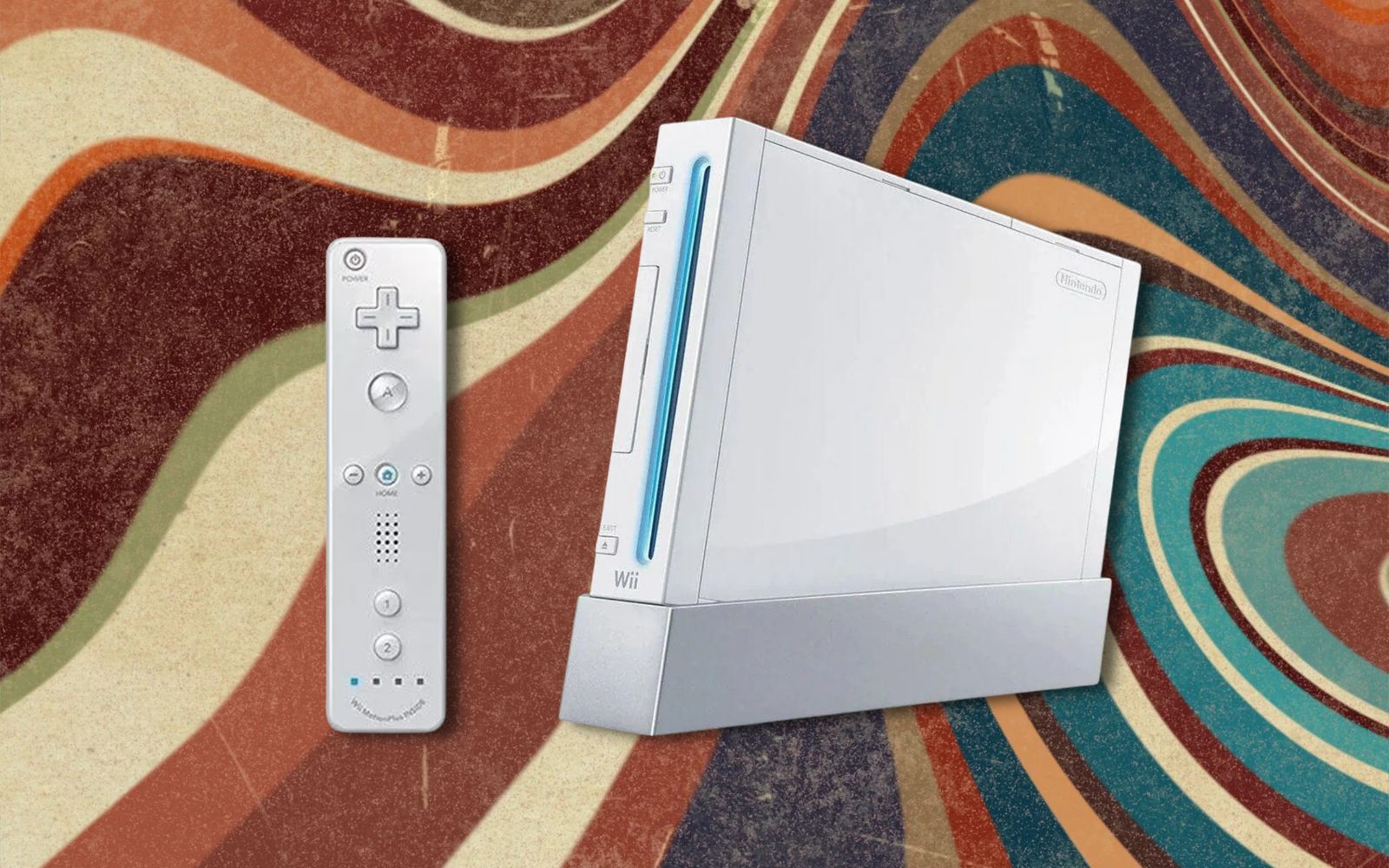
A console named after a bodily function. Top work, Nintendo naming department!
Pee-pee jokes aside, ‘Wii’ signalled that Nintendo was doing something different, ditching a drab codename (Revolution) for something fun. You remember fun – it’s what gaming is before nerds start ranting that you’re only a real gamer if you spend every waking hour glued to their preferred console. Mind you, ‘Wii’ possibly also referred to the sound you made as the Wiimote flew through the air towards the TV, having inevitably escaped someone’s slippery hand.
Yeah, I was happy with a gamepad. And an intact television. Bad Nintendo!
No, good Nintendo! Again, this was about doing something different. Having had its face punched off during the GameCube era, Nintendo wanted to avoid an unwinnable straight fight against the Xbox 360 and PS3. It reasoned that button-heavy gamepads confused people; something more accessible would continue the firm’s inclusivity drive that began with the Nintendo DS, and cement a reputation for unique experiences. Hence Wii Sports being a hit, because anyone could play. Well, until someone smashed the TV.
So you’re saying people waving a controller around in the air saved Nintendo? Madness.
It wasn’t just about the controller – it was about a brand with a history of success through being different, again succeeding by bucking trends. The Wii shifted Nintendo from also-ran to industry leader. And though the company subsequently stumbled with the Wii U, by attempting to claw back snooty ‘core gamers’ who’d abandoned them for ‘proper consoles’, the original Wii had done enough to set the stage for the Switch, which saw Nintendo go its own way again … this time having learned all the right lessons.