
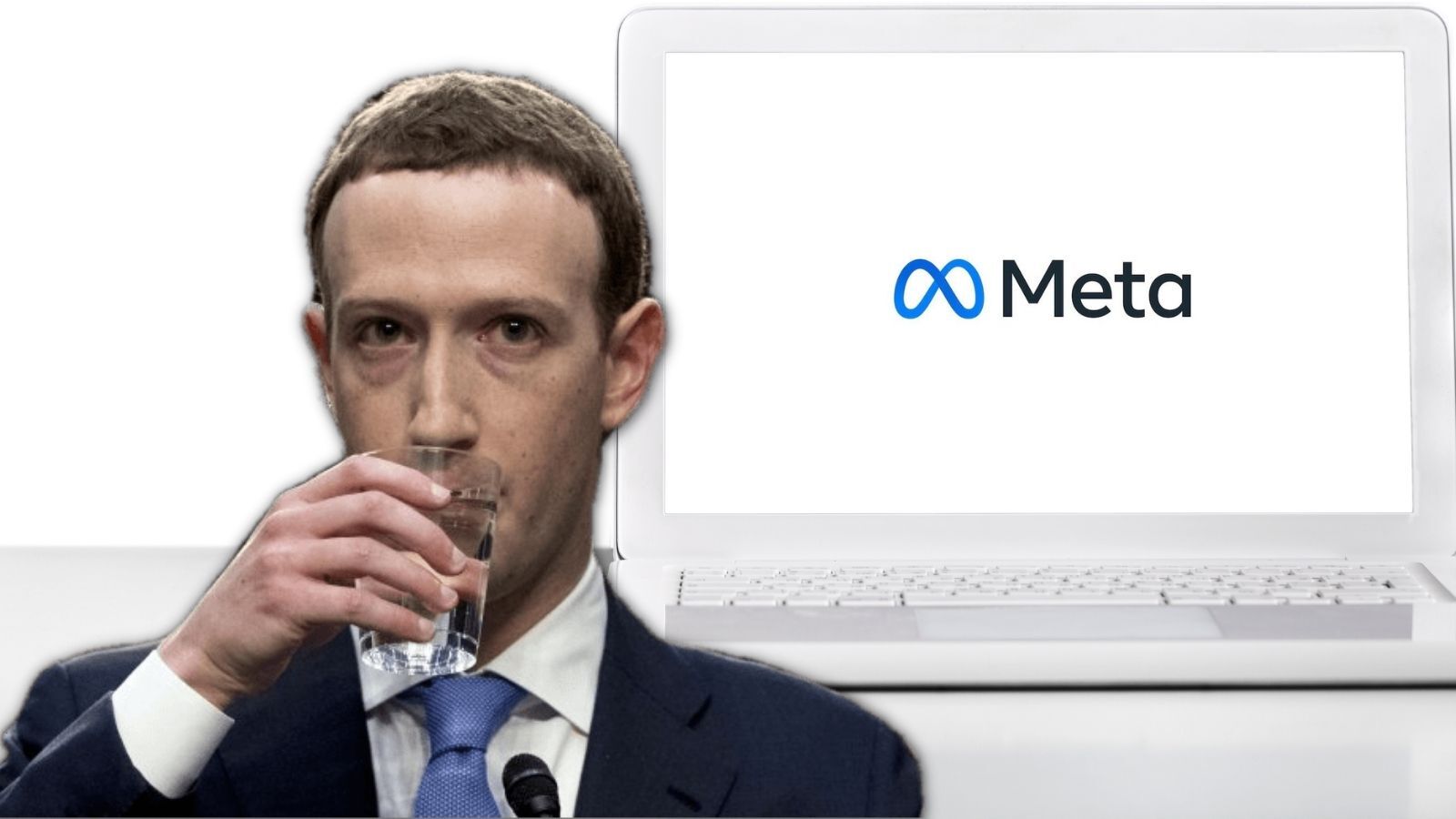
When New Mexico attorney general Raúl Torrez first sued Meta for child trafficking in 2024, he called the social media giant the “largest marketplace for predators and paedophiles globally”.
This March, a jury agreed and found it guilty in a landmark trial, awarding $375-million in damages. In August, in the second part of the trial, the presiding judge ordered Meta to pay an additional $567-million to create a mental health fund for teenagers, bringing the total to $942-million.
It was widely heralded as Big Tech’s Big Tobacco moment – where innovative lawyers have used the same public injury strategy on social media giants as was used against the tobacco industry in the 2000s.
There is a larger reckoning happening for social media, and specifically Meta – whose Facebook, Instagram and WhatsApp apps are used by some 3.5-billion people every month.
The landmark New Mexico case was followed by another blockbuster lawsuit which Meta settled for $17-billion, also in August, and will make changes to its service.
This lawsuit was filed by 47 US States, who originally asked for $200-billion in penalties, and was clearly settled with haste by Meta.
Last week there was another big reckoning for Meta, which allowed Cambridge Analytica to run rampant through its systems in 2016 and failed to warn its users about how their privacy was being invaded.
A New Mexico court ruled that Meta must pay $25-billion – its largest penalty yet – for the “extraordinary number of wilful violations” then-Facebook allowed on its users.
Santa Fe court Judge Francis Mathew wrote that “the harm in this matter is difficult to overstate, and goes to the heart of Facebook’s basic business proposition”.
“Facebook was aware that its users did not understand its privacy settings and took advantage of that to a grossly unfair degree,” Mathew wrote in his judgement. “Facebook’s misrepresentations about users’ control of their data were not isolated incidents, but rather a systematic pattern of deception at the core of Facebook’s business model.”
For context’s sake, Meta’s profits this year until October were $52.48-billion and it earned $200-billion in 2025. Its current market value is $1.8-trillion.
As whistleblower Frances Haugen told the world in 2021, Meta always “prioritises growth over safety”.
Back in 2016, when Cambridge Analytica helped itself to the personal data of 87 million people, by Facebook’s own account, this was certainly true. This manipulation was cited as one of the main reasons Donald Trump won his first US presidency and how Brexit, the greatest act of self-harm by a supposedly mature country, was pushed through.
That kind of targeting by advertising (and in this case propaganda) is what has made Facebook such a force in the world, and Meta as a whole.
Let’s recall Mark Zuckerberg’s original “shocked” comment – when he was informed that fake news (either via Cambridge Analytica or Russian hackers) was fed to its users while manipulating Facebook’s own algorithms – that it was a “pretty crazy idea”.
The difference between Cambridge Analytica then and the assault on mental health now is that the executives definitely know what has been going on for the last decade, if not longer. Meta’s relentless pursuit of profits is its priority, not its users.
Copious Meta emails and presentations about the harms of endless scrolling and its addictive nature, as well as the mental health battlefield for teenage girls, have surfaced in all of these court cases. “Mark has decided that the top priority for the company … is teens,” according to one 2016 email with the subject line “teen growth”.
It’s worth remembering Zuckerberg’s equally infamous comment about privacy in 2010 that privacy was essentially dead, arguing it was no longer a “social norm”.
“People have really gotten comfortable not only sharing more information and different kinds, but more openly and with more people. That social norm is just something that has evolved over time,” he said.
It only evolved into the all-encompassing surveillance capitalism because of Facebook and its algorithms, as much as by Google and its own form of horrible programmatic advertising.
After this whopping $25bn judgment (which was reduced from the original $219-billion Judge Mathew set), New Mexico’s AG Torrez said, “for too long, powerful technology companies have operated as though their size and influence put them beyond the reach of the law”.
He added: “Today’s result makes clear that no corporation is too powerful to be held accountable.”
But accountability is not a frequently used word over at 1 Hacker Way. Nor is the phrase “pay your taxes”.
Meta is trying to exploit “a lucrative tax break intended to support research and experimentation” worth billions of dollars for building data centres, which “its own accountants say the gambit is risky,” the New York Times revealed last month.
On the same day Meta was fined $25-billion, the newspaper ran an expose of how Zuckerberg “pushed Meta to shield him” against a potential new Wealth Tax in California that is expected to be voted on in the November midterm elections.
If Proposition 40 is adopted, it will charge all billionaires a one-time 5% tax on their Californian assets. That would mean a $12.5-billion tax bill.
But Zuckerberg, who is worth $247-billion and is the fifth wealthiest person in the world, doesn’t want to pay it. Instead, “the billionaire told Meta’s board that he planned to list his Silicon Valley home for sale. The company remade its stock structure to help him pay the tax if voters pass it,” the New York Times wrote.
Meta has created a new class of shares which will be issued in January, so that Zuckerberg doesn’t have to dilute his own 60.6% of “supervoting” shares down to 53% should the tax be passed next month.
This is the billionaire who controls how 3.5 billion people communicate. It can’t be a good thing.
- This column first appeared in Business Day.