

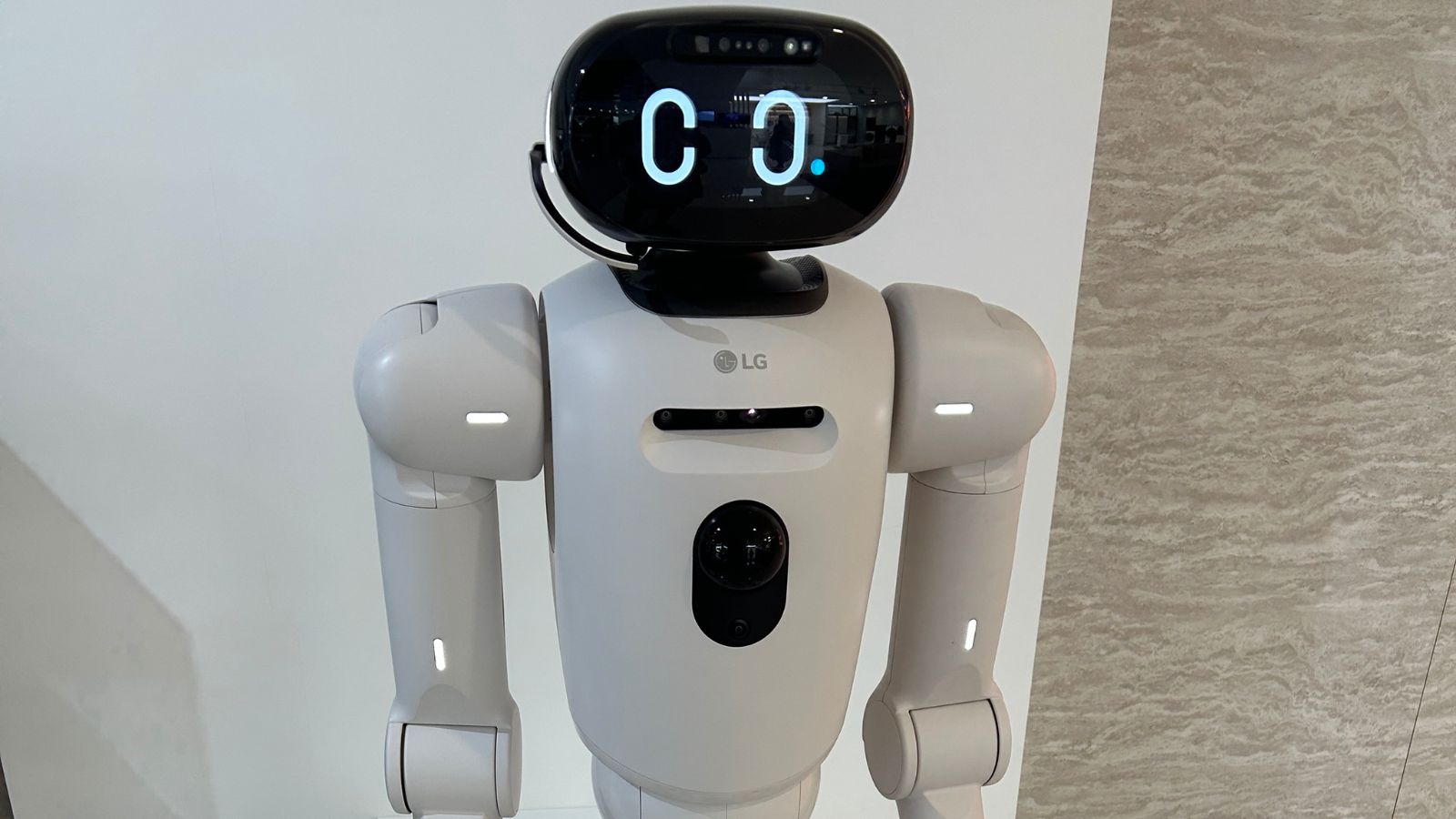
For most South Africans, LG is all about home appliances – it’s your air conditioner, washing machine, fridge or smart TV. But in South Korea, it’s everywhere and then some. LG makes everything from biopharmaceuticals to high-performance components, K-beauty and liquid cooling systems. Pick up a tube of toothpaste and (surprise!) the most popular brand says LG on it. It’s a dizzying, sprawling portfolio, and we got to see some of the chaebol’s most innovative tech up close.
The butler did it: LG CLOiD
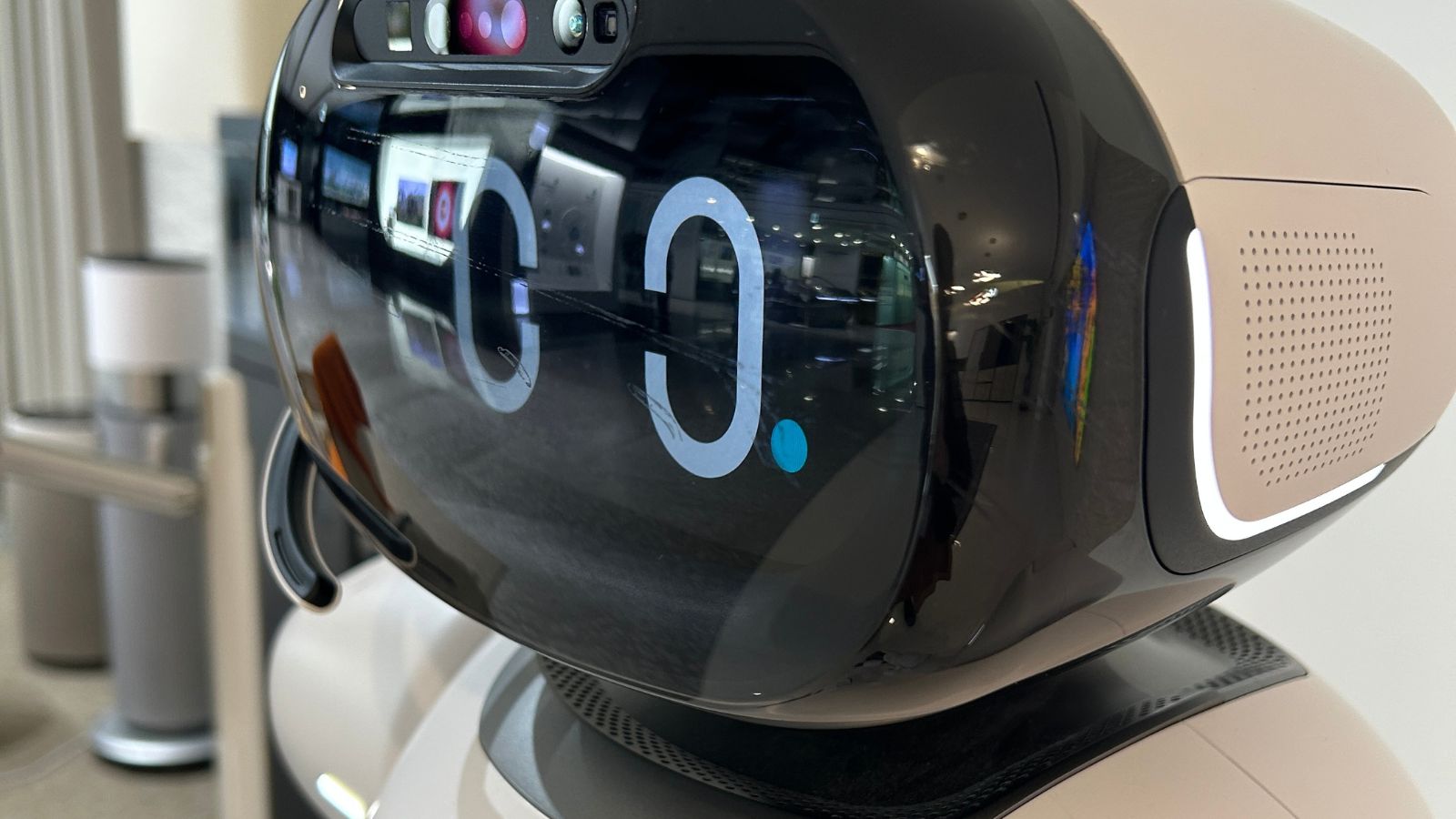 CLOiD is not a futuristic home robot. He’s actually a robot butler, built for housework. The idea is that instead of having to buy a dozen smart appliances that crowd your kitchen countertop, and all have to be connected and managed via an app, you have one handy robot that does the coordination on your behalf, and some chores. CLOiD ‘sees’ the room through cameras and sensors in his head, and he has two arms with five-fingered hands, though he gets around on wheels. (If you have stairs, no CLOiD for you!)
Behind the friendly face is a chipset that works as his brain, running two kinds of AI – a vision language model turns what the cameras see into words he can reason with, and a vision language action model turns that understanding, plus whatever you ask him to do, into movement. Each arm has seven degrees of freedom, the same range as a human arm, and his torso tilts so he can reach anything from knee height up. At CES in January, he loaded a washing machine, put a croissant into the oven and folded towels… very slowly but neatly, nonetheless. If you’ve ever wondered what the term physical AI means, this is kind of it.
Now you see it: LG Signature OLED T
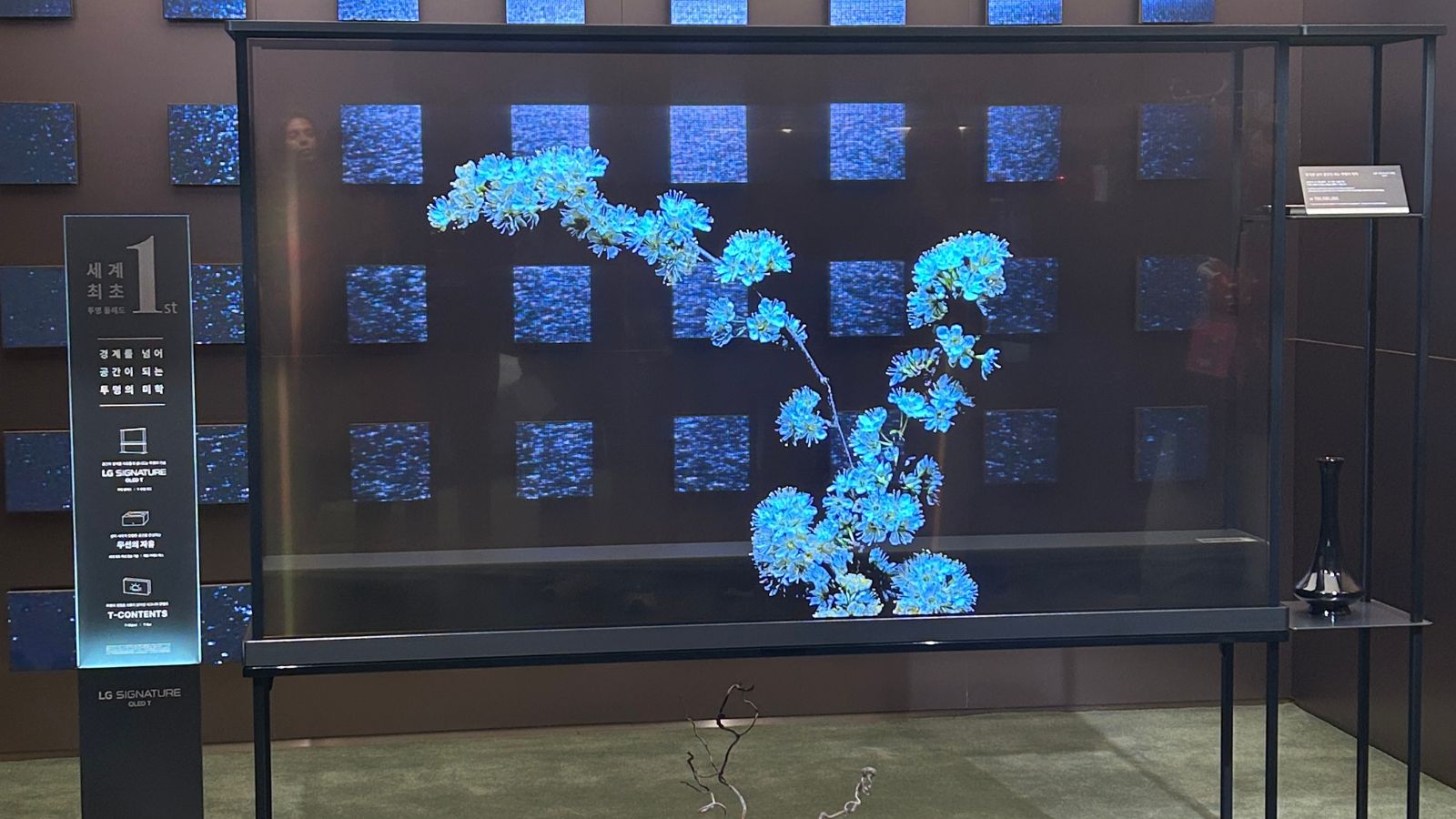 Switched off, the LG Signature OLED T looks like a 77-inch pane of glass. It’s minimalist and a little bit disorientating because once turned on, the picture hangs in the air, layered over whatever sits behind it. It’s an eerie, immersive, CES award-winning effect, and it works because every OLED pixel makes its own light, so there’s no backlight to block the view.
When you want a film to feel like a film, a black contrast screen rises behind the glass, and it becomes a conventional (and very good) 4K OLED running at 120Hz. The other clever bit is the absence of cables – apart from power, nothing plugs into the screen at all, because picture and sound beam across from a separate Zero Connect Box. It’s crazy stuff. And being the world’s first wireless transparent OLED TV, it’s priced at a hefty $59,999 in the US.
Home, smart home: ThinQ
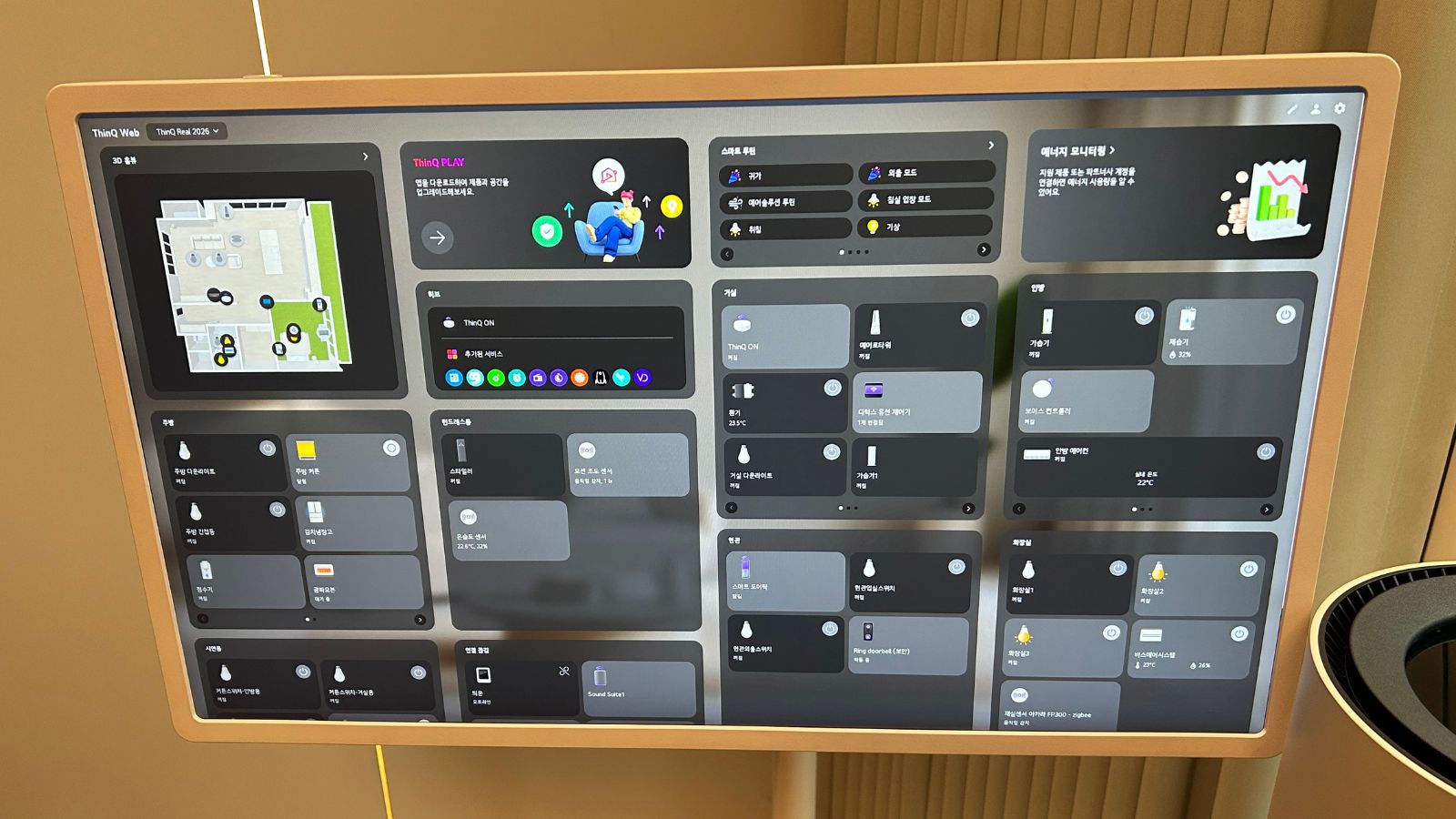 Most smart homes are a jumble of apps, each controlling one gadget and none of them talking to each other. Theoretically, a fully automated home works the other way round. One system that knows who has walked in, what the weather is doing and what every appliance is up to, and acts on it without being asked. At LG Science Park in Magok, there’s a fully functional ThinQ Real apartment, mapped as a live 3D digital twin.
When the smart lock recognises your fingerprint, the lights turn on, music starts to play, and ThinQ ON (the AI hub running everything) suggests freshening up your clothes in the LG Styler, an automated steam closet, because the dust levels outside were high today. Switch on the oven, and the windows open and the extractor fan kicks in. Say ‘I’m going out’ and the lights go off, the appliances power down, and the robot vacuum sets off. One of the coolest things is that you don’t need to be all-in on the LG ecosystem for everything to work. LG bought Homey (and Athom, the Dutch company behind it) in 2024, which means it works with more than 50,000 devices from other brands, from Ring doorbells to Aqara sensors.
Furniture with benefits: LG ArteUP
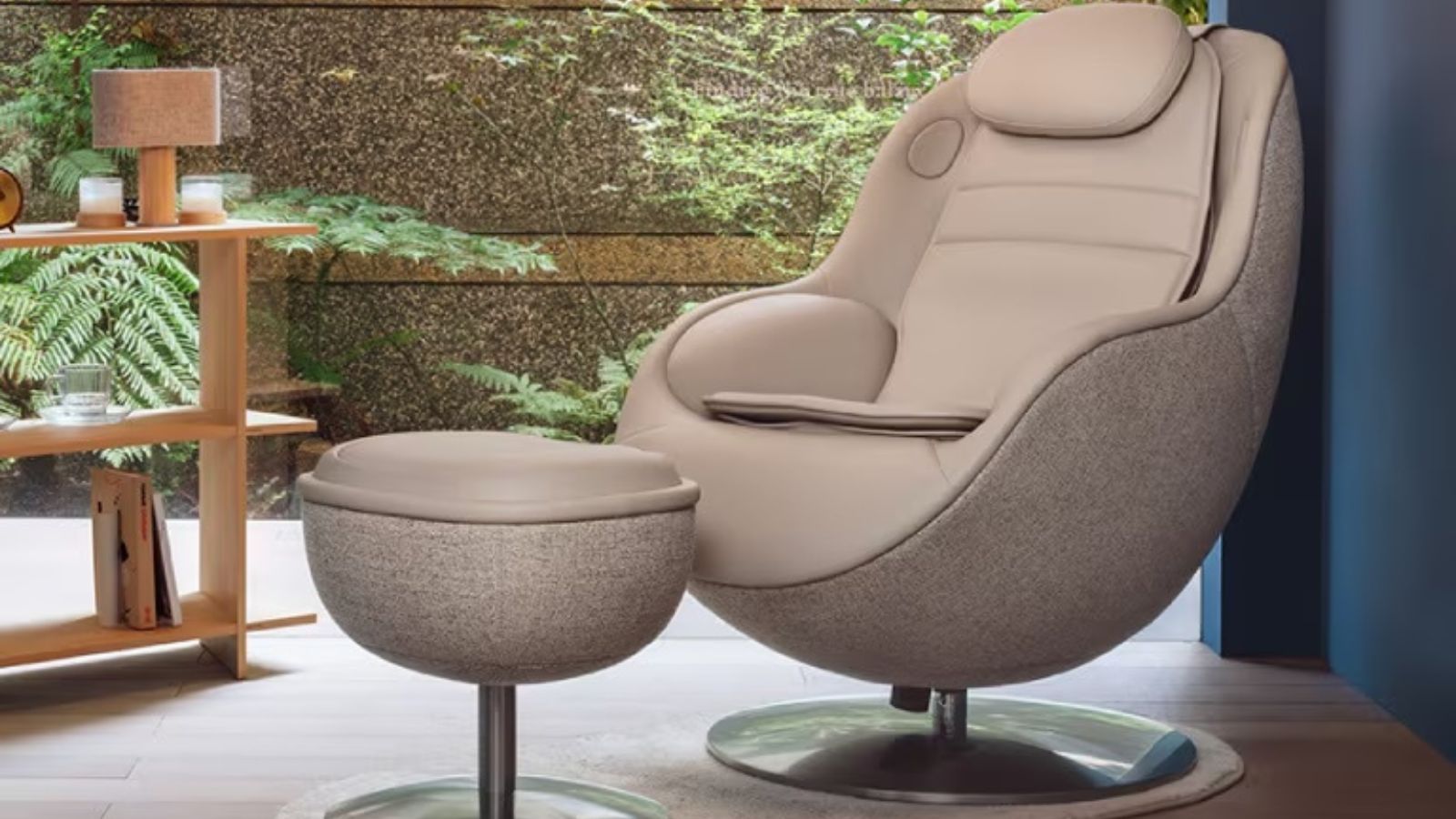 Most massage chairs look like they belong in an airport lounge or a dentist’s waiting room – they’re bulky, black and covered in buttons. But the LG ArteUP looks like a mid-century lounge chair from a design shop, all soft curves and padded edges. It’s only when you sit down that you realise it’s actually a connected appliance. Inside, massage balls move in six directions to knead, press, tap and roll their way along your neck, shoulders and back.
The clever part is the AI course, which learns from the massages you’ve chosen before and adjusts itself, so there’s no fiddling with settings every time. What’s very cool are the ‘Mind Care’ and ‘Sleep Care’ courses, which are built-in with brainwave-stabilising sounds to help you switch off, and new massage functions can be added through the ThinQ app. Even the remote is a slim wireless OLED controller that clips onto the side of the chair.
Through the looking glass: LG UltraView Windshield Display
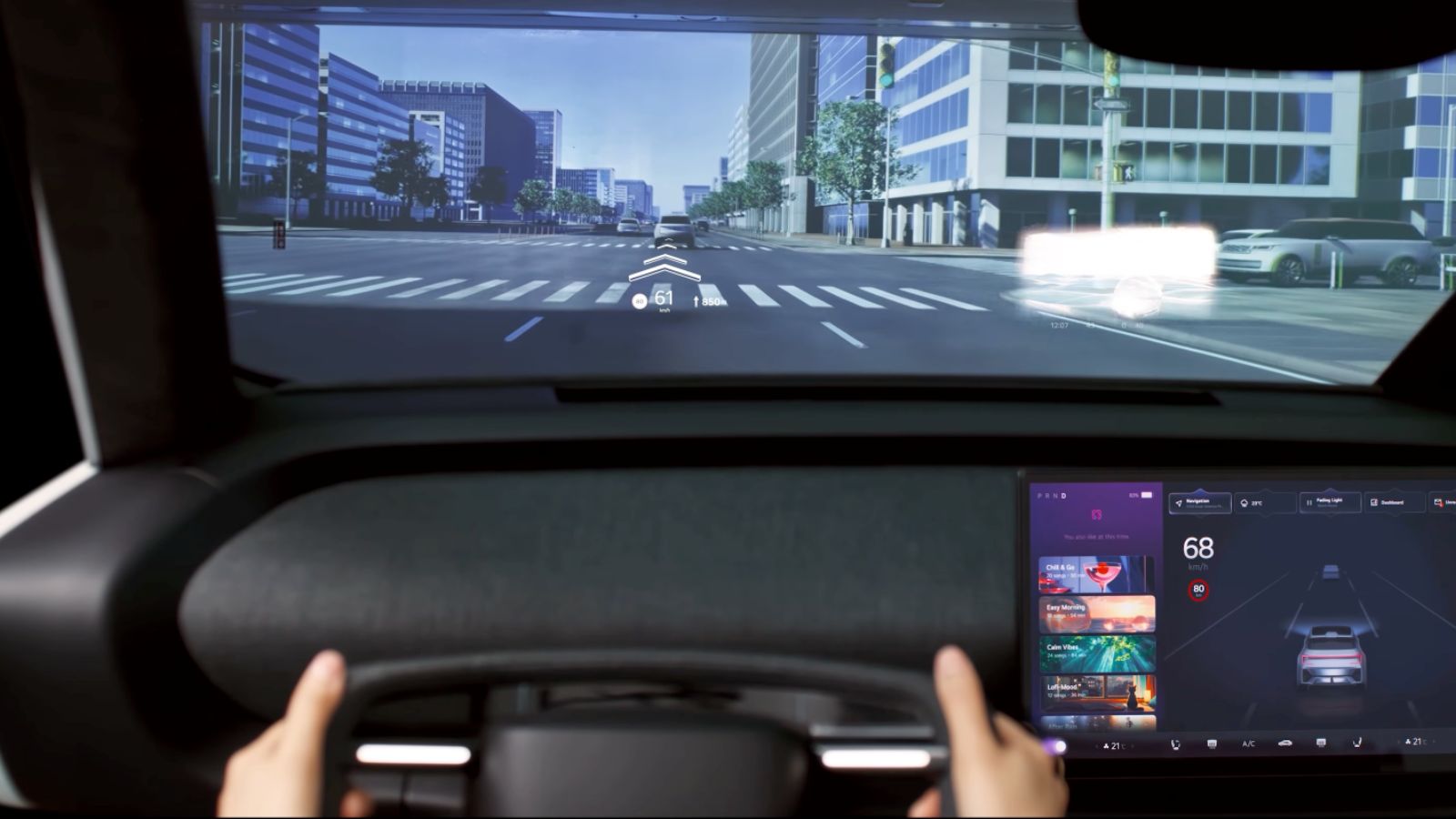 Newer cars keep adding screens, and while that sounds like progress, every new display is another reason for the driver to look away from the road. LG’s UltraView takes the opposite approach by turning the glass you’re already looking through into the display. Speed, driver-assist warnings and turn-by-turn arrows are projected so far ahead that they appear to sit on the road in front of you, while a second, closer layer (which LG calls the Hover Screen) floats maps, music and climate settings in mid-air just beyond the steering wheel.
Where it comes into its own is when driving gets difficult. In a heavy downpour, the car’s cameras and sensors trace the outlines of nearby vehicles onto the windscreen, and at a busy toll plaza it shows you exactly which lane to be in. And if you arrive early with twenty minutes to kill, that floating screen becomes a very cool personal cinema, before disappearing completely when you switch it off.



1 Comment
As LG showcases next-generation consumer tech at its Seoul headquarters—ranging from the physical-AI home butler CLOiD and cross-brand ThinQ ON digital-twin automation to the Signature OLED T and UltraView Windshield Display—which commercialization strategy, such as prioritizing open-ecosystem smart-home hubs that integrate with over 50,000 third-party devices or scaling automotive cockpit displays with automakers, will deliver the strongest global market adoption?