

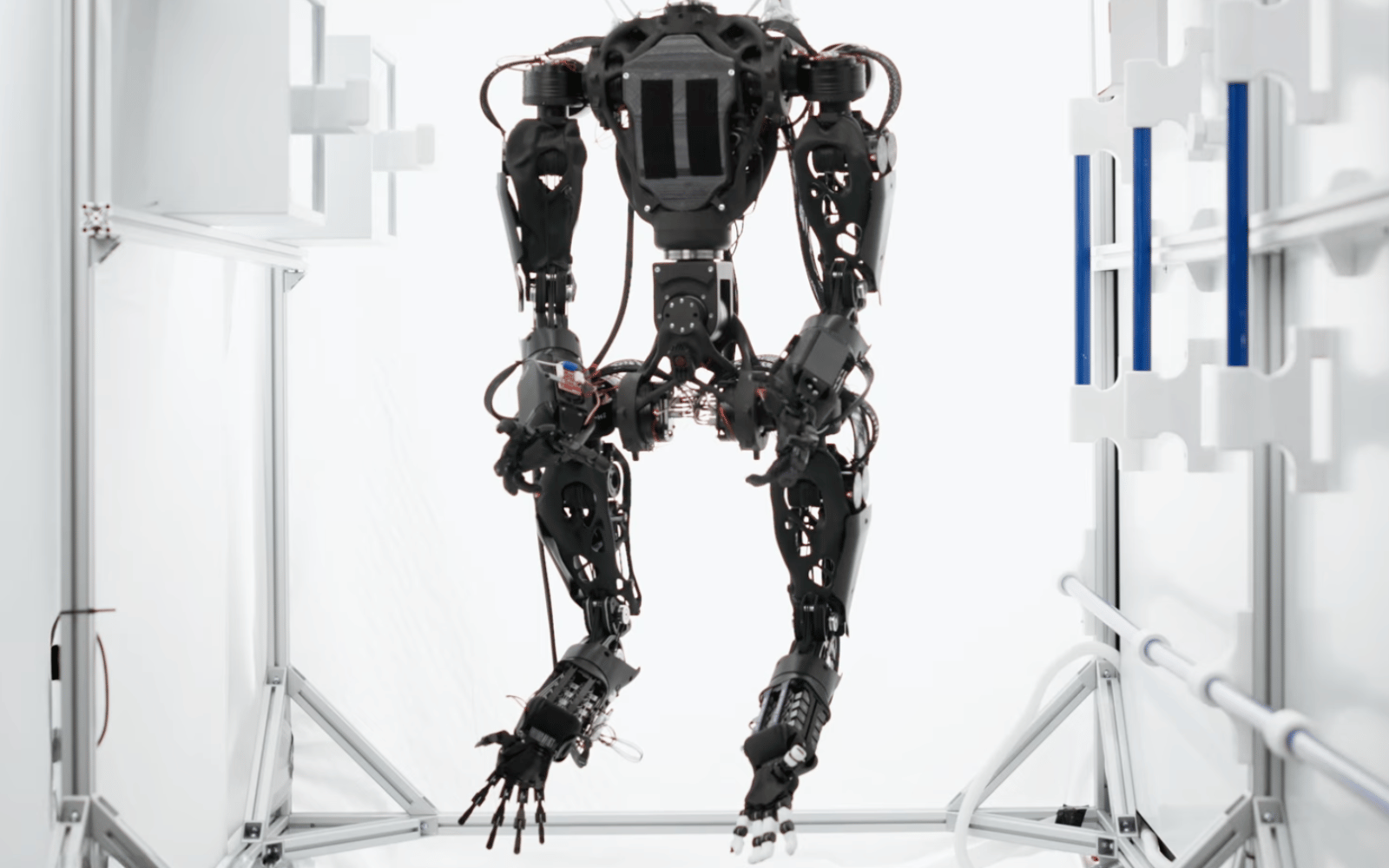
Orbit Robotics, a Swiss company, has unveiled Helios. Nominally a humanoid, at least in general shape, the robot has one large difference compared to the likes of Unitree’s stable. That would be its arms, which make the ‘bot more similar to a chimpanzee than an actual human.
See, Helios has limbs at all of the correct points. The catch is that its ‘legs’ are actually just another pair of arms. It’s a bit useless here on Earth, but that’s not where the robot is supposed to operate. Instead, it’s intended for work in space — specifically, space stations, but we could see it bobbing around spacecraft too.
The power of Helios
The idea of an in-space assistant robot isn’t new. A Japanese company is looking to launch a version taken from the Gundam anime series. But Helios is a far more practical take on putting an assistant into orbit. Four robotic arms would allow the creation to more easily navigate micro-gravity. Astronauts get around using handholds. Letting a robot do the same means not having to design a propulsion system, while keeping the robot tethered away from scientific experiments.
Helios’s tendon-based muscular system makes it more lightweight, perfect for sending to space. Orbit Robotics envisions the robot taking on mundane maintenance tasks on a space station, freeing up humans for more detailed work. The company “builds robots for space so astronauts can do science, not repetitive cargo and maintenance. The first implementation is cargo [and] inventory workflows, then expansion toward full orbital operations support.”
It’s handy practise for what humanoid robots are perhaps best suited for: autonomous setup of off-Earth bases. The idea is to send a fleet of ‘bots to prepare the way for human visitors to the lunar surface or, more importantly, Mars. Having a functional shelter waiting for the first human visitors to Mars would greatly lower the risk to any astronauts making the three-year-long(ish) trip to the red planet. Helios could be just the start of this process.