
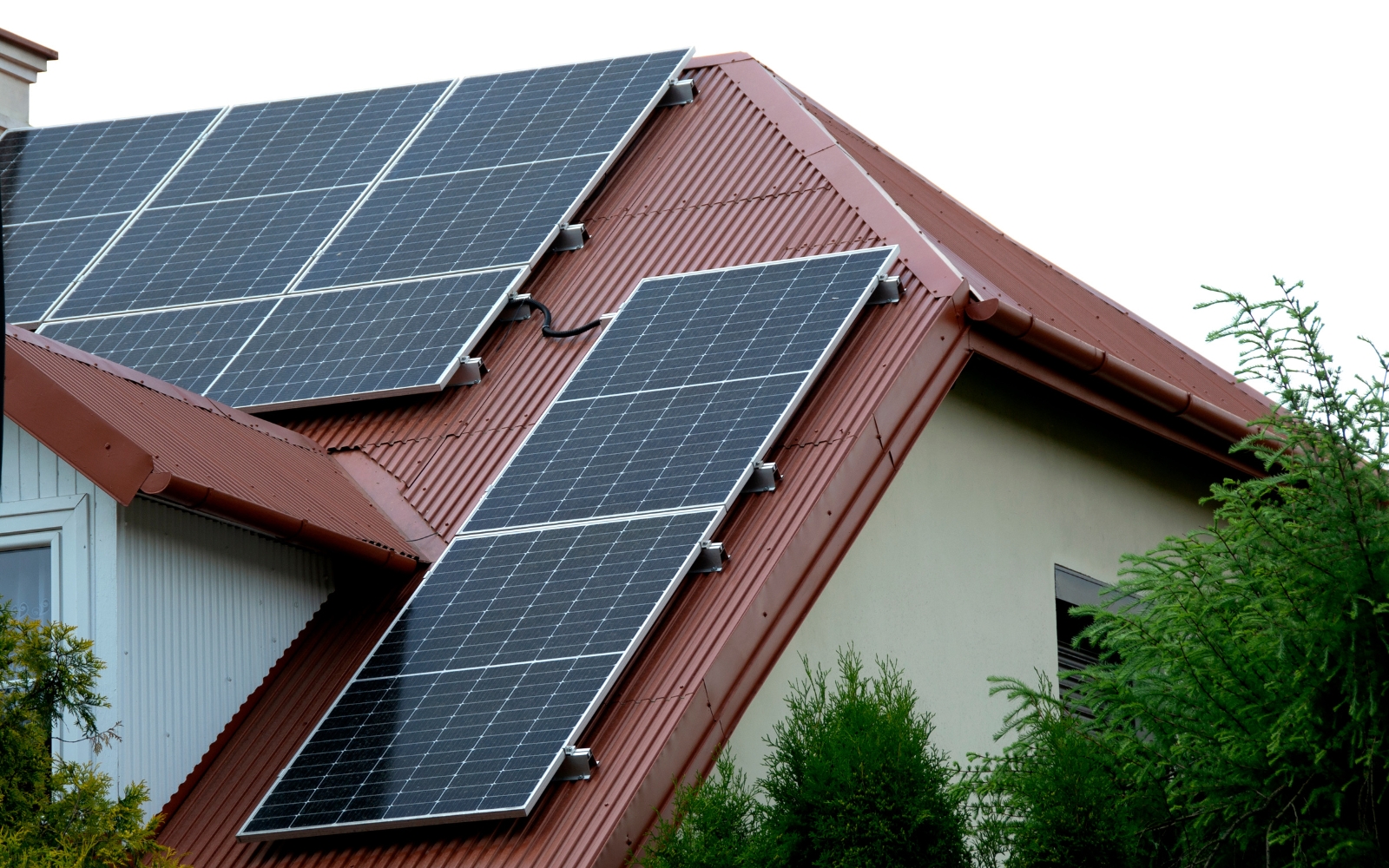
South Africa would seem like the perfect place for widespread uptake of solar energy.
The country is sunny, with high solar generation potential. Solar is a clean, reliable source of power that can help people reduce their dependence on polluting fuels like paraffin and diesel. Switching to solar also cuts electricity bills, which have more than doubled over the last 10 years.
Yet solar power makes up less than 10% of the country’s energy mix. About 74% of South Africa’s electricity still comes from burning coal. Most households use electricity provided by coal-fired power stations. For poorer households, paraffin and wood are still the main sources of energy for lighting and cooking.
We are environmental scientists who focus on sustainable energy and household energy consumption. We wanted to find out what prevents families in one of South Africa’s poorest provinces from adopting solar power. Our research covered both high-income and low-income families.
We interviewed people from 49 high-income and 94 low-income homes in the major cities in South Africa’s Eastern Cape province. We defined high-income homes as those with a monthly income of more than R30,000 (US$1,565). Most of the low-income households (65%) we interviewed had no wages coming in and were dependent on social grants (benefits) from the government. These range from just R370 (US$22.63) to R2,400 (US$146) per month.
This province also has a 42.5% unemployment rate, with 65% of families receiving at least one grant.
We focused on households in the coastal metropolitan cities of Gqeberha and KuGompo City and two medium-sized inland towns, Makhanda and Komani. This was so that we could find out if people were deterred from installing solar by the high humidity and high corrosion levels on the coast, and the high temperature and dusty environments inland. (These conditions have been identified as deterrents in other studies.)
Our research found that, overall, most households across the income spectrum remained hesitant to install solar panels. Although they mentioned several concerns – including financial, technical and institutional – one major reason stood out: fear of theft and damage.
South Africa is one of the most unequal countries in the world, with housebreaking the crime most experienced.
Based on our findings, we make a number of recommendations. For low-income areas, we recommend that the government consider setting up communal solar mini-grids. These could be guarded by security officers. In high-income areas, anti-theft fasteners and security lighting, such as floodlights connected to motion sensors, could help prevent theft of solar panels.
What’s holding people back from solar
We asked households whether they had ever thought about using solar panels at home, and what they saw as the main benefits and risks of doing so. We also asked about the challenges they faced, such as costs, technical issues and government support. We collected basic background information about them too, like their age, income and household details.
Nearly 90% of respondents said they would choose solar panels to avoid future power cuts, after experiencing scheduled power outages by the national electricity utility (also known as loadshedding) from 2007 to 2023.
Just over 80% of high-income households said they’d considered switching to solar. Only 63% of low-income households said they’d considered it.
A big share of high-income households (86%) said cost was the main obstacle to making the switch. For low-income households, this number was 58%. In addition, low-income families said they’d be unlikely to buy the systems because of the high costs of maintenance (battery replacement, inverter repairs or replacement, panel damage or replacement, and technician costs).
About one third of the people interviewed in both groups said that solar home systems were unreliable during dusty, wet and adverse weather conditions.
But our findings show that almost all households shared a common fear – they worried that solar panels could be stolen. This fear did not affect everyone in the same way, however. Wealthier households (60%) were more concerned about theft than lower-income households (52%), likely because theft has been rare among lower-income households that received government-provided solar water geysers.
For wealthier households, solar panels are seen as valuable assets. Many live in more isolated properties and are more aware of crime risks. As a result, the possibility of theft becomes a serious concern, even for those who can afford the technology.
For lower-income households, the stakes are even higher. Solar energy is often seen as a way to meet basic needs like lighting, cooking, and charging phones. If a system is stolen or damaged, replacing it may be impossible. This makes even small risks feel overwhelming and discourages adoption.
This highlights the need for solutions that are sensitive to these differences.
The mini-grid solution
One promising solution could be solar mini-grids – shared solar systems installed in a central location within a community. Instead of each household installing its own panels, multiple households connect to a single system and share the electricity it produces.
In Somalia, Zambia and Nigeria, mini-grids have proven to be effective in powering communities, especially where extending the national grid would be too expensive.
The mini-grid approach addresses several challenges at once.
First, mini-grids improve security. A single, centralised system is easier to protect than many individual rooftop installations. This reduces the risk of theft and increases user confidence.
Second, mini-grids reduce costs. Solar panels, batteries and installation can be expensive. By sharing the system, households split these costs, making solar energy more affordable, especially for low-income communities.
Third, mini-grids solve space constraints. Many homes lack suitable rooftops for solar installation. A shared system removes this barrier by placing panels at optimal locations.
Fourth, mini-grids can strengthen communities. Shared systems encourage cooperation and collective management. They can also create local jobs for maintenance and oversight.
Beyond access, mini-grids also support a just energy transition, that is, a shift to cleaner energy that is fair and inclusive, where the benefits of renewable energy reach everyone and no group is left behind.
- is a Researcher in Environmental Science, Rhodes University
- is a Professor and Head of the Department of Geography, Geoinformatics & Meteorology, University of Pretoria
- is a Professor of Environmental Science, Rhodes University
- This article first appeared in The Conversation