

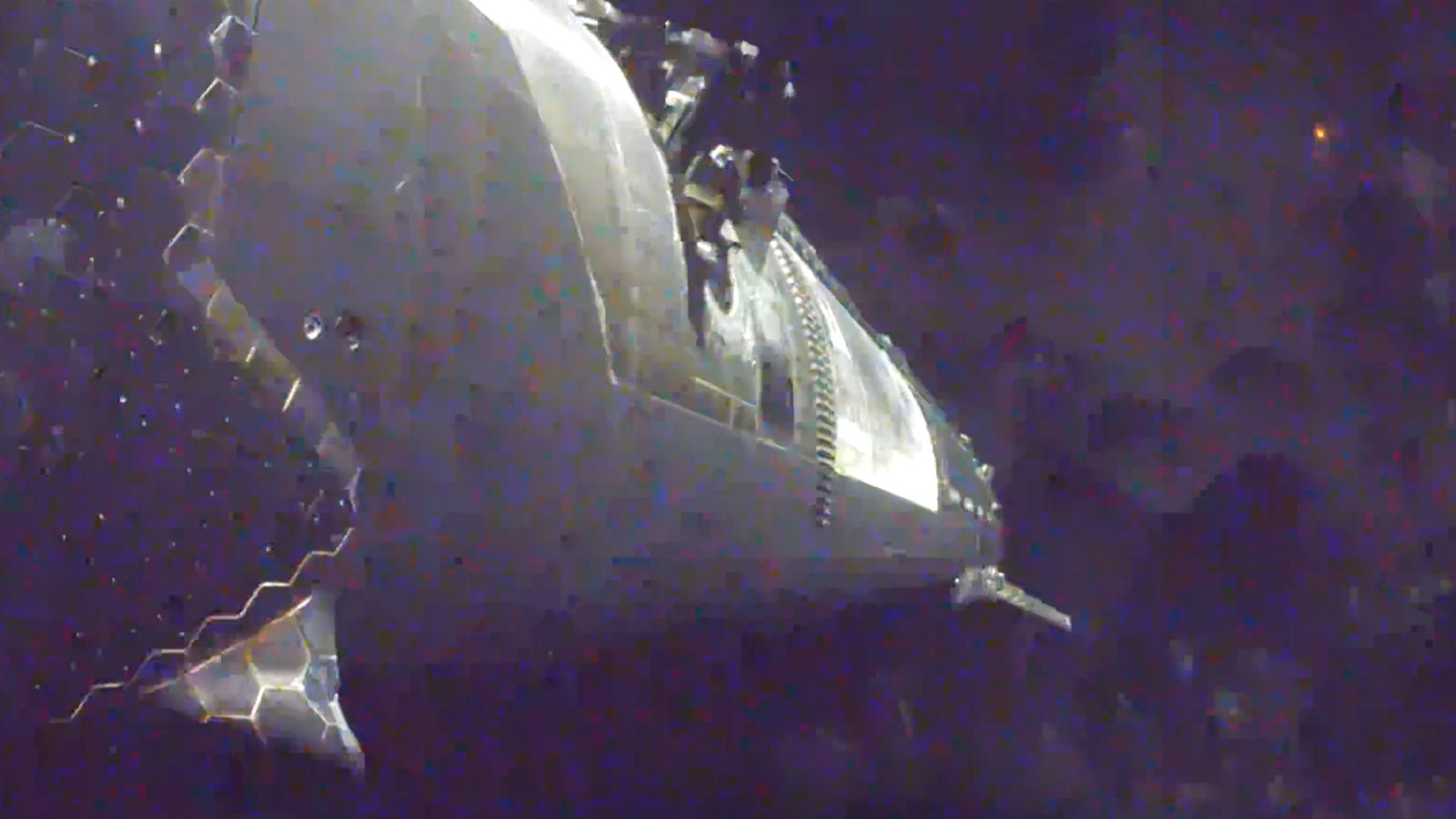
SpaceX has been fiddling with Starship for quite some time, mostly by dropping it into the ocean to see what happens. Yesterday’s Starship 14 mission, following a short delay, was the first to properly attempt orbital insertion.
Whether the mission succeeded or not, we’d be talking about it. One is a spectacular fireball; the other is a technological achievement. SpaceX has delivered the latter, successfully placing the fifty-metre-long object into a path around the planet. It also managed to deploy its newest generation of Starlink satellites without issue.
Starship trooper
The @Starlink team has made contact with all 26 satellites https://t.co/qiAubuhytS
— SpaceX (@SpaceX) September 28, 2026
Yesterday’s launch saw the massive SpaceX vehicle lift off from Starbase in Texas, achieving an orbital trajectory for the first time. The mission wasn’t without issues, however. While the vehicle deployed all 26 of Starlink’s V3 satellites — the deployment was all caught on video — the ten-hour orbital mission was cut short. Three hours after achieving orbit, Starship performed a deorbit burn and reentered the planet’s atmosphere.
Shortly afterwards (and this was also caught on video), the rocket performed a controlled descent that saw it touch down on the Pacific ocean. The rocket settled, sank, and then exploded. Because it’s not a real rocket test unless there’s some sort of fireball.
Following this test, SpaceX’s ambitious program will use the data gathered to eventually attempt to catch a landing Starship. That capability has been demonstrated before, but with the Super Heavy booster. Said booster also wasn’t starting from a height of approximately 275km above the Earth. It’s probable that we’ll see more orbital tests before the Starship vehicle is successfully caught and reused.