

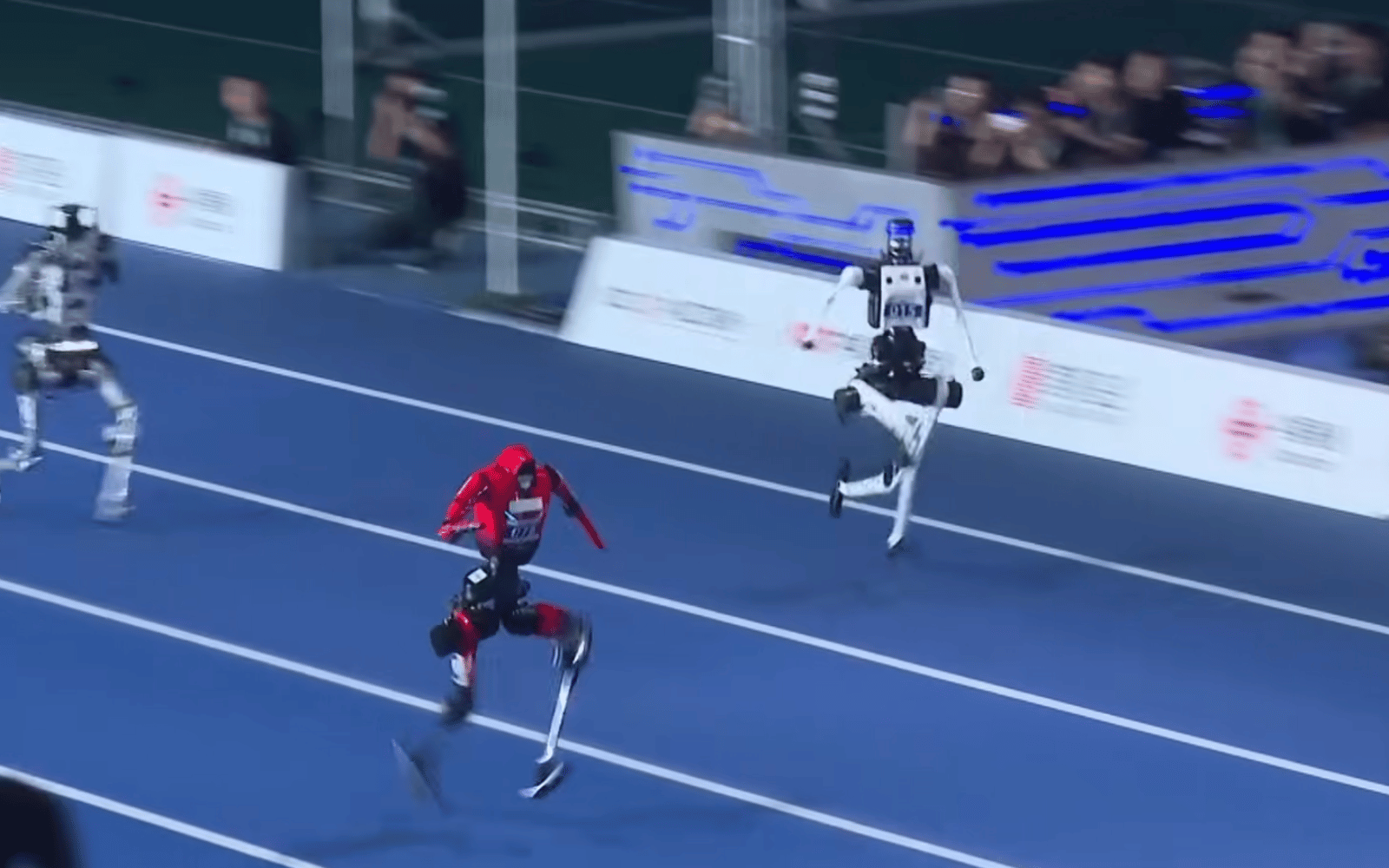
Several countries, China and South Korea in particular, have made massive bets on the future of humanoid robots. The current leader, China, if you were curious, looks to be scaling back those ambitions in the near term.
That doesn’t mean that development is slowing down. Humanoid robots are still popping up everywhere from everyone. But Reuters reports that the China Securities Regulatory Commission is slowing companies in that country from heading to their initial public offering (IPO). Considering what happened after the euphoria of Unitree’s recent IPO, that’s probably not surprising.
Unitree falls in the woods
Unitree has a genuinely intelligent marketing department. It’s also packing impressive hardware, at least in company demos. Its recent IPO was paired with the announcement of its ‘Superhuman’ humanoid robot, which apparently outperforms human athletes in various categories. That’s… actually not hard to do, it turns out. Following initial optimism after Unitree’s filing, the company’s value dropped considerably – by 55% from its highest point.
That performance is reason enough to stall other companies from entering the stock market. Similar slumps can give the impression that this technology China has lavished so much attention on just doesn’t have the legs it’s made out to have. Yes, the technology literally has legs, but that’s not the same thing.
Global finance is a funny thing. The perceived value of a company or technology means far more in various markets than actual value. Nvidia’s $5.5 trillion valuation (as of today) doesn’t reflect reality. It’s a measurement of potential, as seen by the folks who buy its stock. That’s not unique — the same goes for Apple, Tesla, SpaceX, Google, and pretty much every company on the stock market.
A decent illustration of this is the recent spikes in GameStop’s value, driven mostly by coordinated buying and other market manipulation tactics. These aren’t unique to GameStop’s stock value, but usually the stock market’s spikes are based on a) something tangible or b) more plausible deniability. Yes, pump-and-dumps are illegal, but they’re hard to detect if you’re doing them correctly.
Back to the point: Perceived value is often more important than reality. China’s regulator is likely taking action to ensure interest in humanoid robots doesn’t collapse without cause.
Humanoids for sale
The International Federation of Robotics reported this week (via Reuters — its own website doesn’t feature those stats for some reason) that some 7,000 humanoid robots were sold worldwide in the last year. That’s according to its own figures, and it’s difficult to reconstruct sales stats from various manufacturers. It’s not a bad year, in general, but it’s hardly what I could call popular.
Assuming a median price for a production humanoid ‘bot of $14,000 (which is probably on the low end), the conservative global turnover for these products is 98 million annually. Even at the extreme end — assuming every robot sold was a $250,000 Boston Dynamics Atlas-scale construct — the total value of robots sold globally comes to $1.75 billion. That is before R&D and other expenses. Turnover of nearly $2 billion a year doesn’t sound too bad… if it’s a single company. But it’s also obvious why China is pumping the brakes on exposing the tech to various market forces.
The most obvious illustration of this problem with these figures is South Korea’s recent investment in AI and robotics. The country recently announced an $880 billion (with a B) investment in the two technologies, with the bulk of that going towards AI development. That still left more than $300 billion in investment for humanoid robots. If you’re handy with your math, you can already see the problem.
Current sales of the futuristic tech account for 0.7% of South Korea’s investment in robotics development. That investment is spread over several years, granted. Even spread over a decade, the last year of humanoid robot sales only makes up 7% of what South Korea would spend in a year to develop more advanced models. Add to that the investment of other countries, and the potential return diminishes even more.
Back of the napkin
These are rough and dirty figures, certainly, but they use basic math (South Korea’s government investment and known humanoid robot sales) and just two sources of publicly available information. There’s no solid figure on what Tesla is spending on its Optimus robot, but it hopes to sell each for $10,000 and produce a million of them a year. In terms of gross turnover, that’s $10 billion. It’ll definitely spend more than that developing the robot to consumer-grade, just this year. Throw in Boston Dynamics, Unitree, UBTech, Figure AI, and many, many others, and you’re looking at multiple millions required in sales before anyone starts to make money.
Manufacturing has always been a long game, but eventually sales are needed to break even. And nobody makes a product to break even. For humanoid robots to be worth it, plenty of companies have to be underreporting or not reporting their sales. To make up South Korea’s guesstimated annual investment of $30 billion, 120,000 robots need to be sold (at $250,000 each). At the lower price of Unitree’s $14,000 G1, 2.1 million robots need to change hands for one country’s investment to be somewhat worth it.
7,000 units won’t cut it. That isn’t to say there won’t be a future surge in humanoid robots, but the reality isn’t a near-term thing. We’ll still see showcases, marketing stunts, and improved mobility from bipedal ‘bots, certainly. But China’s move to suppress other robotics companies’ listings on the stock market, where appearances are everything, seems like an intelligent one for the technology overall. Otherwise, it risks turning into virtual reality, a technology that has been around since the 1980s. VR has failed, on multiple occasions, to attain widespread popularity. It’s not for lack of trying. The market has just never been there.