

The window for SpaceX’s Starship 14 launch opens as soon as 22 September, according to the space company. Unlike previous recent missions, this one isn’t supposed to crash. At least, not until it’s done working.
Starship 14 will instead see the massive rocket travelling to orbit for the first time. Assuming everything goes as planned, of course. In addition to being a test flight, this launch will see the rocket deploy Starlink V3 satellites in orbit before it returns to Earth.
Starship of dreams
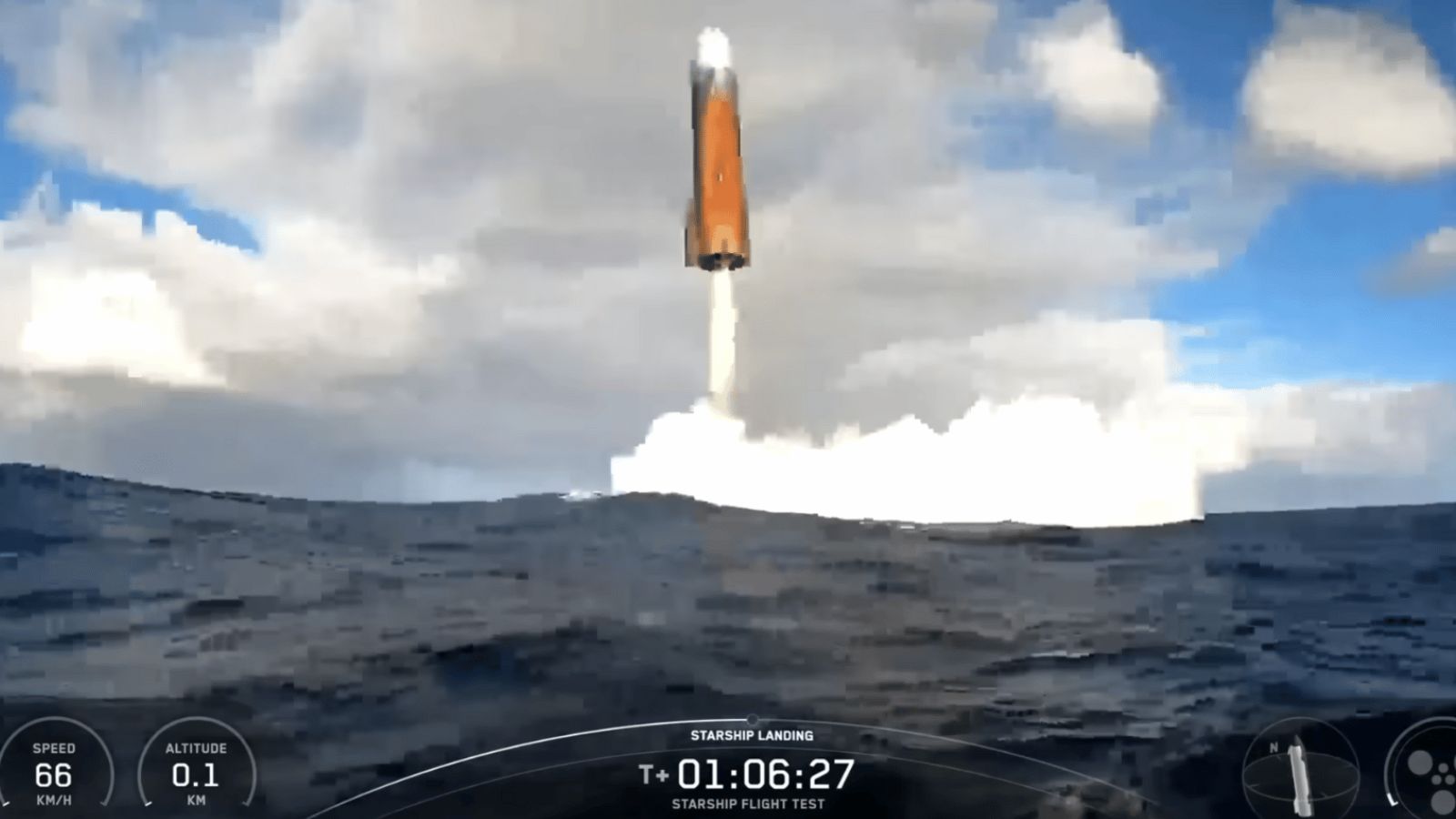
SpaceX’s mission plans are already pretty solid. Instead of “safe suborbital trajectories,” the rocket will travel to a height of 275 kilometres above the planet. It’ll conduct six orbits before returning to the ground. As was the case previously, it’ll touch down on the ocean. This time, the planned arrival point is in the Pacific, near Chile.
“The Starship upper stage’s primary objectives include the first orbital insertion maneuver, the deployment of 26 Starlink V3 satellites, a deorbit burn using a single Raptor engine while in space, and a controlled reentry, descent, and splashdown in the Pacific Ocean.”
SpaceX’s ambitions hinge on its rocket making it to orbital insertion, something that will be assessed once the launch is in flight. It’ll only take place once “the flight control team has ensured there is sufficient redundancy on hardware critical to doing the subsequent deorbit burn at the end of the mission.”
Hardware and software upgrades are being tested on this launch. Improved heat shielding, as well as SpaceX’s first reused components (heat tiles from Ship 40), will be making the run. As ever, there will be a live stream of the launch. It’ll begin at 01h45, South African time, on 23 September. That’ll be 30 minutes before the 19h15, 22 September launch window opens at Starship’s launch location.