

The Galaxy Flip 7 is the best entry point to Samsung's popular clamshell foldable range yet. The outer display is a winner and overall material quality is just as good. It's slightly less attractive if you're rocking an older model, with the Flip 6's cameras in particular sticking around for another year. Still, if you're all about looking good, this is the Flip to buy.
-
Design
-
Performance
-
Battery
-
Camera
-
Value
Samsung’s Galaxy Z Flip 7 is absolutely the best example of a folding handset in this particular range. Of Samsung’s two devices this year (so far), we’d actually give the Flip 7 the lead in the looks department. That doesn’t make the Fold 7 unattractive, but the clamshell design offers a more unusual look when folded away. You can tell it’s a foldable right off, which is what you want from a R28,000 smartphone.
That counts for something, but the new outer screen is definitely the star of the hardware show in 2025. It’s increased in size over the Flip 6, whose display was shunted down to the Flip 7 FE, until it occupies an entire half of the outer casing. There’s more to Samsung’s newest clamshell, so let’s take a closer look.
Flipping everybody out
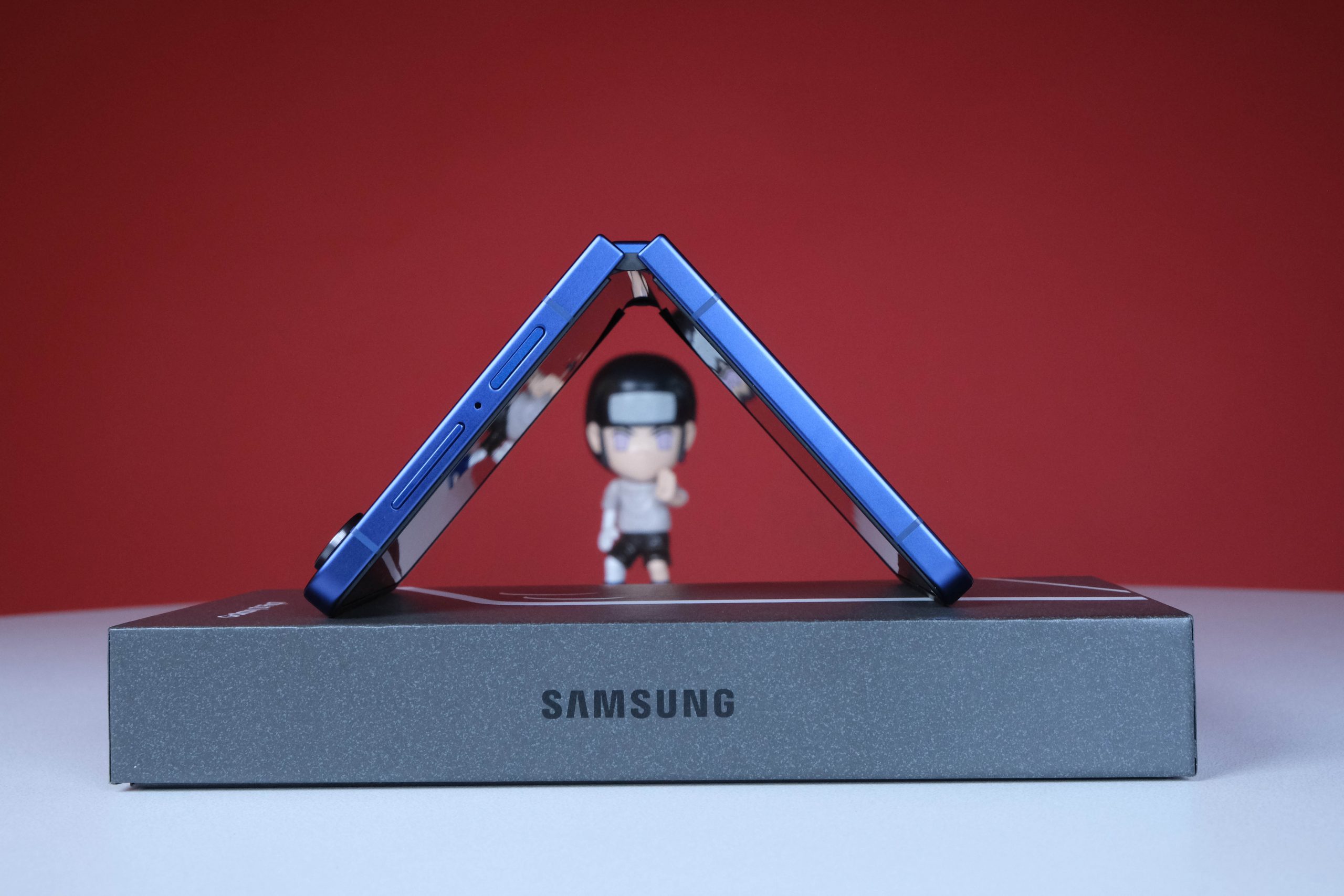
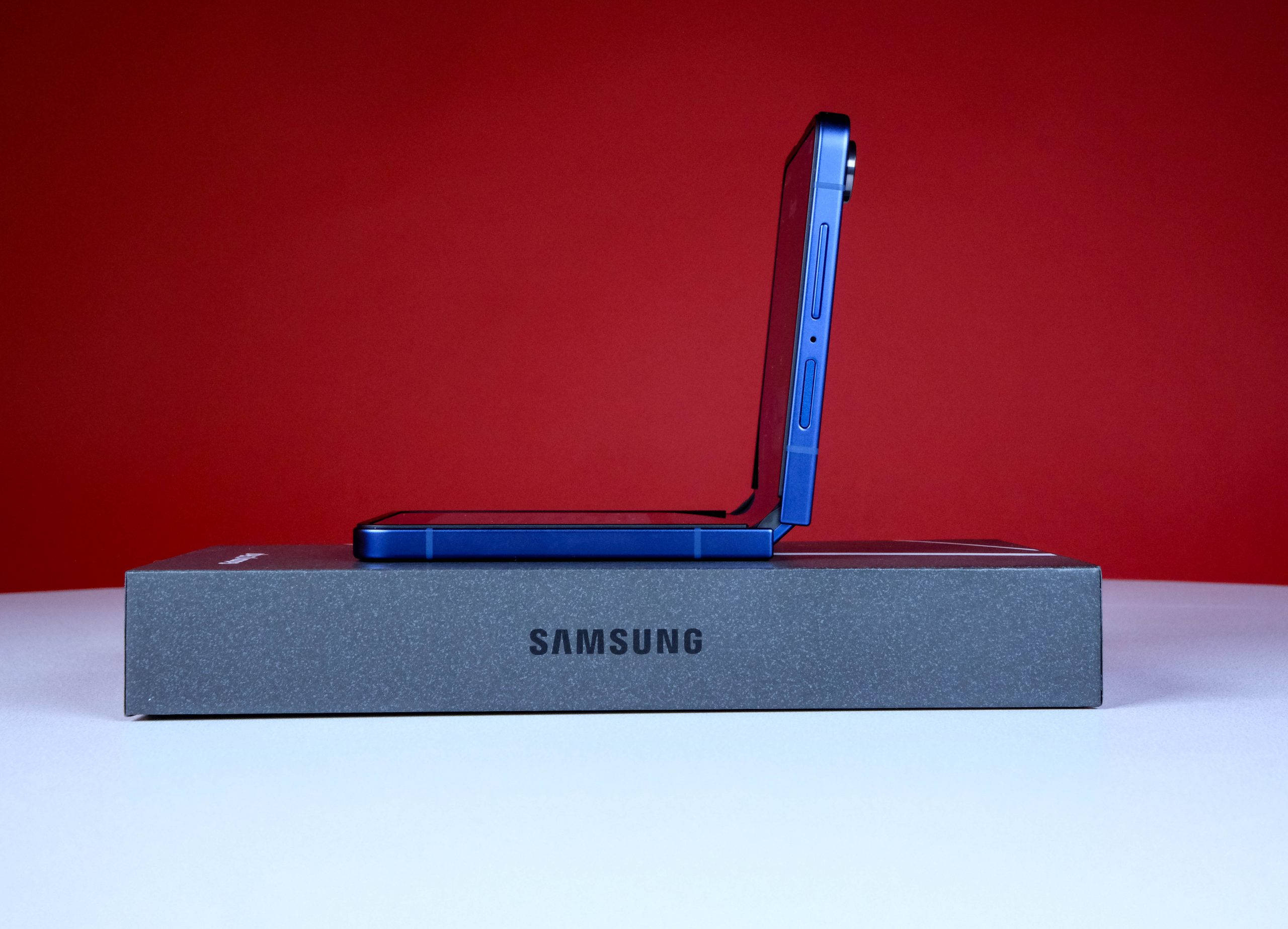
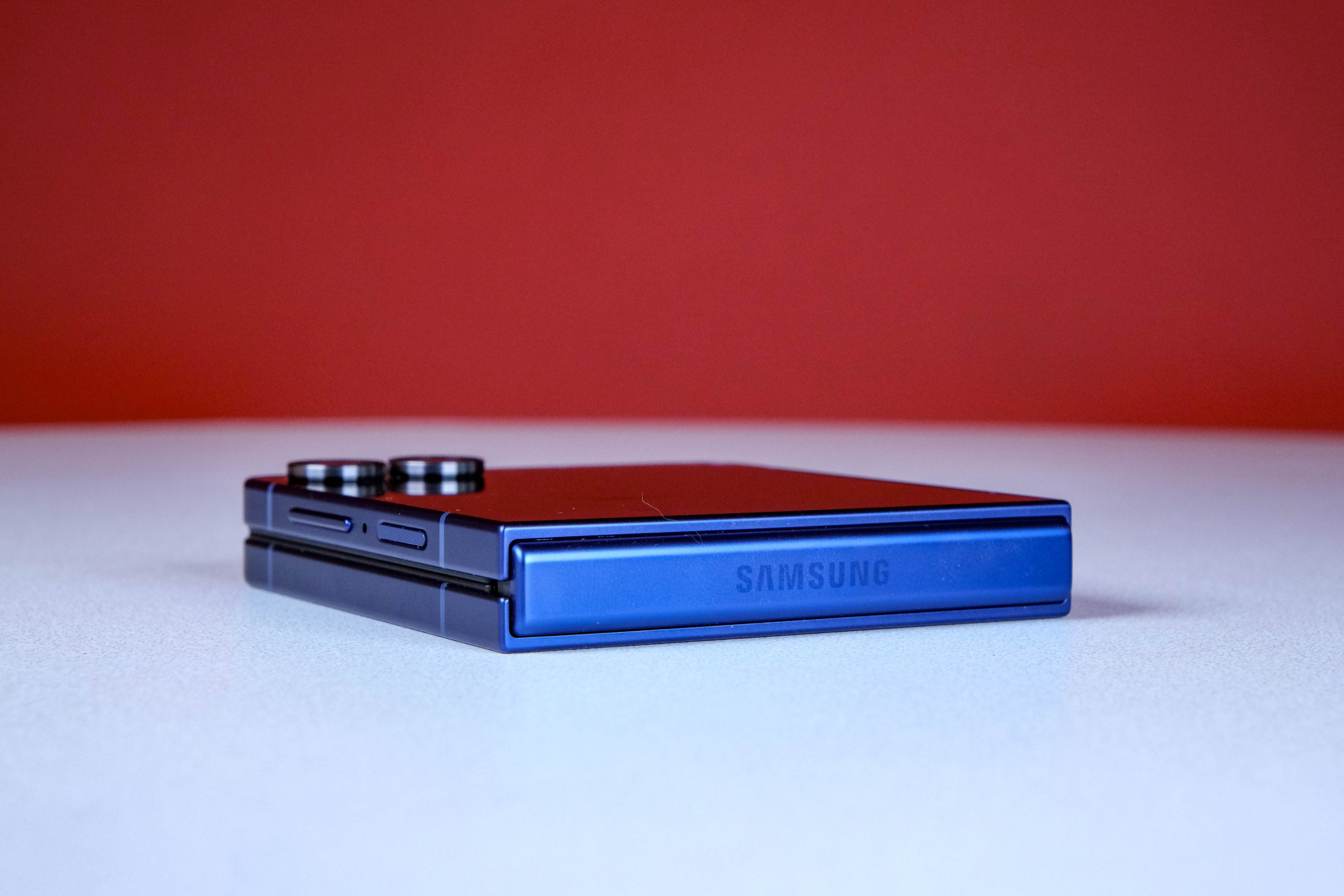 Samsung’s current design makes it hard to believe that the Flip range was once marketed almost exclusively to women. Opened and powered down, it’s flipping impossible to tell it apart from one of the company’s less flexible handsets. From the front, at least. Button and port placements conform to traditional design norms, with just the hinge seam under a finger at the rear and the two hinge-protector protrusions at the phone’s midpoint, alongside the crease, giving the game away.
Flip it over, and the double-barrel camera sensors and black panel look more distinctive. It’s only once it’s actually folded into its compact, squarish travelling orientation that users get the full effect. It’s a folding smartphone from Samsung, and it’ll never look like anything else.
Premium materials adorn… well, everything. Aluminium and Gorilla Glass Victus 2 cover most of the surface area, and it’s no longer the fragile little flower Samsung had to warn everyone about when foldables were still young. The hinge is solid and reassuring, no matter whether it’s open or closed, just stiff enough to stop where you’ve left it but not slack enough to snap closed because you didn’t make sure of your grip on the short edge.
Gaining face
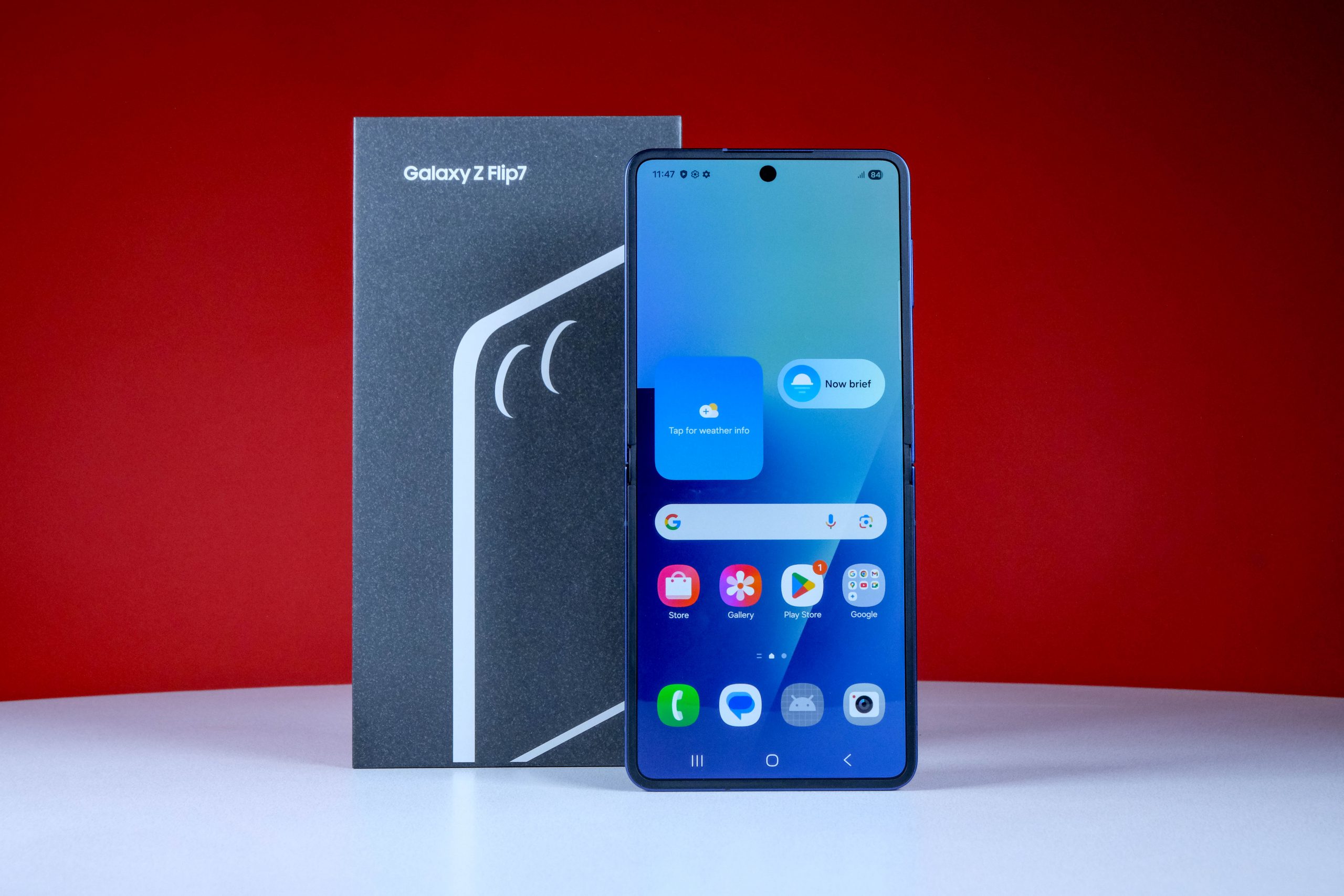
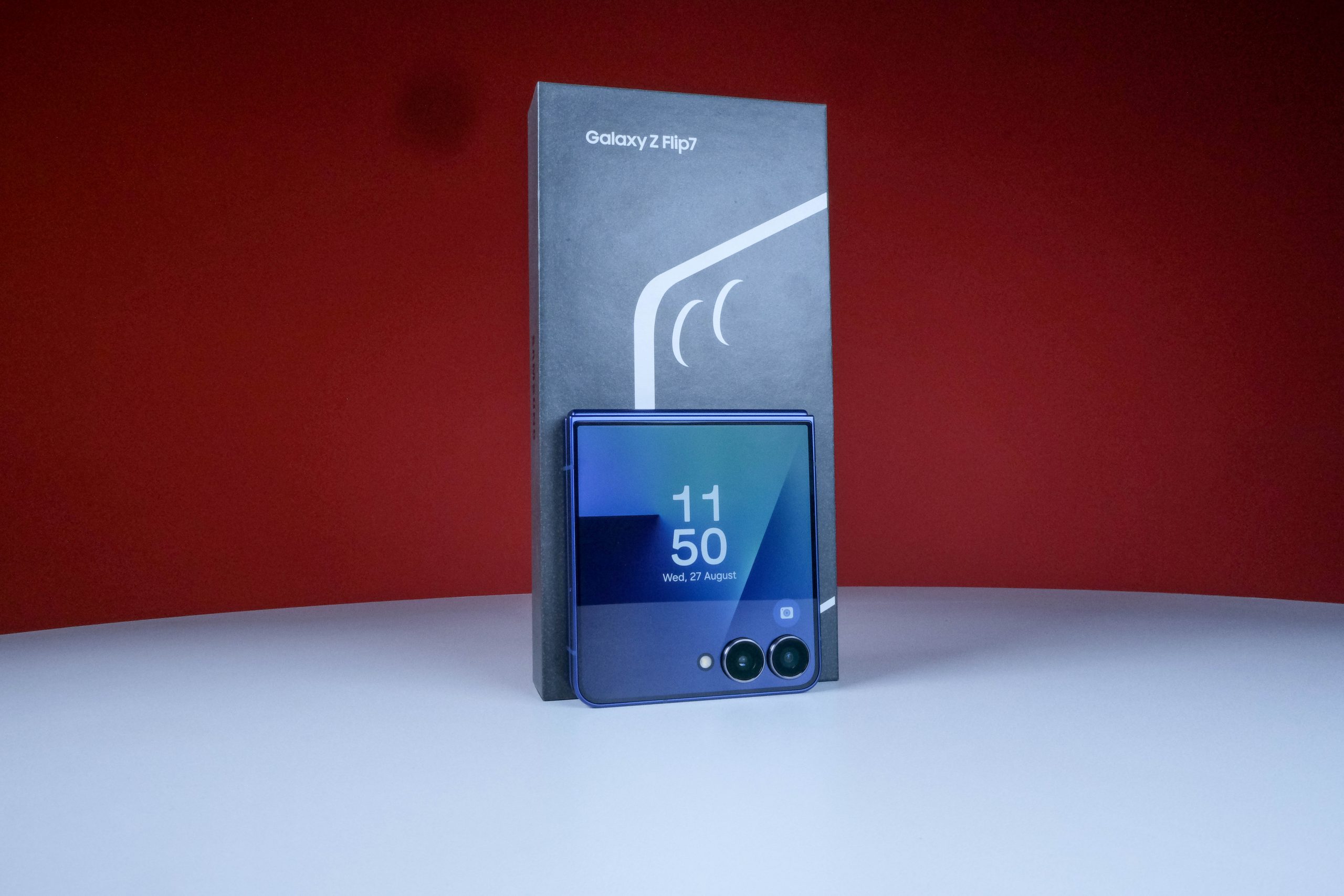
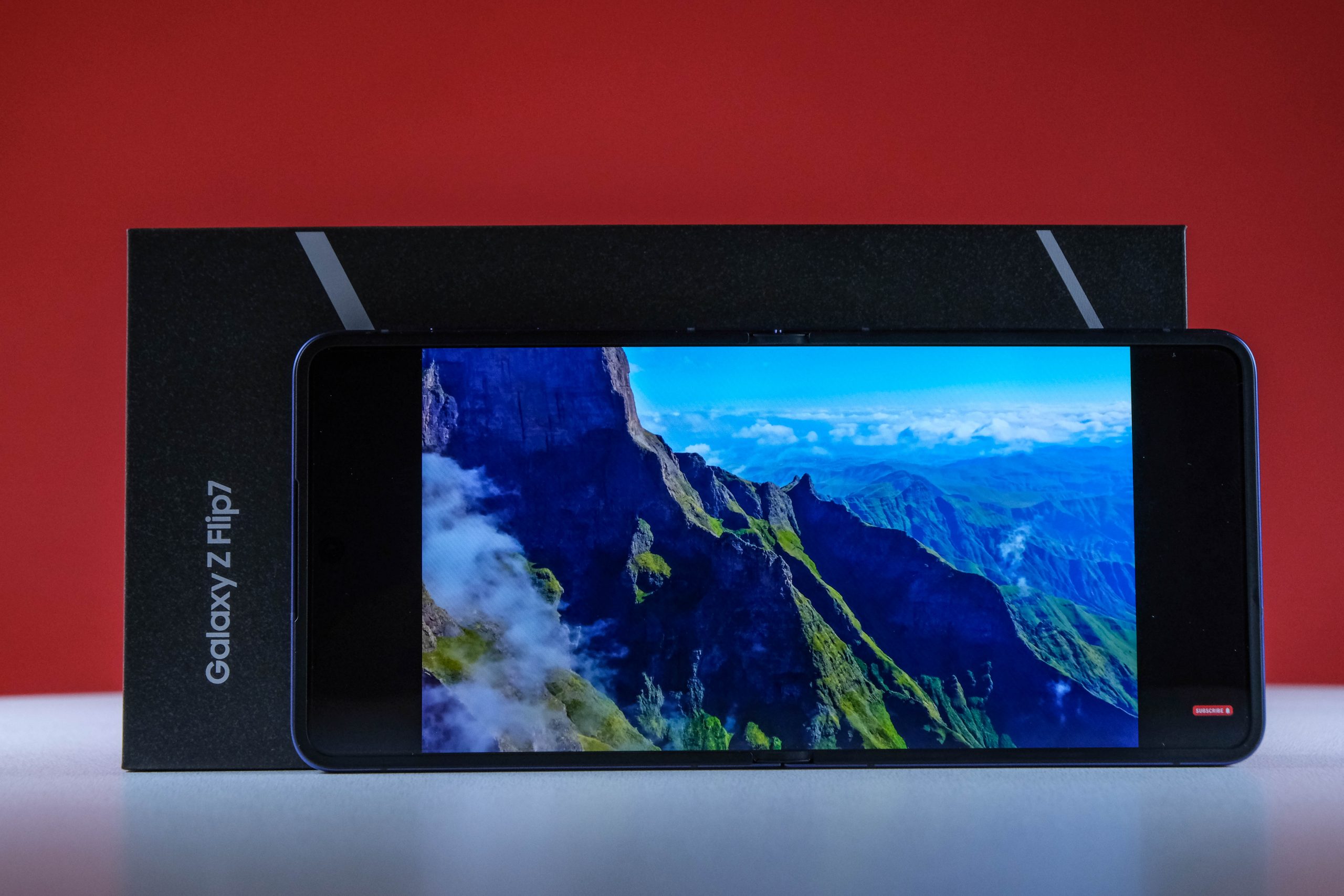
Screens are perhaps the most important part of a foldable phone, and whether you’re staring at the foldable 6.9in dynamic AMOLED or the 4.1in outer Super AMOLED, you’re in for a good time here. Both panels support 120Hz refresh rates and 2,600 nits of peak brightness. In real terms, you’ll always see what’s happening onscreen unless you happen to be caught by a solar flare. Fingerprints struggle to adhere to the screen, and when they do, the brightness usually overwhelms them. Colour reproduction reveals Samsung’s typical exuberance. If you’ve used a Galaxy S in the last few years, you’ll know just what you’re getting.
Samsung’s Exynos 2500 chipset drives both displays — at different times, obviously — backed by 12GB of RAM and either 256GB or 512GB of storage. If you’re annoyed about a lack of Snapdragon, that’s not really an issue. The Flip 7 may feature a technically slower chip, but it’s still speedy enough that you’ll barely notice the difference. Modern flagship phones are overpowered anyway, but if you’re accustomed to pushing your phones to the limit, this one will hit its personal wall a little sooner than the Fold 7’s Snapdragon Elite 8 would.
The 4,300mAh battery represents an upgrade over the Flip 6, but we still would have liked more time between charges. Regular usage will get you back from work before you need to top up. If you’re more manic with your photos and streaming video, you may see yourself charging at the office or in the car instead.
New year, same roster
 If you’re basing a Flip 7 buying decision on this year’s camera hardware and you already have last year’s model, the decision is made. Camera sensor choices have remained unchanged, with a 50MP main and a 12MP ultrawide occupying space on the outer/rear face. A 10MP lens occupies the hole-punch at the top of the inner display, and they’re… well, they’re Samsung cameras.
They’re just not the best Samsung cameras, but they’ll serve for most. Sharpness and dynamic range hold up in conditions down to low light, though this breaks down sooner than Samsung’s more camera-centric handsets will. The 10MP inner lens is almost superfluous, since it’s simpler to use the main camera and the 4.1in outer display to snap excellent selfies.
Samsung has included some software tweaks to even out your disappointment at the lack of changes, but don’t grab the Flip 7 based on that. If it hasn’t already, it’ll filter down to the Flip 6 as a software update.
What more do you want?
 Samsung’s foldables have always had a weak point — dust. This year’s IP48 rating offers extensive waterproofing and improved dust resistance, but we’d still keep it out of the kiddies’ sandbox. Durability overall is better than the earlier models, and this is one segment that always has room for improvement. If we ever see that IP68 rating, it’ll be tough to use a ‘regular’ smartphone again.
Samsung has also done its obligatory software upgrade, with a few new features jumping forward. One of these is the ability to shift the screen so there’s a 90/10% split. This lets you work on a main app and jump to a second by tapping the thin band, but this isn’t Flip-specific. It’s a function of Android 16, so you might already have it waiting in your current handset.
Galaxy AI is present, and the apps and functions are as slick as every other Galaxy headliner to release this year. How much you’ll actually use it is up to you, but transcribing voice notes and getting translations will speed up your day at least a little. Google’s own Gemini functions are also present and accounted for.
Samsung Galaxy Z Flip 7 verdict
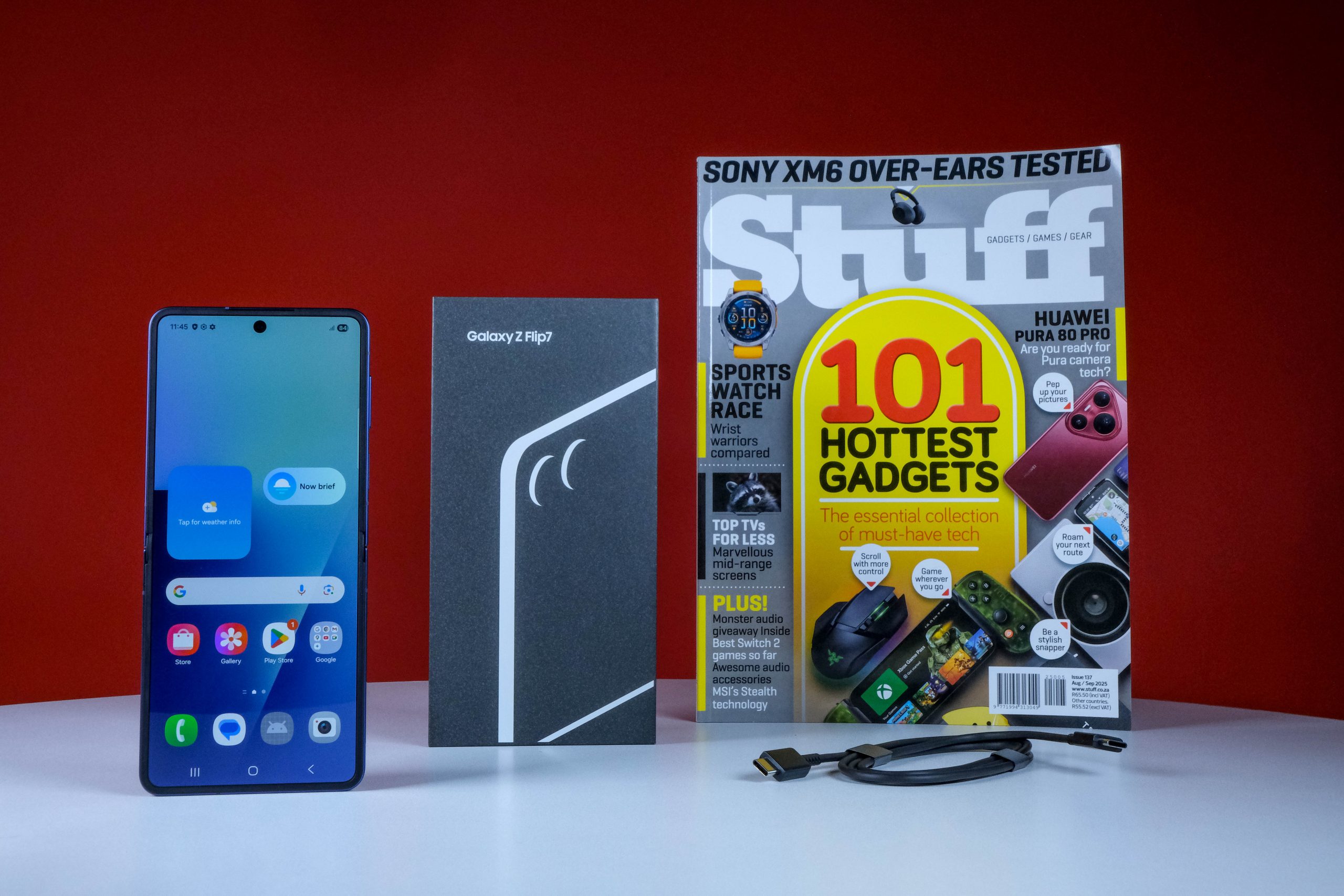 The Samsung Galaxy Flip 7 is a mixed bag of features in 2025. The processor has stepped back, the outer display stepped forward, and the cameras kind of just shuffled their feet and hoped you wouldn’t notice that they’ve moved. But this is certainly the best-looking Flip yet and, considering the line’s roots, that might be enough to prompt an upgrade.
If you are caught by the pretty face, you won’t go home with buyer’s remorse. There’s premium quality everywhere, enough to justify the gaping hole in your bank account. Samsung’s software implementation is very handy this time around, though it takes some getting used to. Galaxy AI is still a bit take-it-or-leave-it, but if you take it, it’ll find a few ways to impress.
Coming from the Flip 6? Skip this generation unless the larger outer display feels absolutely essential. From the Flip 5 and backwards, you’ll want to slip this upgrade into your pocket.