
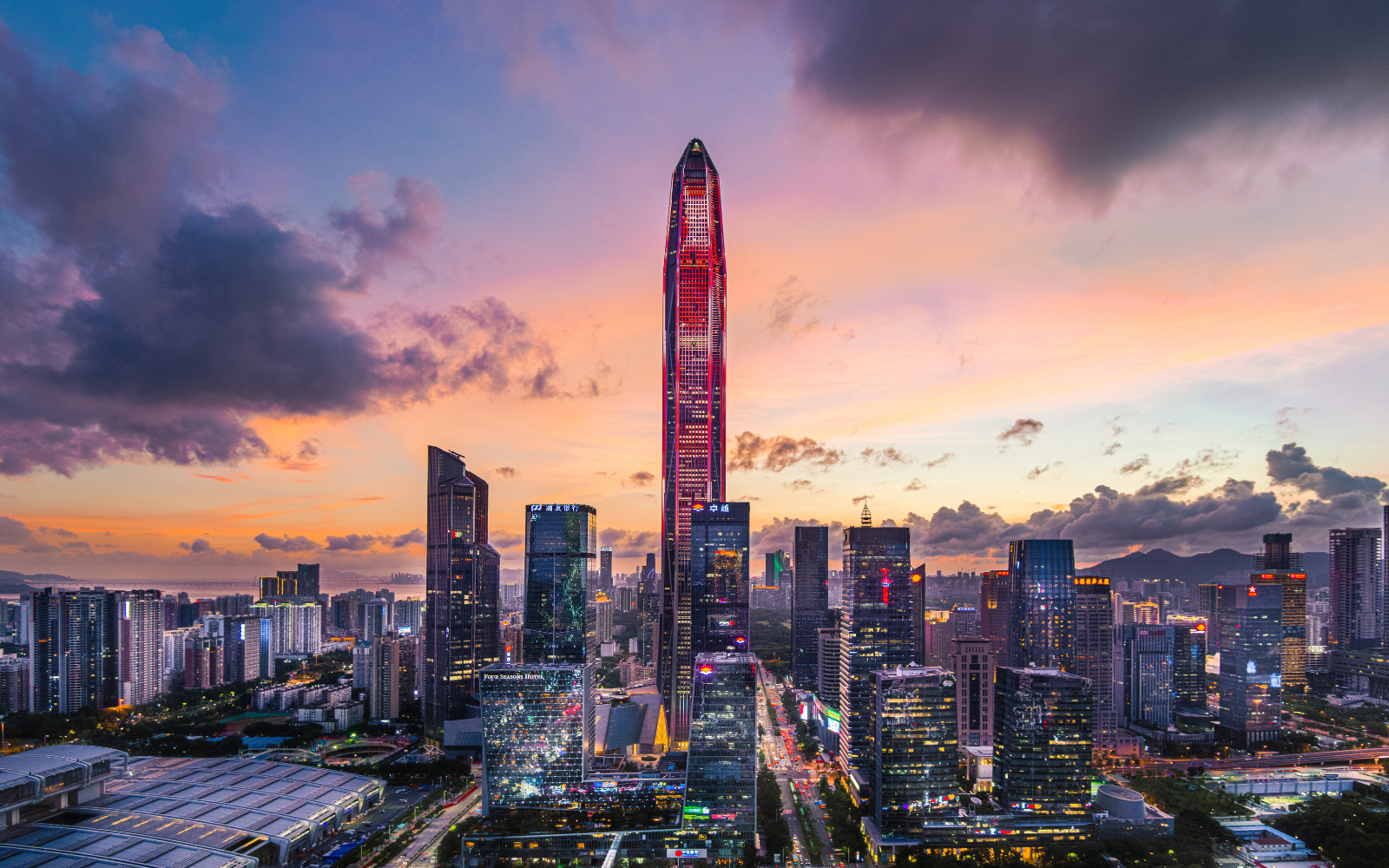
When I first went to Shenzhen in 2004, it was still being built. There was construction everywhere. Everything was new. Now, it’s arguably the most important single city in the global consumer electronics industry.
Between 80% and 90% of all gadgets are manufactured in this one conglomeration of a city. And now, it’s coming for the auto industry. Be afraid. Be very afraid.
By Shenzhen, I don’t just mean the city itself, but the business model it effectively represents. China is the most industrialised manufacturing country in the world and is excellent at it. It’s no longer the knock-off capital (okay, it is), but as widely known for its innovation as its ability to churn out highly complex, circuitry-laden gadgets.
The global consumer electronics market will generate $978 billion in revenue, Statista researchers predict, of which the “telephony” (read: smartphones) category accounts for just over half, or $504 billion.
That’s 6 billion gadgets being sold, mostly made in Shenzhen, this year.
Meanwhile, global car sales in 2025 will be up to 89.6 million vehicles, predicts S&P Global, but before US President Donald Trump threw a spanner in the works with his irrational tariffs. Of that, China is expected to buy 25 million cars, America will buy 16.2 million “units”, and Europe will buy 15 million cars. Give it a year, and China will sell double its nearest competitors domestically.
Cars were once a complicated, mechanically based engineering miracle of tens of thousands of moving parts. Now they’re a gadget. Okay, a really big, really expensive, still quite mechanically complicated… gadget.
What is the primary interface for the next generation of electric vehicles? A 10in/25cm touchscreen tablet in the middle of what was once called the dashboard.
Car sound used to be an after-market hobbyists’ haven. Now brands like Sonos appear in Audi and Volvo, wrapping Harman Kardon speakers around the front windscreen of its EX30. To open the E30X’s cubby hole – as it was called when I was a kid – you have to push a button on a touchscreen.
Your next car, especially if it’s an EV, owes more to Steve Jobs than Henry Ford.
Tesla may have set the early markers for this industry, while Musk’s self-destructive political shenanigans have done a lot to damage Tesla as a brand. But analysts consistently point out that its car models are old, and its big bet, the Cybertruck, has been a disaster.
Where once Chinese car manufacturers churned out cheap knock-offs – often glaringly obvious like the Landwind X7, a clear copy of the Range Rover Evoque – they are now leading the industry. Crucially, this is especially true for EVs and the small cars best suited to get around the cities in Europe, Asia, or Africa.
Five of the 10 top-selling EV car makers in 2024 were Chinese, led by BYD (founded in 1995 as a battery maker) with Tesla second (founded in 2003). Brands like Geely (third; founded in 1989), Changan (6, 1862), Li Auto (9, 2015), and Chery (10, 1997) appear alongside iconic brands like General Motors (4th, 1908), Volkswagen (5, 1937), BMW (7, 1916), and Hyundai (8, 1967).
The age of the respective establishment and challenger firms says it all. Changan, amazingly, has been around for 150 years, although it only started making cars in 1959. Its Lumin model was in the top 10 best-selling EVS in China last year.
Xiaomi, the smartphone maker, has expanded into smart home devices and EVs. When its YU7 SUV went on sale, a direct competitor to Tesla‘s Model Y, it logged 200,000 reservations in three minutes.
The Chinese EV industry is also far ahead of any other competitors in the race to solve the other great problem for the electric car era: fast charging.
In March, BYD announced its “Super E-Platform”, which can give its latest cars a five-minute charge that will let them drive 400km. “Our goal is to make EV charging as fast as refuelling a gasoline car,” said Wang Chuanfu, chairman of BYD, which aims to double its international sales this year, from 417,204 last year. It made 4 million EVs in total.
Until then, the standard has been Tesla’s own Superchargers, which take 15 minutes to give its batteries 320km of range. A month later, China’s CATL, which just happens to be the world’s biggest manufacturer of EV batteries, showed off its superfast-charging technology, promising 500km with only a short 5-minute charge.
Read More: Apple goes to war over an iOS leak
“Auto Shanghai 2025 wasn’t just a car show,” wrote the New York Times in May of the only global car show that seems to matter anymore. “It was a warning to the west.”
The Chinese car industry has poached some of the best talent and biggest names from the big European and American brands, just like Japanese and Korean car makers did before them. In terms of volume alone, the Chinese market is almost double the size of its two next regions, Europe and America.
Meanwhile, SA’s car industry is staring down the barrel of Trump’s tariffs and the EU’s looming carbon charges. SA vehicle exports to the US alone plunged nearly 82% in the first half of the year. Europe doesn‘t want gas-guzzling cars, and all of the SA production lines are geared toward this old technology. The markets SA manufacturers have been supplying are going to be swallowed up by Chinese makers, just as Shenzhen has devoured all the other centres for consumer electronics.
Our local auto industry is hobbled by many policy uncertainties, but also mindless taxes – like the 28% import tariffs for electric cars. South Africans have to pay nearly 30% more for an EV to protect a car industry that just lost over 80% of its US export market alone. Talk about shooting yourself in the foot.
- This column first appeared on Business Day