
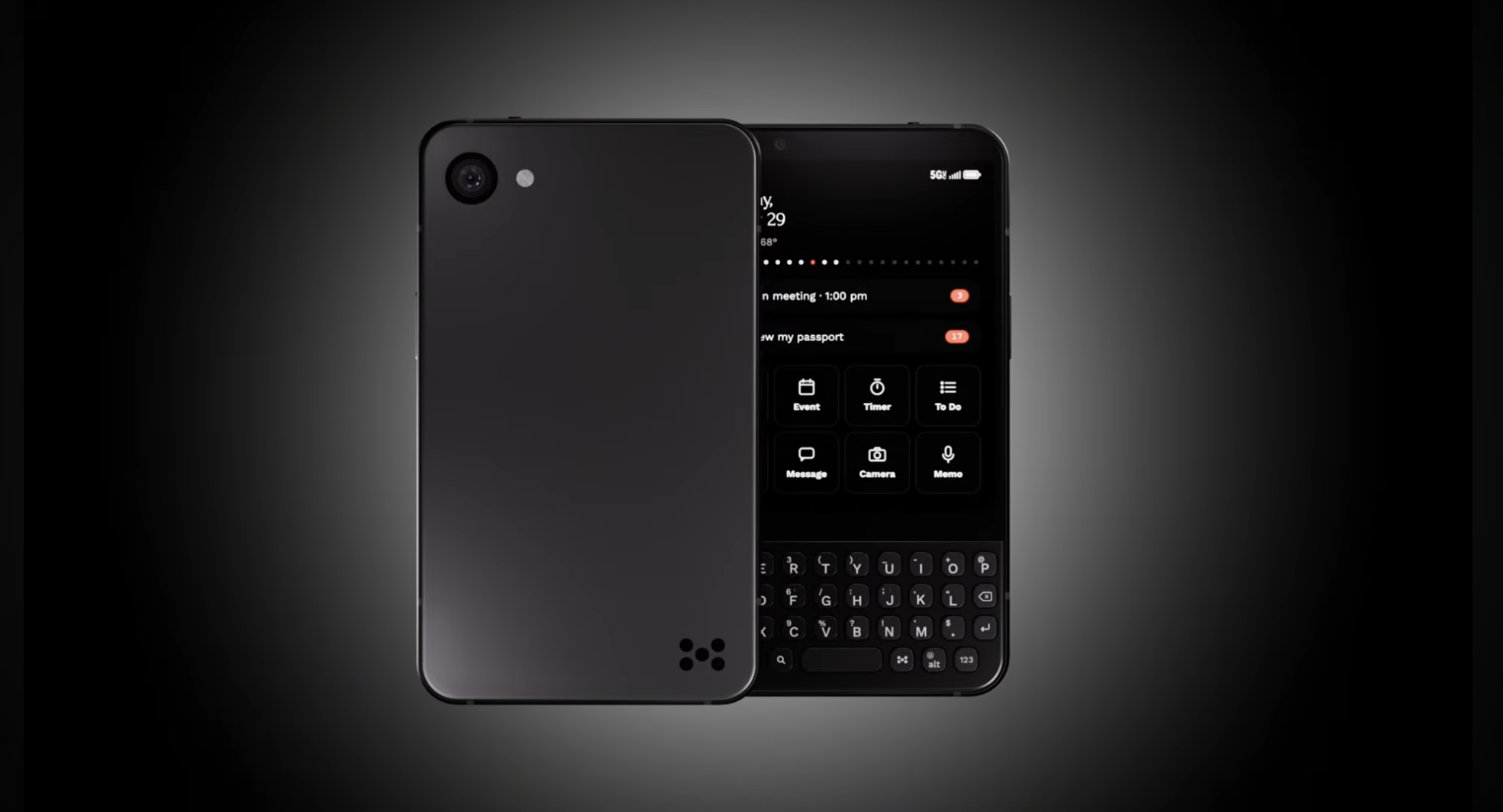
Last year’s Minimal Phone included an E Ink display and a QWERTY keyboard to go along with its take on not consuming every waking moment. The Minimal Phone 2 has decided to go in a slightly different direction. A more conventional direction, but you can still order one on Kickstarter if you want to.
Plenty of folks have, with the device’s $100,000 target having been exceeded eightfold since it launched a couple of days ago. The cheapest versions of the phone are all gone, but you can still snag one for around R10,000. If you’re quick. Whether it’ll make much difference to buying something conventional is up for debate, though.
Making a better Minimal Phone
The Minimal Phone 2 swaps out its E Ink display for something more modern — OLED. Specifically, a 3.92in 90Hz OLED with a resolution of 1,080 x 1,240. A Dimensity 8300 processor, 8GB of RAM, and 256GB or 512GB of storage are the other pertinent details. There’s also, if you have the cash for it, a 12GB/512GB version of the phone (R14,600) that’ll only be available via the Kickstarter funding period. It won’t wind up being sold after the fact.
The QWERTY keyboard and general design language are sticking around, but Minimal is giving its successor a camera upgrade. Plus a few others. A single 50MP f/1.8 camera occupies the rear (up from 16MP), with a 20MP front-facer (up from 8MP). The 3,000mAh battery offers 27W wired charging, plus 15W wireless top-ups. Most of the ‘minimal’ functions are software-based, with reduced clutter and other features designed to help you prevent waking the phone being front-and-centre.
The intensity of this data reduction is something users can set themselves, in case fewer notifications weren’t actually part of their future. There’s a Focus Hours function and screen-time limits that can be enabled or disabled. It’s still up to users to adhere to those, since they can just be flipped off. There’s one thing that might seriously appeal, though.
The Minimal Phone 2 also features a single physical switch that’ll tank all connections and location tracking. It’s programmable, to boot, so you can make it do other stuff like switch modes to suit where you are at that moment. Finally, the bootloader is wholly unlocked, opening the door to custom firmware installations. That doesn’t sound terribly minimal, but you can make it so. First, you’ve got to buy one, though.