
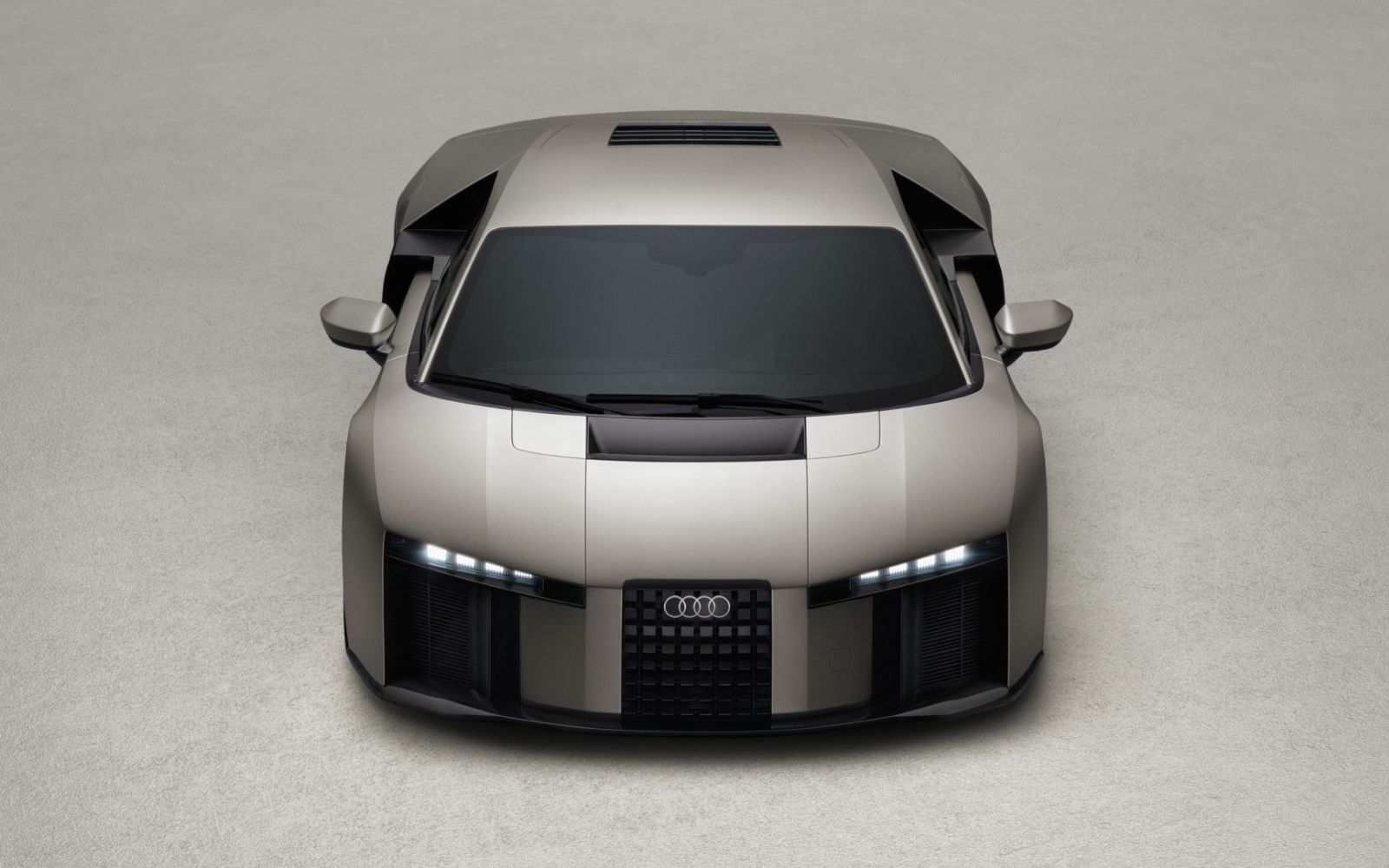
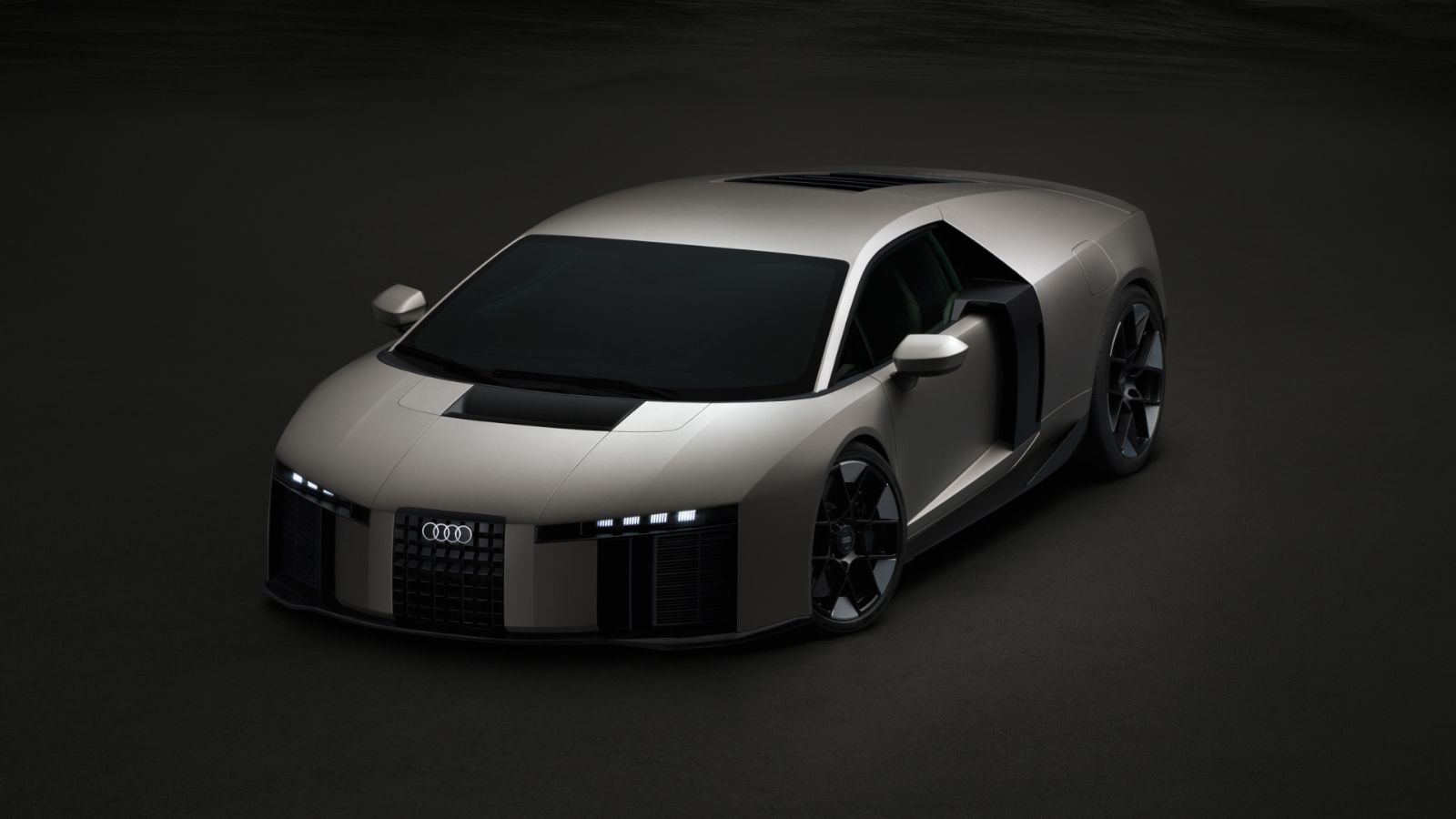
Audi has just announced the Nuvolari, its first hybrid supercar and successor to the iconic R8. It features a distinctive design language that R8 fans will spot from afar, and enough ‘F1-inspired’ technology that makes us question how the company managed to make it road-legal.
That probably isn’t something you’ll have to worry about. Not that this will be too expensive (it will be), but that Audi is only making 499 of them, with deliveries starting next year.
“With the Audi Nuvolari, we are accelerating technological progress,” says Gernot Döllner, Chairman of the Board of Management of AUDI AG. “It shows what is possible when the focus is on technology, performance, and execution through teamwork — and when we achieve progress together.”
Will the Audi Nuvolari juice be worth the squeeze?
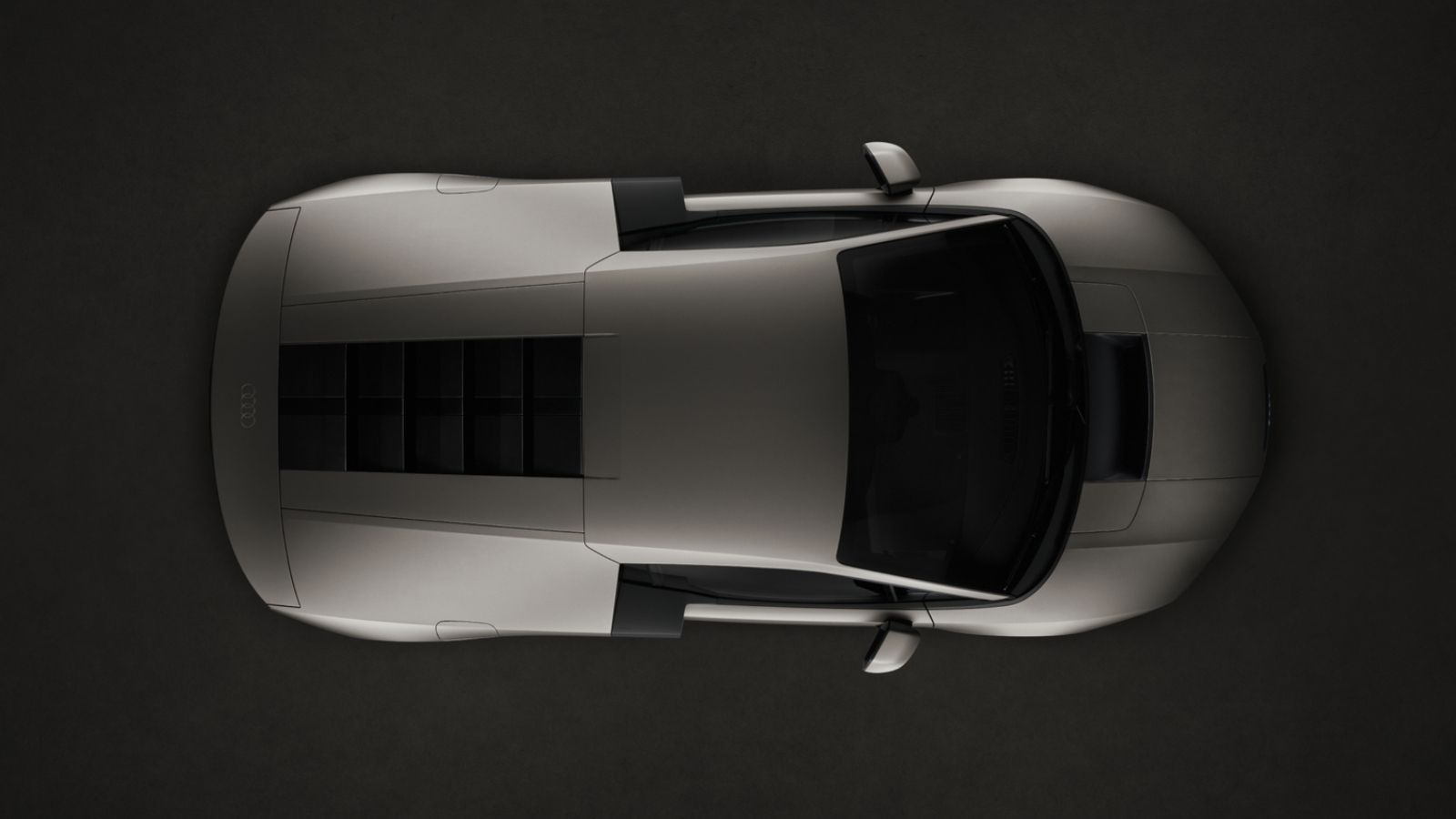
Audi’s new hybrid powertrain starts with a 4.0-litre V8 biturbo engine, which produces 588kW and 730Nm of power and torque, respectively. It’s joined by three “axial flux” electric motors, each producing 110 kW. There are two of those over the front axle, which together produce an astronomical 2,150Nm of torque. The electric engines draw from a lithium-ion battery with a gross capacity of 7.3 kWh. Altogether, the Nuvolari boasts a maximum system output of 736kW.
If you’re ever in a hurry, it will do 0-100km/h in 2.6. If you’re in a big hurry, 0-200km/h will happen in a claimed 6.8 seconds. It maxes out at “more than” 350km/h. So… 351km/h?
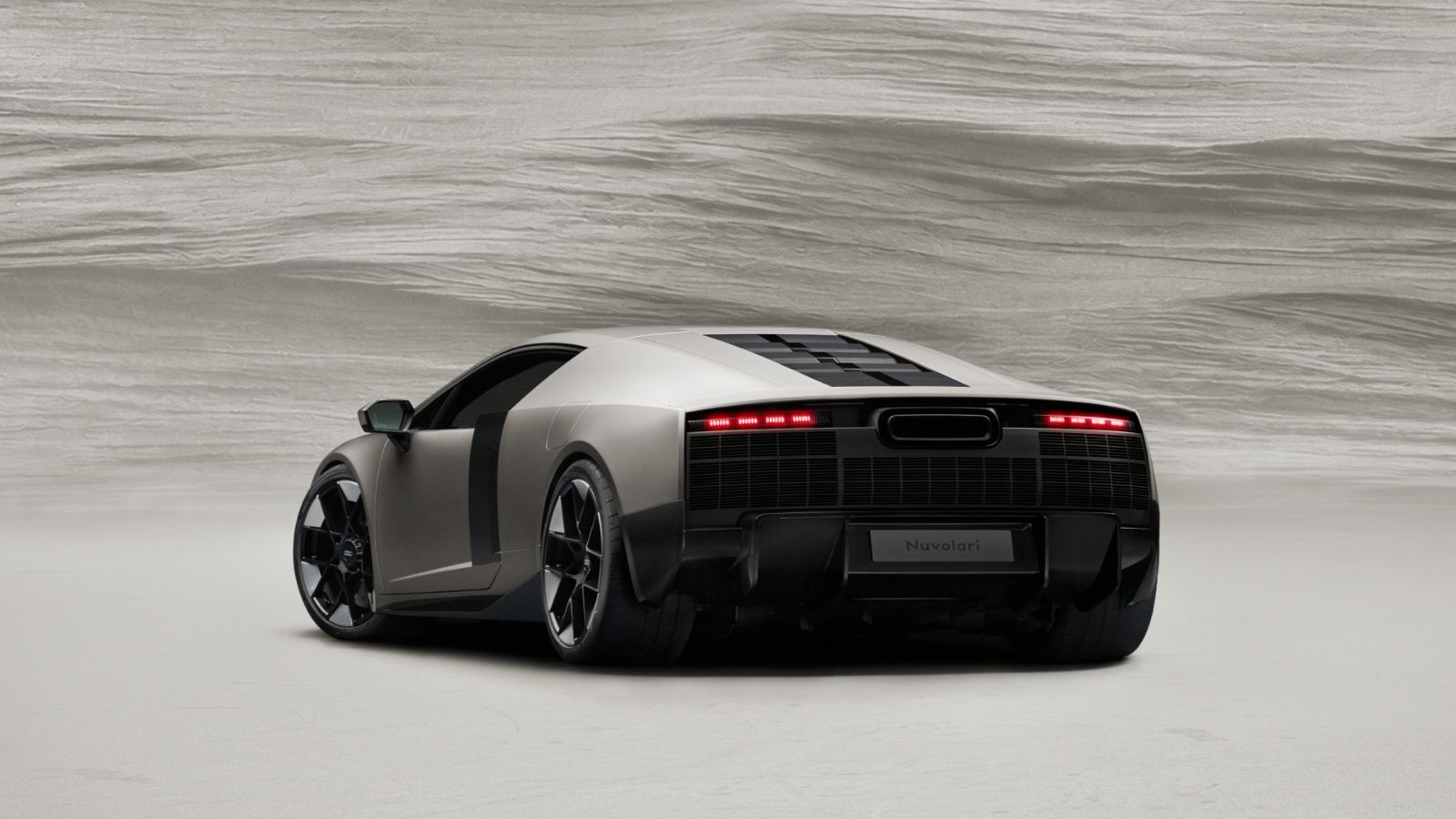 Since entering the F1 scene this year, it seems like Audi was looking for an excuse to use F1 tech in its next street car. The Nuvolari uses bits of active aerodynamics that work as a system to adjust downforce, drag, and aerodynamic balance in response to driving conditions, which Audi says maximises the vehicle’s stability and precise control.
The best bit of this active aerodynamic system is the deployable adaptive rear wing. It’s capable of operating in three conditions: closed, low downforce, and high downforce, and generating up to 400kg of downforce in certain conditions. Then there is the breaking system that sports an “energy absorption capacity of up to 2.8 megawatts,” which Audi says is “on par with a current Formula 1 car.”
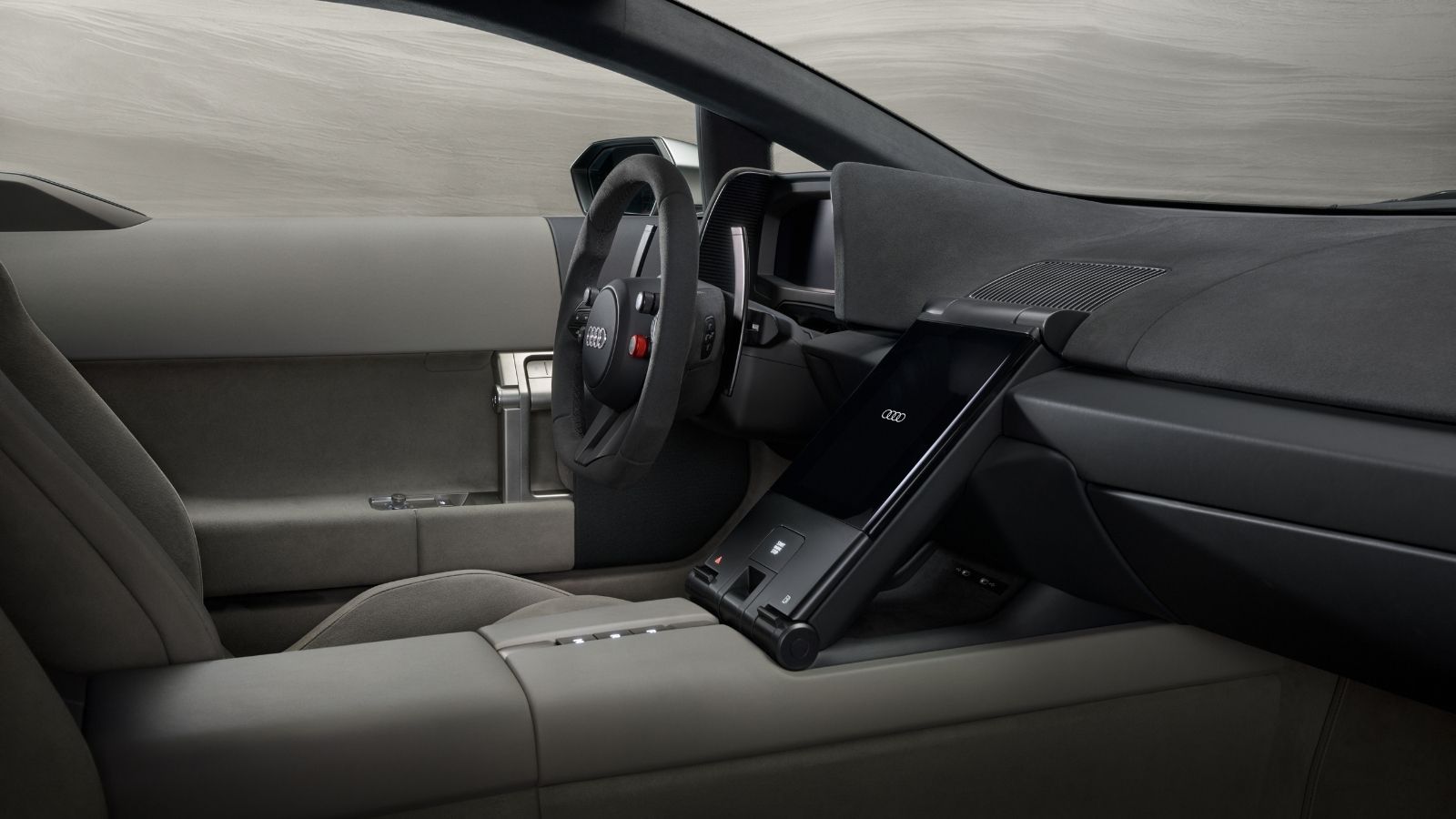 The interior is suitably sharp. It features Audi’s new signature colour, Titanium, with minimal distractions and controls “directly within the driver’s field of view”. One of those is a manual DRS button (Drag Reduction System), like the F1 cars use.
While the design might not be everyone’s cup of tea, we don’t think it will receive the same backlash as Ferrari’s latest vehicle did.