
When you type John Ternus into Safari, it automatically capitalises the surname of the new Apple CEO.
I found this out by chance this month, as arguably the most prestigious CEO mantle was passed to the 50-year-old head of engineering at the company that pioneered both the personal computer and the smartphone. Known for its beautiful design, it ushered in both of these revolutions, first the PC through the early Macintosh and then the iPhone.
Now we have an annual iPhone upgrade cycle. This landmark device – which was not just the first smartphone but the first that used touchscreens to magnificent effect – earns about two-thirds of Apple’s revenue and the majority of its profit. After the Mac itself, the iPhone is truly Steve Jobs’ second coming.
Jobs, who was famously booted from his own firm, returned as CEO in 1997 and restored Apple to its former glory – before setting up its stratospheric run of great products and even greater shareholder returns.
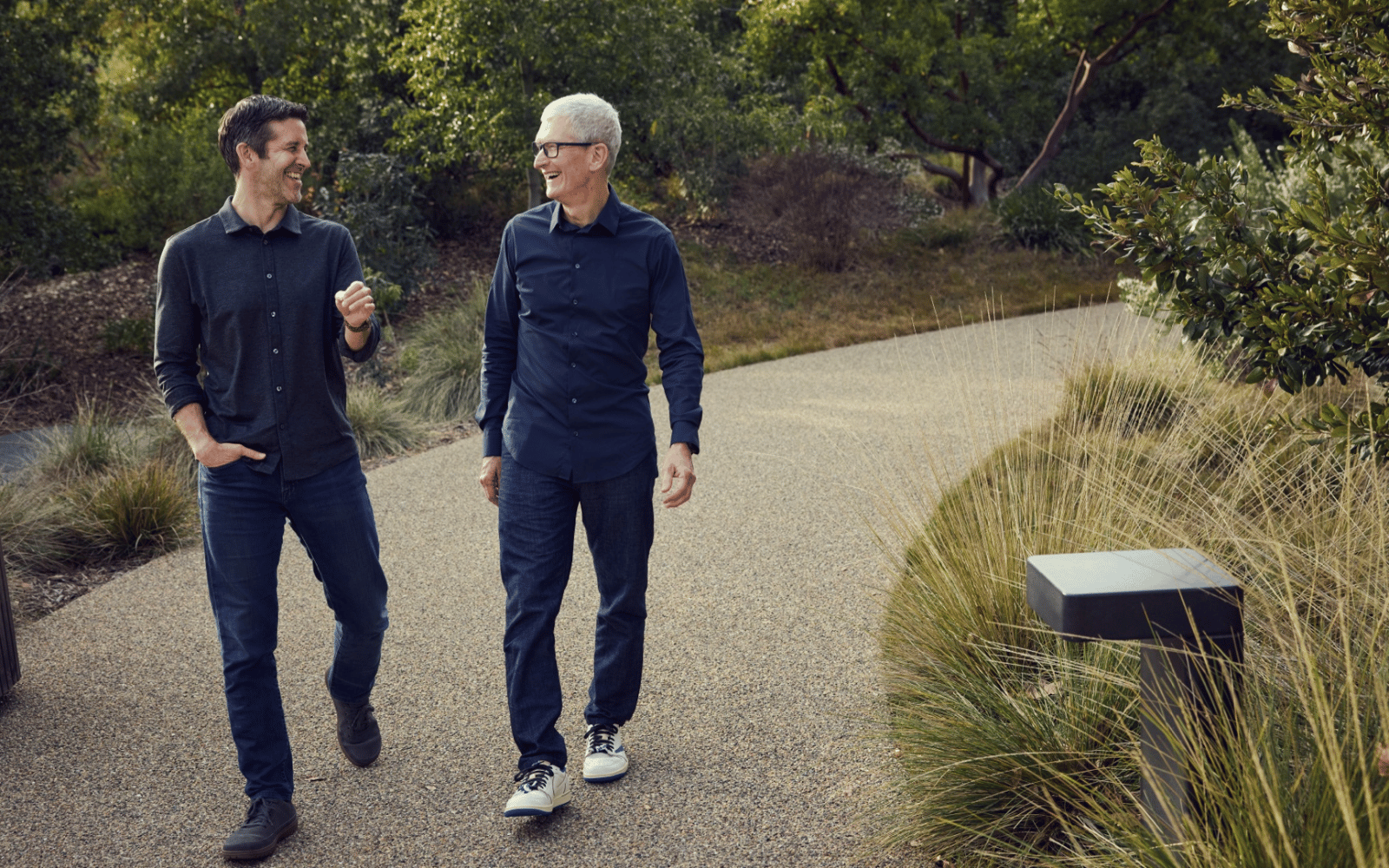
Ternus, a mechanical engineer who joined Apple in 2001, has worked his way through the engineering ranks and will be the eighth CEO. At 50, he’s the same age as the man he replaces, Tim Cook, was when he took over from Jobs.
“If you want to make an iPhone every year, Ternus is your guy,” former Apple executive Cameron Rogers told Bloomberg.
The first big job for the “affable mechanical engineer,” as he was described by the Wall Street Journal, will be to fix Apple’s very poor artificial intelligence offering and catch up with all the other big tech firms, which have a significant lead.
While Jobs will forever be remembered as the brains and design genius behind Apple, it’s his (second) successor, Cook, who propelled the little $350-billion computer company into the $4-trillion iPhone-making behemoth that it is now. That’s a tenfold increase – or “10X” as the cool kids like to say. Even more impressive is how Apple’s annual revenue has surged to $110-billion, quadrupling from what it was when he took over.
In the 15 years since Jobs died in 2001, Cook, now 65, has presided over an epic story of creating the world’s first company to reach the trillion-dollar mark (in 2018). He then quadrupled that to its current stratospheric valuation. During his term as CEO, Apple’s stock gained almost 2,000% in value. That’s hard to beat as a corporate success story.
Steady hand
Cook, the quiet CFO with a penchant for supply chain management, has proved to be one of the greatest business minds of the golden era of tech firms. He has perfected Apple’s just-in-time supply chain, expanded into China, diversified production out of China, and – somehow – kept US President Donald Trump onside. Openly gay, Cook has continued championing the diversity and empowerment rights that the Trump Administration is busy trammelling.
While Jobs launched the groundbreaking iPhone, Cook is often accused of not creating any great products. But under his guidance, Apple launched the AirPods and Apple Watch, which are big revenue streams in their own right. The Vision Pro headset, on the other hand, has been an expensive failure.
Most importantly, under Cook, Apple has evolved into a service business. Make no mistake, the iPhone is still the star of the show. But when Cook took over in 2011, there wasn’t a line item for “services”. The only digital offering was iTunes, which had annual revenue of $6-billion.
Services now include iCloud, the App Store, Apple Music, Apple TV+ and News+. In 2025, it brought in $109-billion in revenue, a 14% increase from the year before. In the last quarter of 2025, services raked in $30-billion (also an annual 14% jump) and made more money than the Mac, iPad, Apple Watch, Home, and all the accessories combined.
That’s a lot of people watching Ted Lasso.
AI device
The talk of Silicon Valley is who will invent the iPhone of the AI age. Will it be a new format like the now-defunct Humane AI pin? Or will it be augmented reality glasses frames like those made by Meta?
Nobody knows yet, but everyone is scrambling to find the new holy grail gadget.
Last year Sir Jony Ive’s year-old startup, io Products, was bought by OpenAI for $6.4-billion, which resulted in Altman and Ive in a cringeworthy pose and much speculation about what the replacement for the smartphone might be.
A quick win for Ternus will be bringing some real intelligence and actual value to Siri, the much-maligned voice assistant, which is a pale shadow of what Samsung offers, for instance.
“Siri is probably one of the worst tech products of the last 10 year,” said NYU professor Scott Galloway, on his Pivot podcast. “Apple has the world’s best supply chain and world’s most embarrassing AI assistant.”
The best strategy might be to open up Siri to multiple other AI services. Apple currently uses ChatGPT for Siri, but has signed a deal to use Google’s Gemini. Apple is far off the leading AI firms, but it has over 1-billion iPhones and iPads for which it can charge a hefty price to be the gatekeeper.
Google pays to be the default search engine, and you can be sure Apple knows it is the gatekeeper to the 1% of smartphone users. Ternus has inherited a well-oiled money-making machine and will need to readjust it for this AI-infused era. Good luck.
- This column first appeared in Business Day