

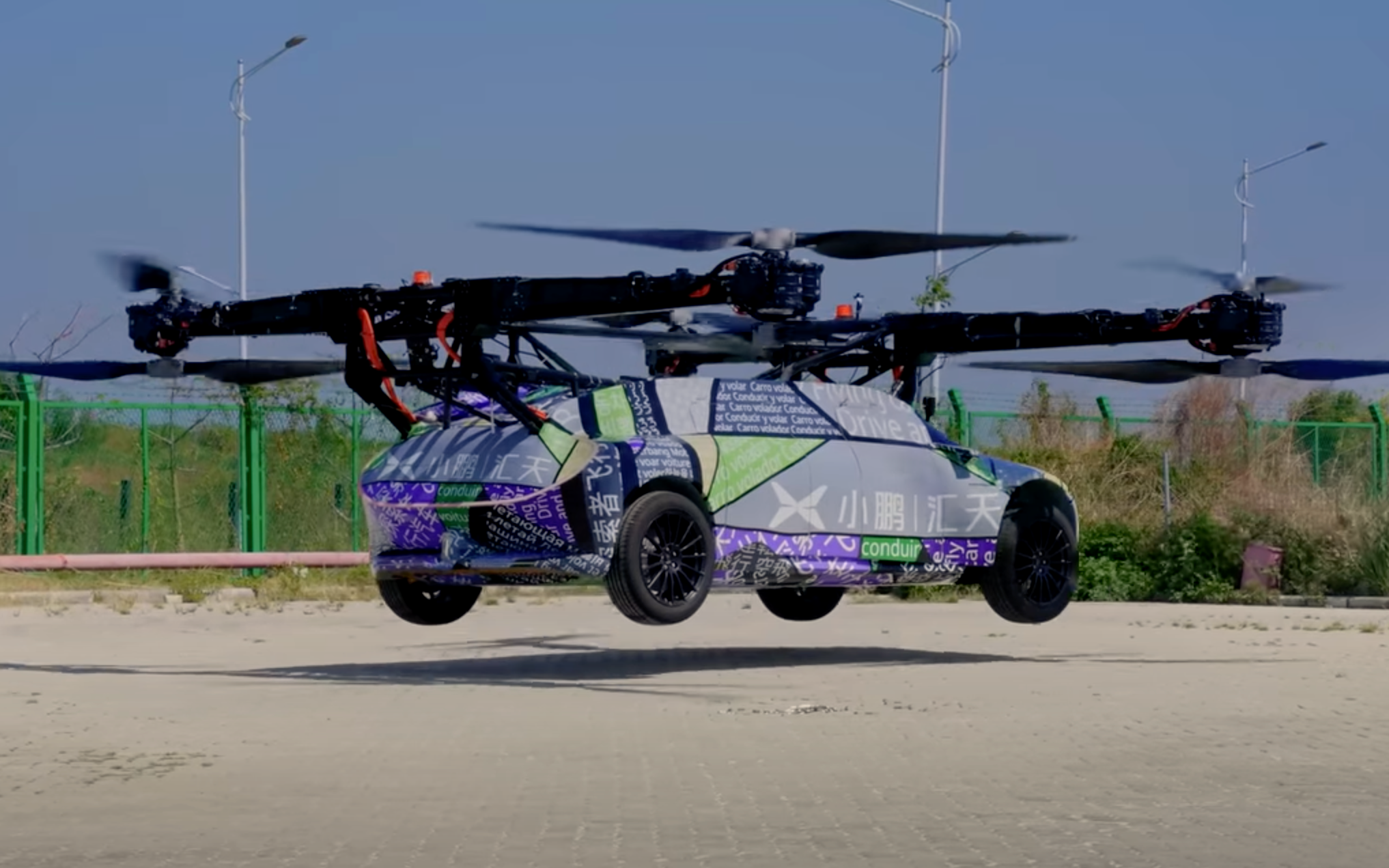
Chinese company Xpeng is extremely ambitious. Its recent humanoid robot outing displayed highly detailed, human-like movement (and a slight technical glitch). Its flying car project, which has been in the works longer, could take to the skies just after its droids head to market.
Xpeng-sive venture
The company’s president, Brian Gu, speaking to Reuters, believes that Xpeng’s flying vehicles will enter production in 2027. Its humanoid robots, on the other hand, are supposed to become available towards the end of this year. Production of the first of its units, for which Xpeng has more than 7,000 orders, likely won’t wind up in the hands of private buyers, however.
Instead, Gu reckons that it will produce hundreds of vehicles like its X3 flying car. These will be used for “tests around the world with partners,” to see how feasible flying robotaxis are as a concept. The Chinese company isn’t the only one with its sights on that segment, either. Joby, Airbus, and even Uber are considering ferrying people around in the air.
Ultimately, though, Xpeng believes its humanoid robots will account for most of its revenue. The ‘bots will act as receptionists and in other client-facing roles, at first. Brian Gu thinks that in the next decade or two, demand for humanoids will outstrip the money made from its automobiles. Initially, this demand will come from China, but Xpeng thinks that international expansion is also on the cards.