

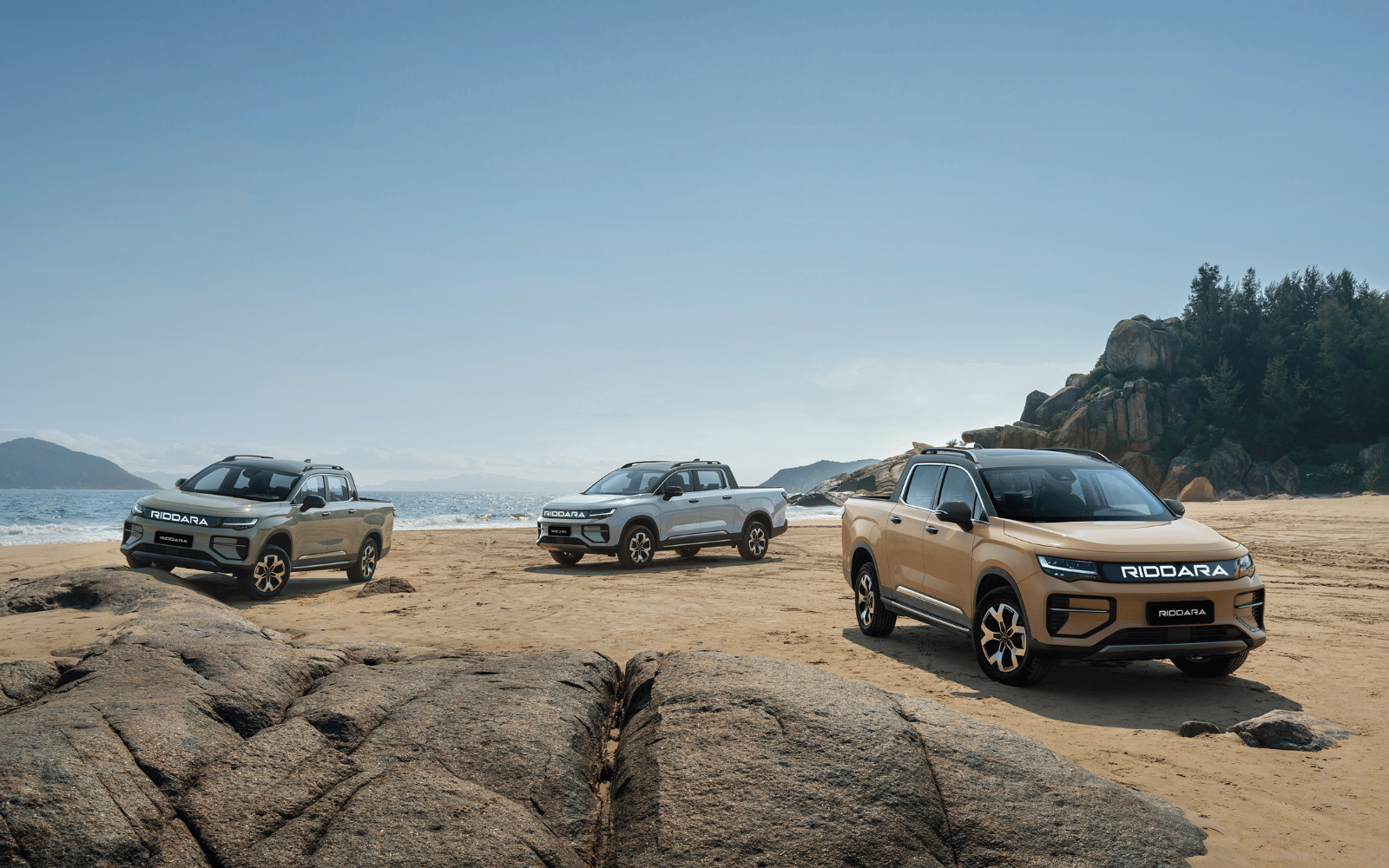
Geely’s back at it again. After launching the Geely E2 at a starting price of R340,000, it earned itself the title of South Africa’s cheapest EV. Now, the company’s got what looks to be another winner on its hands in the form of the Riddara RD6, the country’s most affordable fully electric double-cab bakkie. It’s… still not cheap.
Especially if you’re gunning for the most competent RD6. The range headed for South Africa offers three trim levels, the cheapest of which — the RD6 Aspire Econ 2WD — is priced at R612,000. Aim for the middle of the road, and you’ll get the Aspire Econ 4WD for R682,000. Finally, the Apex 4WD tacks on an extra hundred grand.
Good Riddara
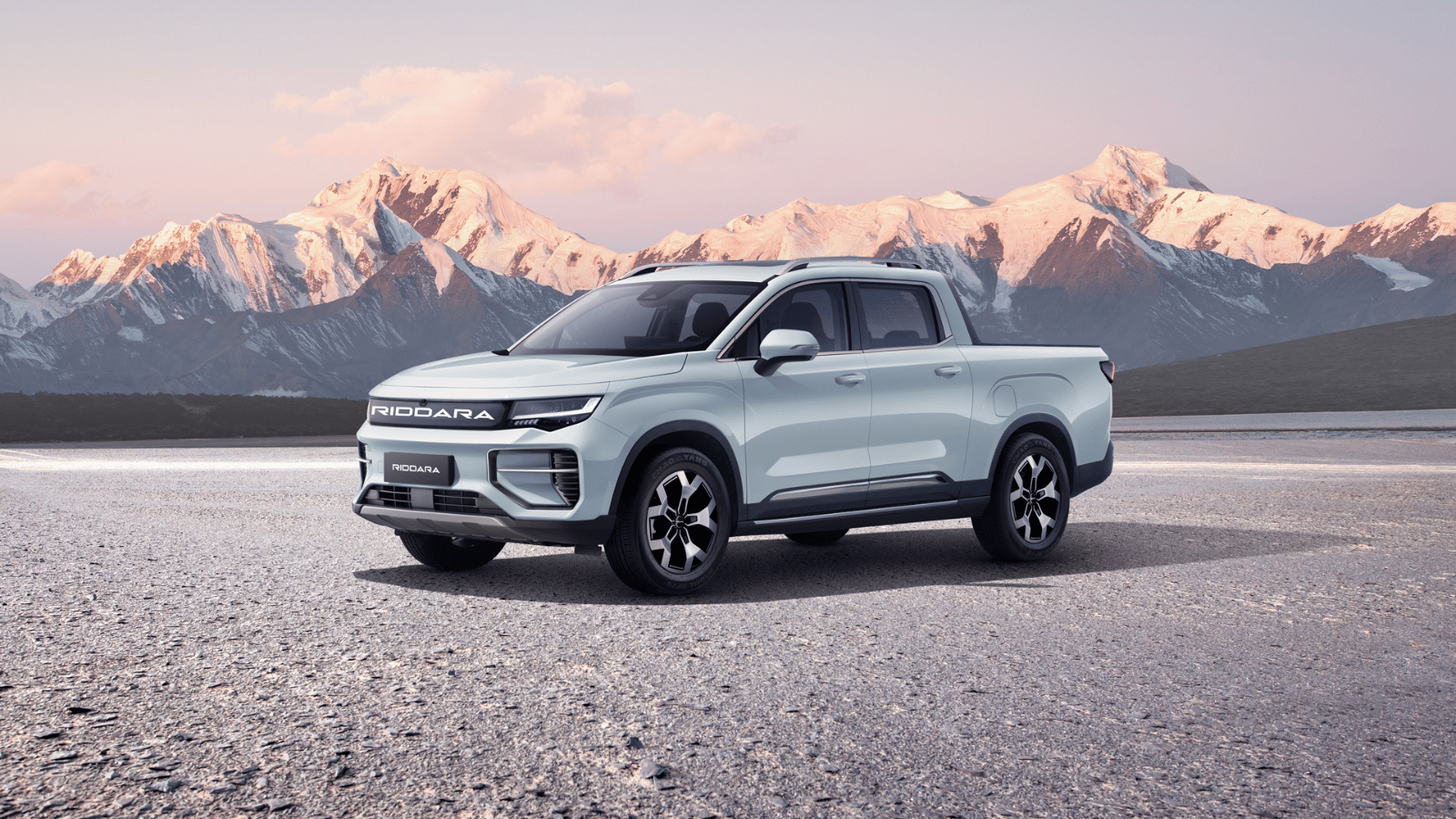
Starting from the bottom, the Riddara RD6 Aspire 2WD rides on 17in wheels and a single electric motor on the rear axle, providing 180kW and 309Nm of power and torque, respectively. It’s got the usual three drive modes — Eco, Comfort, and Sport. It’ll handle just fine on the highway, with Geely claiming a top speed of 160km/h.
We’re less impressed by the 63kWh lithium-ion phosphate (LFP) battery, which Geely reckons is enough to get the bugger 369km away before needing to charge. That’s measured on the NEDC cycle, however, slightly fudging the numbers. On the more common WLTP cycle, estimated range takes quite the knock, providing closer to 314km in a single go. It’s rated for 90kW DC charging, taking roughly 32 minutes to get from 30% up to 80%.
Put the pedal to the metal, and the Aspire 2WD will take nine seconds to reach triple digits on the speedometer. That’s… not bad, assuming it lives up to Geely’s promises of securing a 1,115kg payload and a towing capacity of 2,500kg. It’s a bakkie, after all. An entirely electric one, which makes up the bulk of what you’re paying for here.
Read More: Leapmotor’s B10 hybrid EV lands in SA starting at R500,000
Upgrading to the 4WD will unlock a few key benefits. Like the 73kWh LFP battery, bumping the claimed range up to 332km on the WLTP cycle. It’s running on a dual-motor system now, generating a combined motor output of 280kW and 485Nm — far closer to the sort of specs prospective buyers would be looking for from a bakkie.
You’re still getting the same 90kW charging spec, though it’ll now supposedly take 30 minutes to hit the 80% mark. It’s slightly more capable of being a bakkie, offering a 1,235kg payload and 3,000kg towing capacity. Geely’s also thrown in a wider range of drive modes, adding Sand, Mud, Off-road, and Wading to the mix.
Inside the Aspire model sit rear parking sensors, a reverse camera, an 8.8in digital cluster behind the wheel, and a marginally smaller 8in screen floating above the centre console. Drivers get a six-way electric seat, too. The Apex, as expected, kits out the rest of the interior far more lavishly.
Apex predator?
The flagship of the Riddara family, AKA the Apex 4WD, lands with a significantly more powerful dual-motor all-wheel drive system, plying the roads with a combined output of 315kW and 595Nm. It’ll hit 100km/h in half the time as its Aspire cousin, managing the feat in 4.5 seconds. If you’ve got Highway Terrain (HT) tyres, that is.
It’ll go further, too, but that’s to be expected. Geely’s figures point to a claimed 424km NEDC range on the same 73kWh battery pack, shrinking closer to 360km on the WLTP cycle. If you’re hauling your family cross-country, this is the one you’ll want, with a 70l front trunk, 48l storage hidden beneath the seats, on top of the 3,000kg towing capacity. Its payload abilities have taken a beating, falling to 1,030kg compared to the Aspire 4WD.
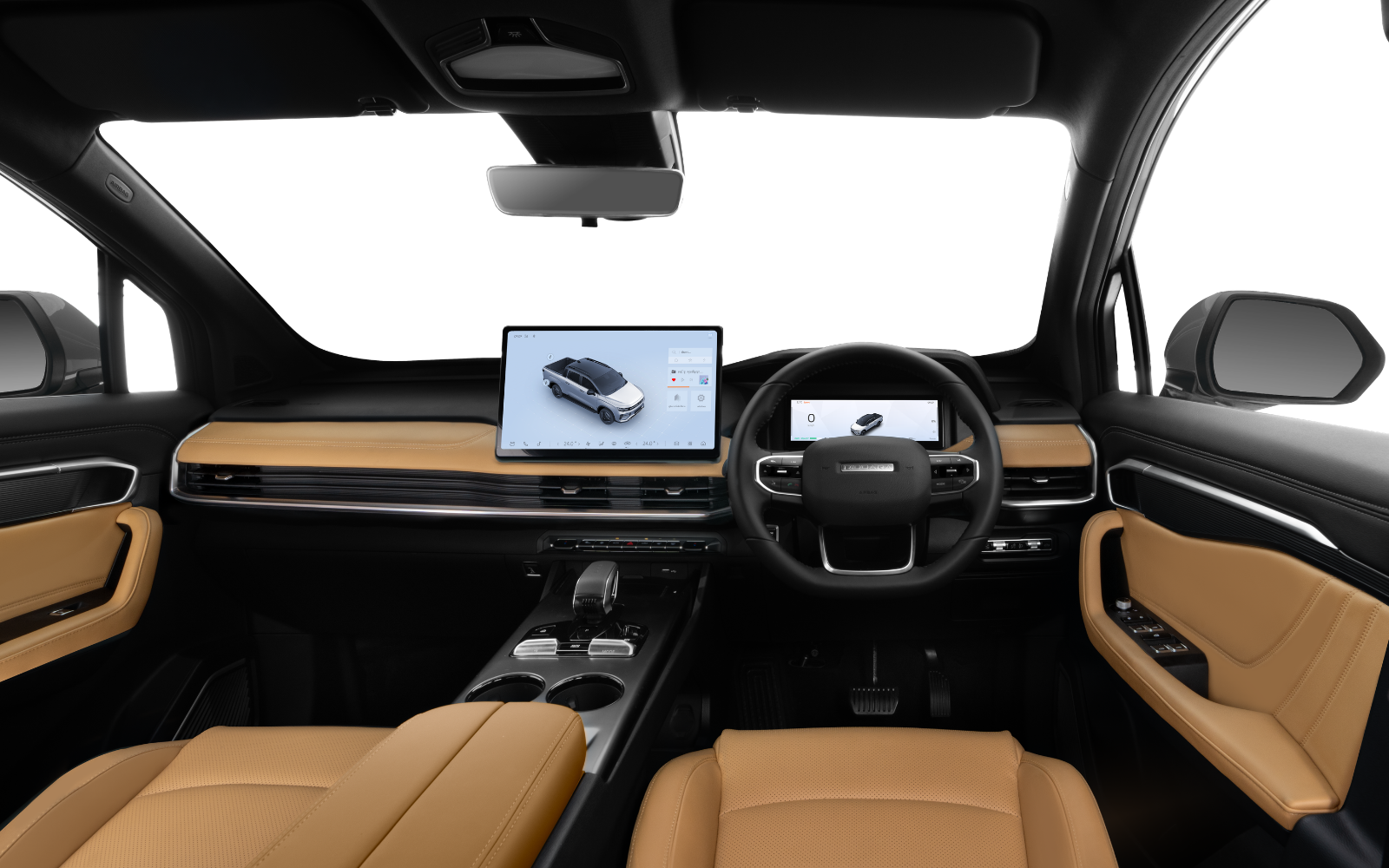
The Apex derivative retains the internals of the Aspire range, but bumps the centre console screen up to a 14.6in display, while the one behind the wheel is now 10.2in. It’s also packing adaptive cruise control, automatic emergency braking, lane-assist technology, blind-spot detection, and a whole lot of other safety features.