

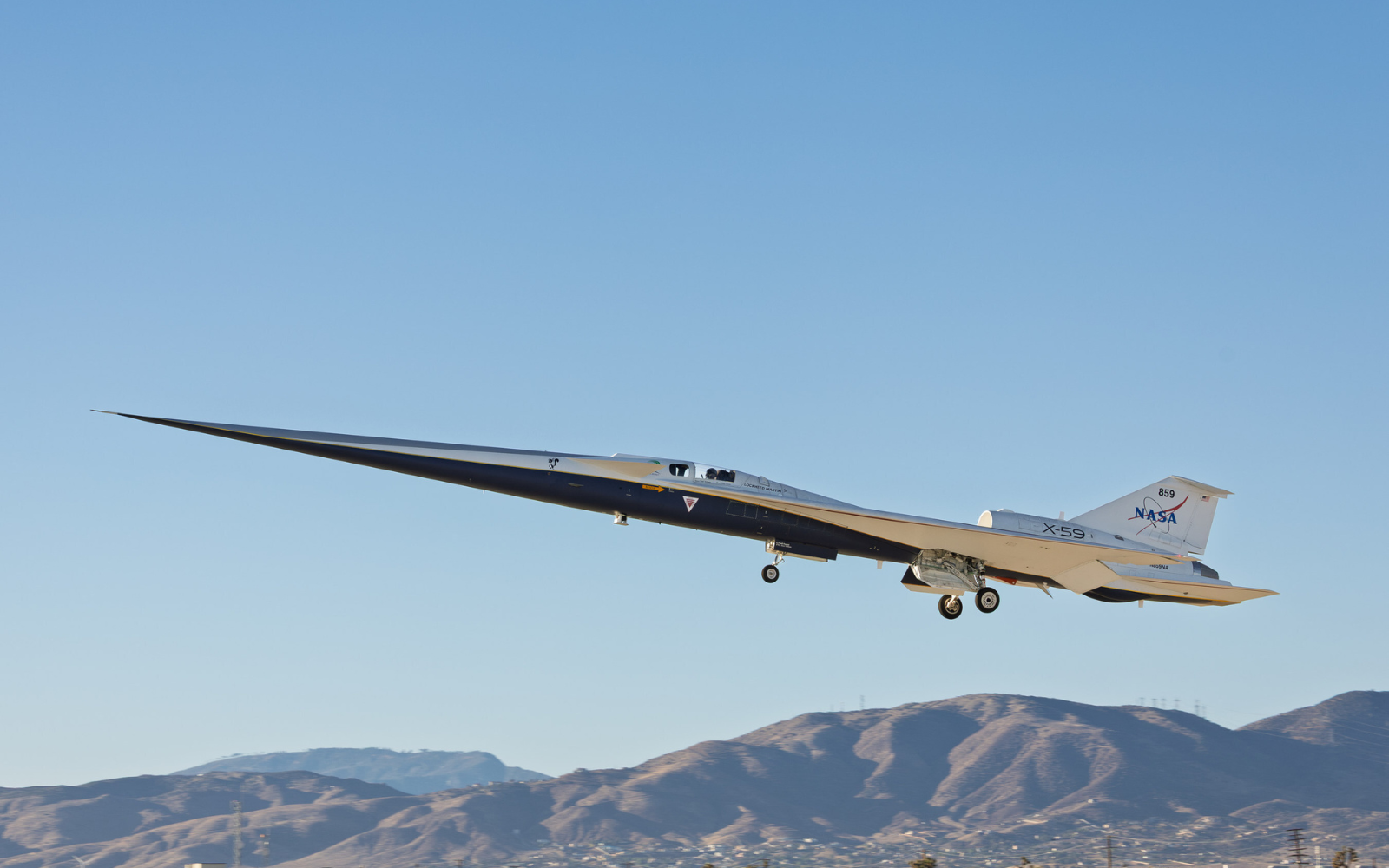
We’ve been following the development of NASA’s X-59 aircraft, if only because it holds the potential to reintroduce supersonic air travel to the masses. The Concorde was ferociously expensive, but also incredibly quick. One of the problems with it was the sonic boom the airliner generated. This made it unsuitable for flight over most inhabited areas.
The X-59 intends to sidestep the latter problem, at least. NASA’s engineers are trying to generate a ‘quiet’ sonic boom, without the effects of a purely ballistic approach. A new video posted on several of NASA’s YouTube channels shows the aircraft in action during its recent tests.
X-59 go boom
The video shows NASA’s experimental plane in action, from pilot and ground-crew prep to takeoff, flight, and landing. What it doesn’t show — and what we’re unlikely to see for a while — is the supersonic ‘thump’ the plane is supposed to make. Planned future tests will include a NASA F-15 escort to measure the sound output while also masking it from the ground. There’s at least some secrecy still involved.
There are no radical manoeuvres performed by the X-59 in the video above, unless you count the contrail it leaves when up to speed. The difficulties involved in taking off and landing, thanks to the elongated spike at its front, are readily apparent, though. It’s also obvious that most of the footage shown was shot at slower speeds than the jet is capable of.
The X-59’s timeline isn’t public knowledge, but it’s scheduled for more test flights in 2026 before being allowed to start generating sonic thumps in 2027. After that, it’ll travel around the States to test the effect of its design on humans. More or less. The tricky bit there? Finding locations with a three-kilometre-long runway for takeoff and landing.