
Sleep is so important for our health that Discovery is incentivising its health and insurance customers to get more of this “nightly program that keeps the brain and body working”.
Discovery has run a three-year research project on sleep and matched that data with all the other data Discovery collects from its members and policyholders. This includes data from health trackers, smartphone apps, vehicle telematics, and all the insurance claims (health and vehicle) and other data it collects.
If you understand how Vitality Active Rewards work (I never did), then you will get Vitality Sleep Rewards. This is calculated on your Vitality Sleep Score, which is a score out of 100, taking in the regularity, length and quality of your sleep.
Oura farm while you sleep
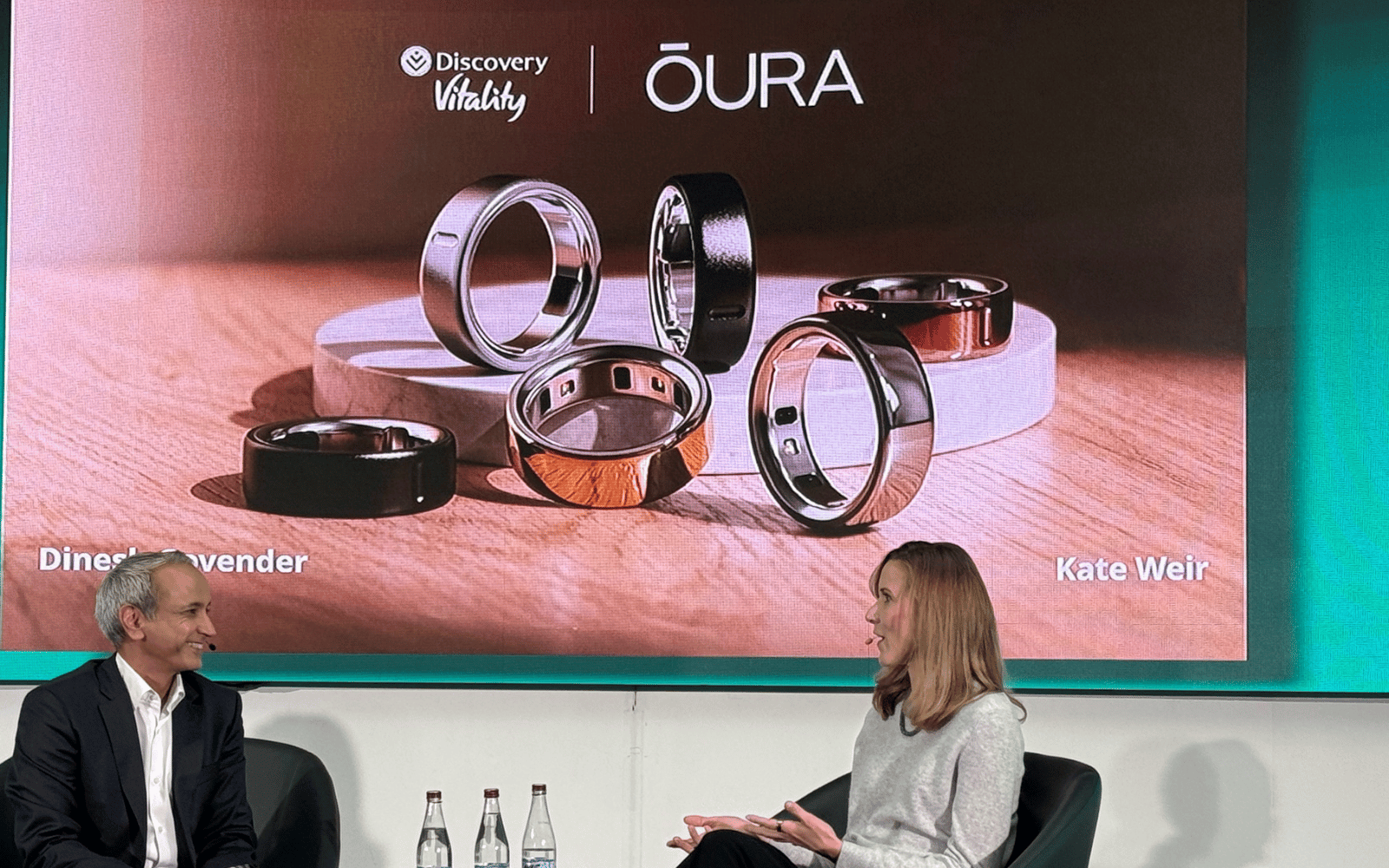
To help track this new sleep score, Discovery has partnered with Oura, which makes the premier smart-ring (yes, Stuff reader, by now you should know these handy little gizmos are a thing). Discovery users can get a 4th-generation Oura ring, which it says has a battery life of up to eight days. They go on sale today after arriving in the country last Thursday, says Discovery Vitality CEO Dinesh Govender.
The Oura Ring 4 is 2.88mm thin and 7.90mm wide (think a chunky wedding band), has a battery life of 5 to 8 days, and weighs about 5 grams. It charges in 20-80 minutes.
Discovery SA CEO Hylton Kallner says the insurer has built up a comprehensive and multi-dimensional database of over 1.4 petabytes over the last 25 years. That’s 1.4 million gigabytes, adds Kallner, also the CEO of Discovery Bank.
Discovery funded a three-year study with 105,000 participants, measuring 47 million nights of sleep, for its impact on health. It found that when people had seven or more hours of regular sleep, they had a 24% improvement in average mortality, while they saw a 7% reduction in hospital claims. Conversely, says Kallner, “poor sleep is linked to a 36% higher risk of more vehicle accidents and contributes to workplace errors”.
The magic number is between seven and nine hours of sleep a night, according to Discovery’s research, which involved sleep scientist Dr Matthew Walker, author of Why We Sleep. Our lives are “wonderfully enhanced by sleep when we get it or monstrously disrupted when we don’t,” he said via a video statement at the launch in Johannesburg on Tuesday.
Discovery will reward you
The importance of sleep was underlined by Stellenbosch University’s Professor Nadine Rampf, who spoke at the launch event. “Sleep is not downtime. It is active biology,” she says. “You spend a third of your life doing something you can’t remember. But you can’t survive without it. Sleep is the nightly program that keeps the brain and body working.”
After numerous questions from the audience, she answered that one burning question people seem so desperate to ask: Do you get a better night’s sleep with a drink?
“Alcohol helps you fall asleep,” she cautioned, “but the quality of sleep won’t be great.”
Some of the most interesting insights – unusually, given how eminent and lyrical scientists were involved in the launch – came from Emile Stipp, Vitality Global’s chief actuary, who showed trends related to good or bad sleep in the huge datasets Discovery has collected and been able to analyse.
“The point is we need to build habits,” he says. “When something becomes a habit, it becomes predictable, and you can rely on this behaviour to continue for the next week, next month, next year.”
What’s the magic number to convert a New Year’s Resolution into a new habit? Luckily, we can ask an actuary.
“After 10 weeks if people can develop a habit – and this is very consistent for exercise as a new habit – people tend to sustain it for at least a year.”
Then, Discovery applies its well-tested Vitality programme to incentivise its customers as rewards for these behavioural changes. These range from daily recommendations, then weekly rewards, and later annual rewards, including travel incentives. If you need any more incentive, it’s an actuary reminding you that “If your sleep is poor, you are at higher risk of chronic diseases. If you have a chronic disease, you are likely to sleep poorly.”
Tune back in later for our first test of the Oura Ring 4. Part of the process is choosing the correct-sized silicon ring for 24 hours to check it’s comfortable. A thoughtful idea given that the Ring 4 starts at $350 for the silver option (roughly R6,000 directly converted). SA prices have not been revealed yet, but Stuff understands they will start at R10,000 locally.