

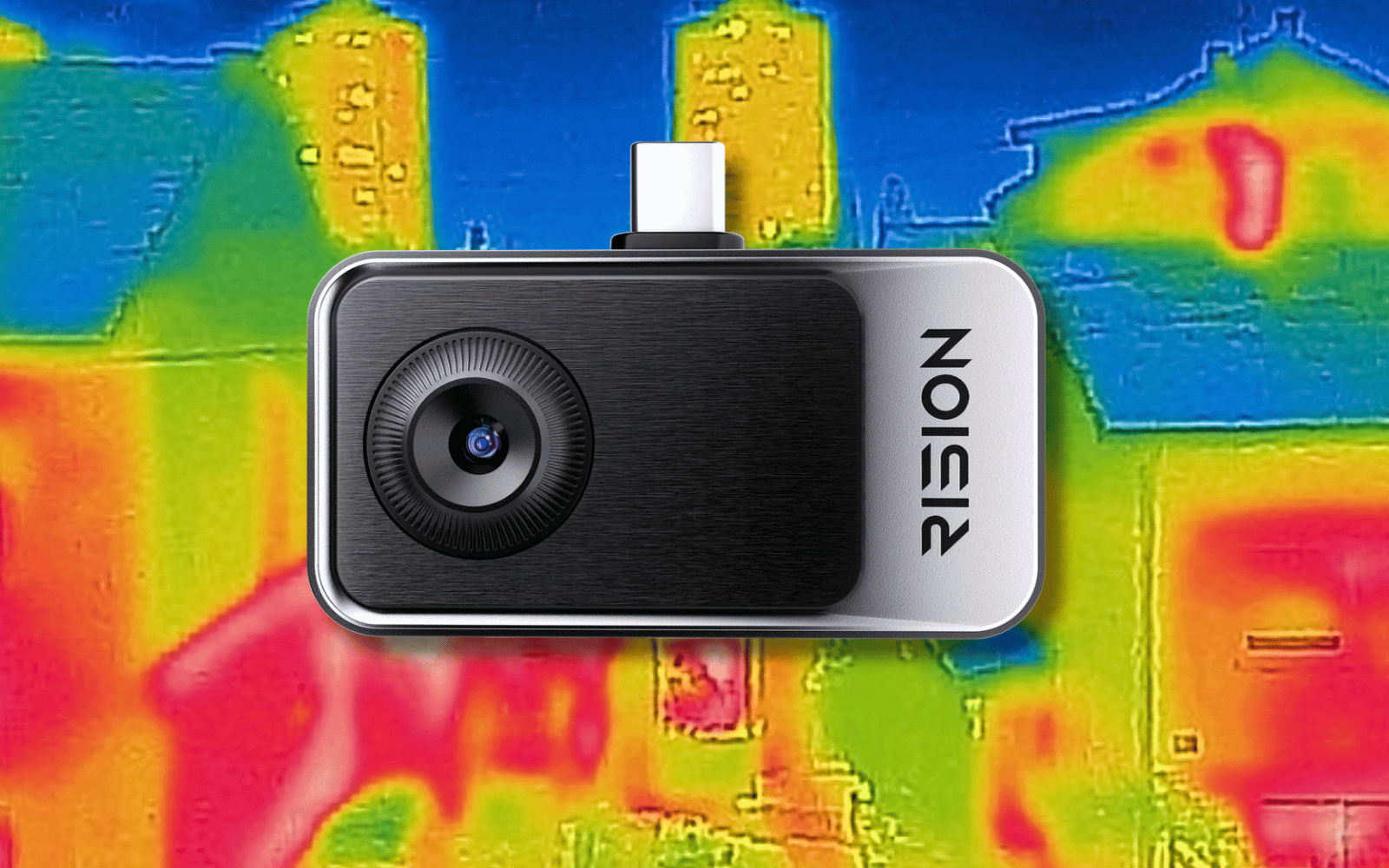
Thermal cameras are one of the more unusual smartphone features. Generally, they’re confined to specific models, but the Rision Magic Pro could let anyone with (almost) any phone keep an eye on nearby heat signatures. But you’ll really have to want the camera, because it won’t come cheap.
At least you’ll only have to buy one, because it’ll transfer over to your new smartphone. The Rision Magic (and Magic Pro) is a USB-C peripheral that connects to a phone and adds heat vision. You shouldn’t need to upgrade the camera unless something substantially new comes along. Or unless you break it, we suppose.
Rision to the task
As you’d expect, the company’s stock Magic camera add-on is the less-capable of the pair. It features a 160 × 120 thermal sensor, “super-resolved to 320×240”. A 25Hz refresh rate and thermal sensitivity of 40mK (milliKelvins) should make it more than capable for most uses. It remains less advanced than the Magic Pro, obviously. How else would Rision justify the pricing for the better unit?
The Magic Pro has a larger 256 × 192 thermal sensor, boosted to 512 × 384. The company calls this ‘HyperBoost-IR’. The same refresh rate and thermal range let it (and the stock Magic) detect temperatures between -20°C and 600°C. If you need help going much higher (or lower), you probably have bigger problems than merely checking temperatures.
Both products went up for pre-order earlier this week. Don’t get too excited, though. The Rision Magic and Magic Pro are both sold out for the first batch. The lineup officially goes on sale on 24 August, but you’re likely to miss pre-order pricing. The less advanced camera starts at around R3,100, while the Magic Pro will retail for R6,850. At that point, it may be better to buy a smartphone with a thermal camera stuck inside it.




1 Comment
Rision’s approach makes a lot of sense — instead of locking you into a specific rugged phone, you get a thermal camera that moves with you to any new device. The Magic Pro’s 256×192 sensor upscaled to 512×384 with 40mK sensitivity puts it in serious territory, and the 25Hz refresh rate means smooth real-time viewing rather than the choppy slideshow you get from cheaper sensors. That said, at nearly R7,000 retail, you really have to need thermal imaging regularly to justify it over just buying a rugged phone with FLIR built-in.