

Apple’s folding iPhone is clearer than ever

It’s more or less an open secret that Apple has been developing a foldable iPhone for years now in an effort to catch up with the competition, all of which have some form of foldable or another. Samsung, for instance, is already on the seventh generation of flip and folding phones, while Apple is targeting a 2026 release for its first.
That secret is largely due to analyst Ming-Chi Kuo and Bloomberg’s Mark Gurman never letting the rumours die, and according to the latter’s latest Power On newsletter, the device is beginning to take shape in Apple’s backend. Gurman mentions that users should imagine two of the ridiculously thin iPhone Airs stuck together, and voilà – a folding iPhone.
In other words, it’ll be pretty slick for a folding phone. The iPhone Air measures 5.6mm thick, which would put the iPhone Fold (or whatever it ends up being called) at roughly 11.2mm thick when closed, though still considerably thicker than something like the Galaxy Z Fold 7 at 8.9mm. It’ll also be made of titanium, which should alleviate any concerns about the device’s durability.
That’s all well and good. The real issue is the price. When Gurman says that it’s “going to be ridiculously expensive compared with past iPhones,” while touting a price tag hovering around $2,000 (∼R34,000), it almost immediately kills any enthusiasm we may have had for the project.
Inserting Pandora’s brainchip

While the U.S. continues to crumble, Elon Musk has been quietly carrying on with his many ventures — the most exciting (and slightly terrifying) being Neuralink. The company aims to begin another round of clinical trials in October, one that would allow human testers to translate their thoughts into text — the idea being to help those folks with speech impediments or who can’t speak at all, get their thoughts across.
“We’re currently envisioning a world where in about three to four years, there will be someone who’s otherwise healthy who’s going to get a Neuralink,” said Neuralink president DJ Seo. “If you’re imagining saying something, we would be able to pick that up.”
The keyword being ‘we’. While the idea is sound, it opens the door to third parties poking around in your mind palace, somewhere previously thought to be unreachable by anyone but the owner. Neuralink’s intentions may be pure, at least at first, but it certainly raises some questions as to the privacy of those thoughts, seeing as those involved will have Neuralink-planted chips in their head.
Hisense’s new Laser TV is a 150in monster
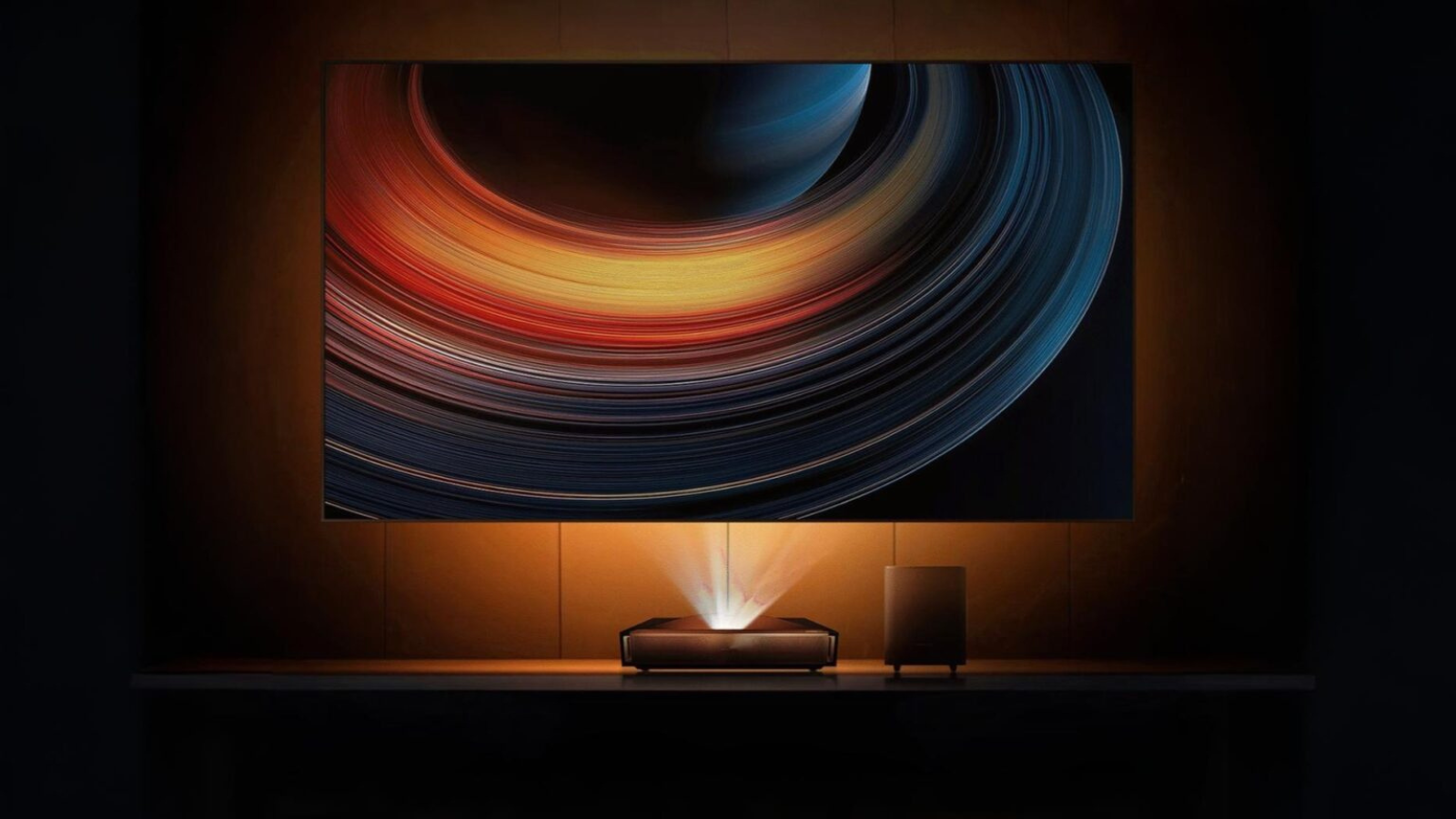
If you’ve got the sort of wall space (and intervening space between you and the wall) to accommodate a 150in TV, then listen up. Hell, even if you’re still fending off complaints about your 40-something-inch TV, it’s still worth paying attention. Hisense has officially debuted its first 150in screen-sound laser TV… in China. It’s probably for the best. We prefer not to imagine the sort of prices it would fetch over here.
The Hisense Xplorer X1 Ultra, now available in 150 and 139in variants, on top of the already existing 120 and 100in models, reinvents what it means to be an ultra-short-throw laser projector TV. You’ll still need to keep it relatively close to the wall it’s projecting onto (around 0.6m), but instead of blasting Tenet’s incredible dialogue through the projector itself, the sound now comes from the screen it’s projecting onto.
Hisense adopts a dual MCL39 tri-colour RGB laser light here, providing 1,000 nits of brightness and 110% support of the BT.2020 colour gamut. You’re also getting Dolby Vision and IMAX Enhanced support. But it’s the Nano Spectrum Selective Screen Pro in use that’ll make this work almost anywhere, with Hisense claiming less than 1% reflectivity. It’s also a Harmon Kardon-made 9.1.4-channel audio system embedded into it.
It remains to be seen whether the Xplorer X1 Ultra will ever make it out of China — possibly under a different name. Hisense is charging 100,000 yuan for the privilege of owning all 150in, making it roughly R234,000 before shipping fees are tacked on. The 80,000 yuan 139in laser TV isn’t much better at around R195,000.
Meta’s smart glasses will only get smarter

Meta seemingly struck oil when it first got into the smart glasses game with Ray-Ban, reportedly selling more than one million pairs in 2024 alone, despite the high price tag. The company has continued to develop, branching out into Oakley specs and, more recently, a Ray-Ban set that’ll include a display.
And now, they’re about to get smarter. Buyers were previously forced to contend with Meta’s own software and the odd third-party developer, like Audible or Spotify. On the second day of its Connect event, the company announced it was opening the doors for more developers to build apps that take advantage of the specs’ sensors and built-in speakers through what it calls the Meta Wearables Device Access Toolkit.
The tools will first roll out as part of a limited developer preview, though it won’t be long before it expands to more — something Meta hopes to achieve in 2026. Doing so will not only take full advantage of the glasses’ full capabilities, but also soften the blow of the too-high price tag for most. Better yet, it doesn’t appear to be limited to Meta’s latest and greatest, but rather the full Meta glasses line-up.
Don’t be surprised to see companies like Twitch, YouTube, or even Disney get in on the action. Twitch and YouTube would build out features like on-the-go livestreaming right from your glasses, while Disney envisions using the glasses as a sort of guide through its parks — an idea it’s already exploring (via UploadVR).