
After sending me numerous fake video clips, clearly from TikTok, I told an old friend last year to get back to the basics and read a proper newspaper. The final nonsense clip featured two guys claiming that Turkish Olympic pistol shooter, Yusuf Dikeç, famous for his nonchalant stance, only took up shooting after getting divorced. It was patent misinformation.
“Stop getting your news on TikTok,” I told my friend, who really should know better. “Or, only get it from reputable sources,” I added.
A few weeks back, the jovial proprietor of a well-known breakfast establishment ranted about how angry he was about something that had popped up in his Instagram feed. “Why should I read about this at 4AM?” he said of a post by Scott Galloway, the respected NYU Stern professor, and was proud to have called him a “poes” in a comment.
The Instagram post in question concerns Galloway’s approach to money and why he doesn’t want to be a billionaire. I watched it later, and what he said about a decades-long career of hard work and eventual riches seemed really reasonable and a great bit of advice.
Why was the proprietor so angry? Because the algorithm showed it to him, and he was offended at Galloway’s assertion that he was happy with his success. Here he was, up at 4AM, opening his restaurant, when he was suddenly confronted with this unbidden advice. He did what most people seem to do: he shot the messenger.
Even though he doesn’t follow Galloway’s account, it’s something the Instagram algorithm threw up. But whose fault is it, I asked him, as I have for the last decade or so, when I’ve discussed responsibility for getting outraged by something on social media.
Who installed the app, who opened it, who followed the people, and who now consumes such algorithmic entertainment? You can’t be angry at someone else simply because they showed up in your timeline.
And yet, this friend, a successful businessman who survived Covid and has kids, was behaving like a cyberbully because of what the algorithm showed him in the app he chose to open and scroll through.
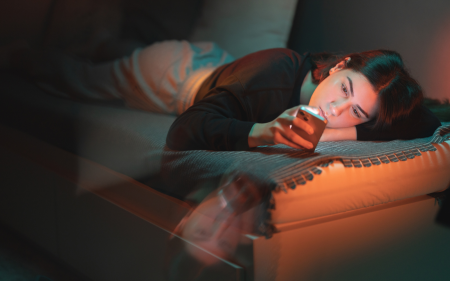
“It’s an addiction,” he repeated. “An addiction.”
Of course it is. That’s why I don’t have social media apps on my mobile anymore. That’s the way I got away from it. But I’m just as addicted as everyone else.
Instead of doomscrolling social media posts, I now doomscroll the news. I read about rugby for something more light-hearted. That’s about the only saving grace for me right now, in a world that has seemingly lost its mind. There’s always a silver lining. If you look.
I haven’t had Facebook and Instagram on my phone since my son was born eight years ago; this year, I deleted the last of them, Twitter. It has become a toxic environment filled with right-wing trolls, misogyny, anti-Semitism, Islamophobia, and rampant, rampant misinformation.
My wife’s solution has also been to delete social apps from her phone, but she still looks at them on her iPad. It’s a much more structured and controlled way to access something we all know is addictive.
I’ve gone back to the old-fashioned way of reading the news. I go directly to the publications or broadcasters that I can rely on. Locally, I read Business Day, News24, Daily Maverick, and Scrolla.Africa, while I subscribe to the New York Times, Guardian, and Wired, and use the BBC and CNN apps a lot.
As I told the frustrated proprietor, choose reputable news sources and go directly to them. If you want a right-leaning paper, read The Telegraph.
Where you get your news is as important now as it has ever been, but probably more so because of all of the different ways you can find news in the era of social media apps whose only function is to keep you staring at the screen for longer.
These are not the early days of serendipitous discovery that Twitter opened up. Twitter was the front page of news for many years, and deservedly so. We saw revolutions unfolding in the Middle East, #BlackLivesMatter, and other movements formed and gained strength on social media.
Now, Twitter no longer exists. It was rebranded to X and is a far cry from those early days when people shared ideas and made some real connections.
My mental health gift to myself at the beginning of last year was to only read the headlines of subjects that aren’t my core interests. I probably reduced the amount of news I read by half. What that allowed me to do was do other things, mostly read more.
If the jovial proprietor’s anxious cry about us being addicted is true, I wonder if I am trading down from one form of digital addiction to another? I console myself that it’s reading, and that is a lesser drug than any form of social media. Right?
This column first appeared on Business Live.