
Author: The Conversation

A spate of cyber attacks has affected Ukraine’s digital systems since Russia’s invasion began. It soon became clear Russia’s “boots on the ground” approach would be supplemented by a parallel cyber offensive. Last week Ukraine called on its citizens to take to their keyboards and defend the country against Russia’s cyber threat. At the same time, a campaign was underway among the hacktivist collective Anonymous, calling on its global army of cyber warriors to target Russia. The Anonymous collective is officially in cyber war against the Russian government. #Anonymous #Ukraine — Anonymous (@YourAnonOne) February 24, 2022 Who is Anonymous? Anonymous is a global activist…

Read More

New U.S. sanctions on Russia will encompass Russia’s space agency, Roscosmos, according to a speech U.S. President Joe Biden gave on Feb. 24, 2022. In response to these sanctions, the head of Roscosmos on the same day posted a tweet saying, among other things, “If you block cooperation with us, who will save the ISS from an uncontrolled deorbit and fall into the United States or Europe?” The International Space Station has often stayed above the fray of geopolitics. That position is under threat. Built and run by the U.S., Russia, Europe, Japan and Canada, the ISS has shown how countries can cooperate on…

Read More

Following a decade of consultation and public debates, South Africa introduced a carbon tax in June 2019. Treasury faced strong opposition, especially from energy intensive businesses. But the country’s ratification of the Paris Climate Agreement in November 2016 signalled the government’s commitment to responding to climate change and gave impetus to implementing the carbon tax. In line with the international “polluter pays” principle, the tax attaches a cost to greenhouse gas emissions. The idea is to change the behaviour of large emitters. Burning fossil fuels for electricity production accounts for the largest share of South Africa’s carbon emissions, followed by transport, and the industrial production of materials such as…

Read More

On Feb. 22, 2022, AT&T is scheduled to turn off its 3G cellular network. T-Mobile is scheduled to turn its off on July 1, 2022, and Verizon is slated to follow suit on Dec. 31, 2022. The vast majority of cellphones in service operate on 4G/LTE networks, and the world has begun the transition to 5G, but as many as 10 million phones in the U.S. still rely on 3G service. In addition, the cellular network functions of some older devices like Kindles, iPads and Chromebooks are tied to 3G networks. Similarly, some older internet-connected systems like home security, car navigation and entertainment systems, and solar…

Read More

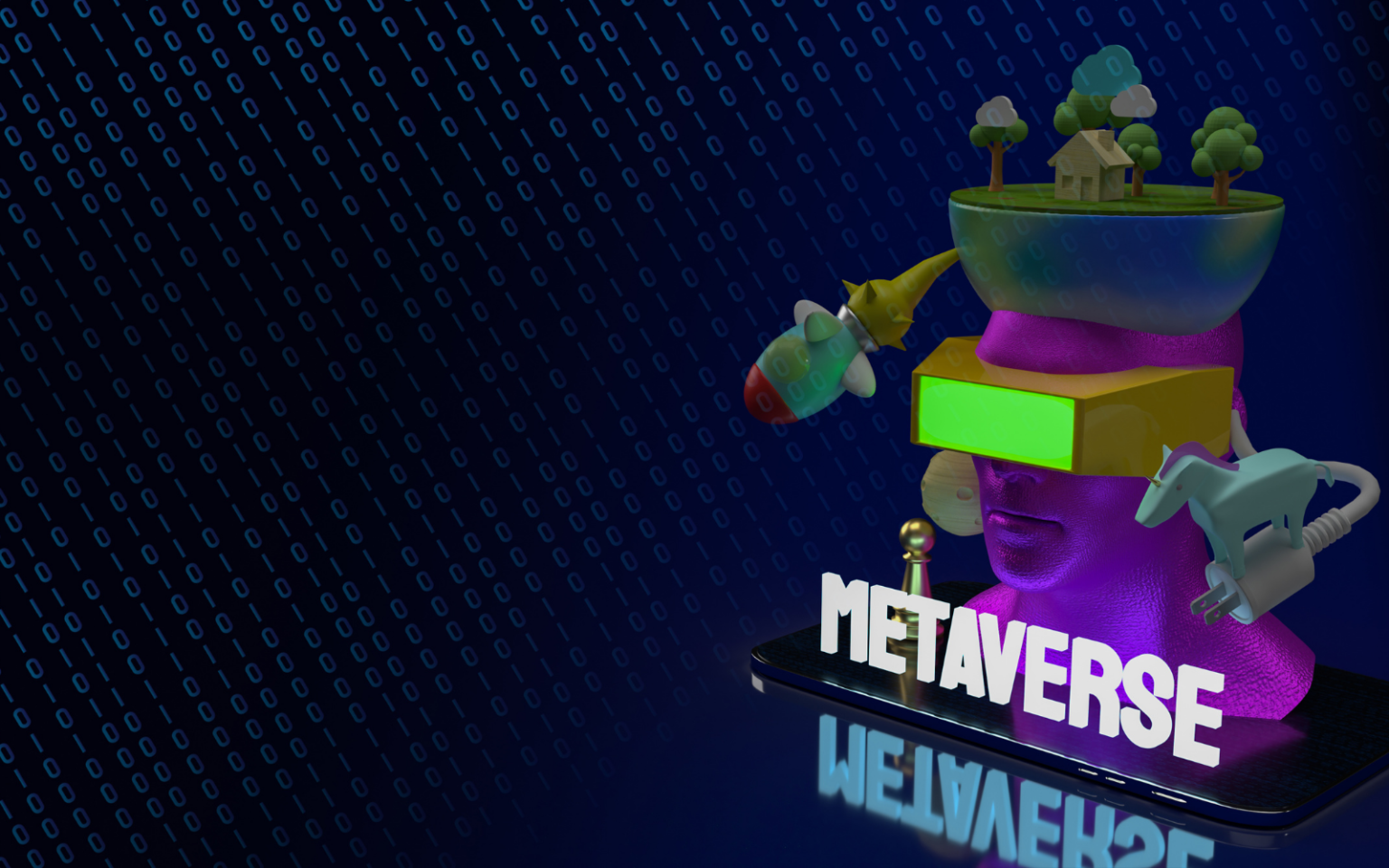
The “metaverse” seems to be the latest buzzword in tech. In general terms, the metaverse can be viewed as a form of cyberspace. Like the internet, it’s a world – or reality, even – beyond our physical world on Earth. The difference is that the metaverse allows us to immerse a version of ourselves as avatars in its environment, usually through augmented reality (AR) or virtual reality (VR), which people are and will increasingly be able to access using tools like VR goggles. While it all seems very exciting, a curious lawyer like me is inclined to ask: who or what governs the metaverse? The way…

Read More

For more than a decade we’ve been deeply immersed in a love affair with social media. And the thought of ending things can be painful. But like any relationship, if social media is no longer making you happy – and if curating your online persona is exhausting instead of fun – it might be time to say goodbye. Late last year, Meta (previously Facebook) came under intense scrutiny after leaked documents revealed the company was fully aware of the negative impact its products, Instagram in particular can have on users’ mental health. Meta went straight into damage control. But it seemed…

Read More

Many people think of privacy as a modern invention, an anomaly made possible by the rise of urbanization. If that were the case, then acquiescing to the current erosion of privacy might not be particularly alarming. As calls for Congress to protect privacy increase, it’s important to understand its nature. In a policy brief in Science, we and our colleague Jeff Hancock suggest that understanding the nature of privacy calls for a better understanding of its origins. Research evidence refutes the notion that privacy is a recent invention. While privacy rights or values may be modern notions, examples of privacy norms and privacy-seeking behaviors abound across cultures throughout human history and across geography. As privacy researchers…

Read More

Space travel is all about momentum. Rockets turn their fuel into momentum that carries people, satellites and science itself forward into space. 2021 was a year full of records for space programs around the world, and that momentum is carrying forward into 2022. Last year, the commercial space race truly took off. Richard Branson and Amazon founder Jeff Bezos both rode on suborbital launches – and brought friends, including actor William Shatner. SpaceX sent eight astronauts and 1 ton of supplies to the International Space Station for NASA. The six tourist spaceflights in 2021 were a record. There were also a record 19 people weightless in space for a short time in December, eight…

Read More

In the chart-topping Netflix documentary The Tinder Swindler, three women describe how they were defrauded by convicted conman Simon Leviev (who was born Shimon Hayut) after meeting him on the dating app. The film gives a detailed and deeply personal account of how Leviev used Tinder to connect with his victims and ultimately swindle them out of hundreds of thousands of dollars. I have been researching romance fraud for more than a decade. I have heard the painful and traumatic stories of hundreds of victims. While each story is unique, there are common factors, and some wider lessons to learn. The Tinder Swindler…

Read More

It’s probably no surprise that keeping healthy in space is incredibly important. And without the typical resources found on Earth, creative solutions have to be explored. Right now, some excited Year 10 and 11 students from around Victoria are waiting with anticipation as their space-made yoghurt – fresh off the International Space Station (ISS) – heads back to Australia from NASA facilities in the United States. The students worked with researchers at the Swinburne University of Technology to design an experiment investigating the nutritional values of space-made yoghurt. The results could provide insight into how to best help astronauts with…

Read More