
Author: The Conversation

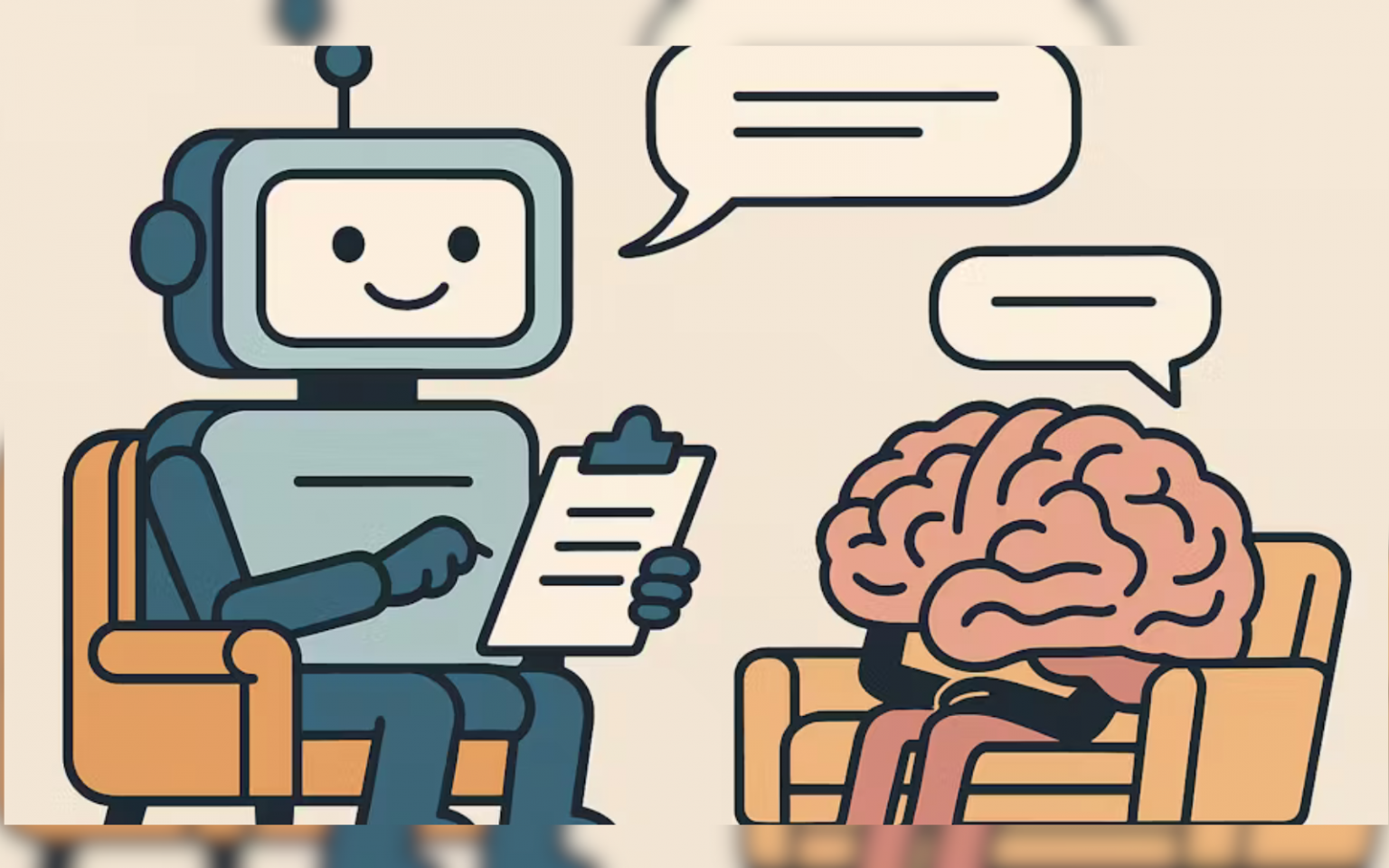
Would you create an interactive “digital twin” of yourself that can communicate with loved ones after your death? Generative artificial intelligence (AI) has made it possible to seemingly resurrect the dead. So-called griefbots or deathbots – an AI-generated voice, video avatar or text-based chatbot trained on the data of a deceased person – proliferate in the booming digital afterlife industry, also known as grief tech. Deathbots are usually created by the bereaved, often as part of the grieving process. But there are also services that allow you to create a digital twin of yourself while you’re still alive. So why not create one for when you’re gone?…

Read More

Generative artificial intelligence (GenAI) is now a reality in higher education, with students and professors integrating chatbots into teaching, learning and assessment. But this isn’t just a technical shift; it’s reshaping how students and educators learn and evaluate knowledge. Our recent qualitative study with 28 educators across Canadian universities and colleges — from librarians to engineering professors — suggests that we have entered a watershed moment in education. We must grapple with the question: What exactly should be assessed when human cognition can be augmented or simulated by an algorithm? Research about AI and academic integrity In our review of 15 years of…

Read More

South Africa has committed to phasing out human-caused carbon pollution by 2050. To get there, it needs to push as much renewable energy as possible into the national grid. The country is the world’s 15th largest carbon polluter. It’s one of only a handful of countries still heavily dependent on burning coal to generate electricity. The country’s transport system is totally reliant on crude oil and its derivatives. One of the keys to the transition to net zero is decarbonising household energy consumption. This means finding ways for homes to reduce the greenhouse gases that cause global warming. At the moment, household…

Read More

In 2023, the science fiction literary magazine Clarkesworld stopped accepting new submissions because so many were generated by artificial intelligence. Near as the editors could tell, many submitters pasted the magazine’s detailed story guidelines into an AI and sent in the results. And they weren’t alone. Other fiction magazines have also reported a high number of AI-generated submissions. This is only one example of a ubiquitous trend. A legacy system relied on the difficulty of writing and cognition to limit volume. Generative AI overwhelms the system because the humans on the receiving end can’t keep up. This is happening everywhere. Newspapers are being inundated…

Read More

Imagine a world where fresh vegetables and herbs sprout in the heart of our cities without the need for sprawling farms. Hydroponics – a method of growing plants without soil – uses a nutrient-rich water solution instead of earth and is useful in areas where soil quality is poor, land is frequently flooded, water supply is unreliable, or there simply isn’t enough space. Hydroponically cultivated plants use 90% less water than soil-based agriculture. They grow upwards in stacked layers and occupy 99% less land. Some hydroponic crops can yield ten times more produce compared to traditional cultivation methods, depending on crop type and the scale and…

Read More

Claims that artificial intelligence (AI) is on the verge of surpassing human intelligence have become commonplace. According to some commentators, rapid advances in large language models signal an imminent tipping point – often framed as “superintelligence” – that will fundamentally reshape society. But comparing AI to individual intelligence misses something essential about what human intelligence is. Our intelligence doesn’t operate primarily at the level of isolated individuals. It is social, embodied and collective. Once this is taken seriously, the claim that AI is set to surpass human intelligence becomes far less convincing. These claims rest on a particular comparison: AI systems…

Read More

When the World Wide Web went live in the early 1990s, its founders hoped it would be a space for anyone to share information and collaborate. But today, the free and open web is shrinking. The Internet Archive has been recording the history of the internet and making it available to the public through its Wayback Machine since 1996. Now, some of the world’s biggest news outlets are blocking the archive’s access to their pages. Major publishers – including The Guardian, The New York Times, the Financial Times, and USA Today – have confirmed they’re ending the Internet Archive’s access to their content. While publishers say they support the archive’s preservation…

Read More

Much is being said about the wonders of artificial intelligence (AI) and how it is the new frontier. And while it provides amazing possibilities in fields like medicine, academics are debating its advantages for university students. Peet van Aardt researches student writing and presents academic writing workshops at the University of the Free State Writing Centre, helping students to build clear arguments, summarise essay structure and express their opinions in their own voice. He also spearheads the Initiative for Creative African Narratives (iCAN), a project that assists students in getting their original stories published. Here he shares his experiences and thoughts on the…

Read More

If you’re following AI on social media, even lightly, you will likely have come across OpenClaw. If not, you will have heard one of its previous names, Clawdbot or Moltbot. Despite its technical limitations, this tool has seen adoption at remarkable speeds, drawn its share of notoriety, and spawned a fascinating “social media for AI” platform called Moltbook, among other unexpected developments. But what on Earth is it? What is OpenClaw? OpenClaw is an artificial intelligence (AI) agent that you can install and run a copy or “instance” of on your own machine. It was built by a single developer, Peter Steinberger,…

Read More

A South African solar manufacturer, ARTsolar, is taking the government and several renewable energy developers to court. The case focuses on local content rules for renewable energy projects. ARTsolar says it invested in new manufacturing capacity because it expected these rules to lead to orders for locally assembled solar panels. That did not happen. Wikus Kruger has researched renewable energy financing and procurement in Africa for 15 years. He argues that the ARTsolar court case points to a deeper policy problem. Local manufacturing requirements were added to South Africa’s renewable energy programme without a clear industrial strategy. The government created obligations, but not the conditions needed…

Read More