

Google has launched an all-new feature for Chrome users in the United States. Enhanced autofill, a function that trawls your Gmail for additional information it can type out for you, won’t stay in the US. It’ll eventually get here, and everywhere else, but it’s worth examining why the search giant is doing this.
Google has built its empire on making products that help it make more products. Gmail, Maps, Search — all those (and others) promised convenience while obscuring what the company was actually doing. Mostly, it was gathering data, eventually leading to the AdWords and Ads platforms. The business model has since been successfully replicated by many other companies. Meta is the most egregious copycat, mostly because it doesn’t actually provide much value. Mark Zuckerberg is also not nearly as sneaky as the big G.
Enhanced Chrome
According to Google’s Amanda Lim, “Chrome’s enhanced autofill feature can automatically suggest information pulled directly from Gmail as you fill out online forms.” It’s positioned as something nice to have. Fewer keystrokes? Less hunting back and forth? Sure, those are attractive suggestions. But what else is the company up to? That, as ever, is a little harder to determine.
Mining your inbox for further AI training data is a safe guess, since the company says that “Allow feature and improve AI models” is on by default for most users. The exceptions are Workspace Education and some Chrome Enterprise browsers, which can use enhanced autofill without needing to “help improve Google’s AI models.”
Google’s ‘we’re reading your data’ boilerplate for enhanced autofill reads: “[Data accessed] might include prompts, inputs, outputs, feedback, source materials, and related information, depending on the feature. Data can also be read by human reviewers, for the sole purpose of improving Google’s AI models.”
What’s Google looking for?
“Using Gemini with Personal Intelligence, [enhanced autofill] can surface details like order numbers, tracking information, and flight bookings, right when you need them.”
Seems innocuous enough. Gemini investigates your Gmail in Chrome for the data in the form you’re filling in, and gives you an automatic option you don’t have to type. Only… that involves reading somewhere along the line. Gemini will read the page you’re working on and then use those insights to run inbox searches. You’ve used a search function before, right?
If you search ‘Amazon order number,’ you won’t just get the last one. You’ll drag up all of them. And if Google is using your data for training purposes, odds are it won’t stick to the result it hands you. After all, it’s got permission to run the search. The search is the training data, not the result. Your participation may make the process faster or smarter, but it’s also doing something behind the scenes. Something Google isn’t talking about. Training Gemini on your data (unless you turn off that option), for a start.
Other possibilities
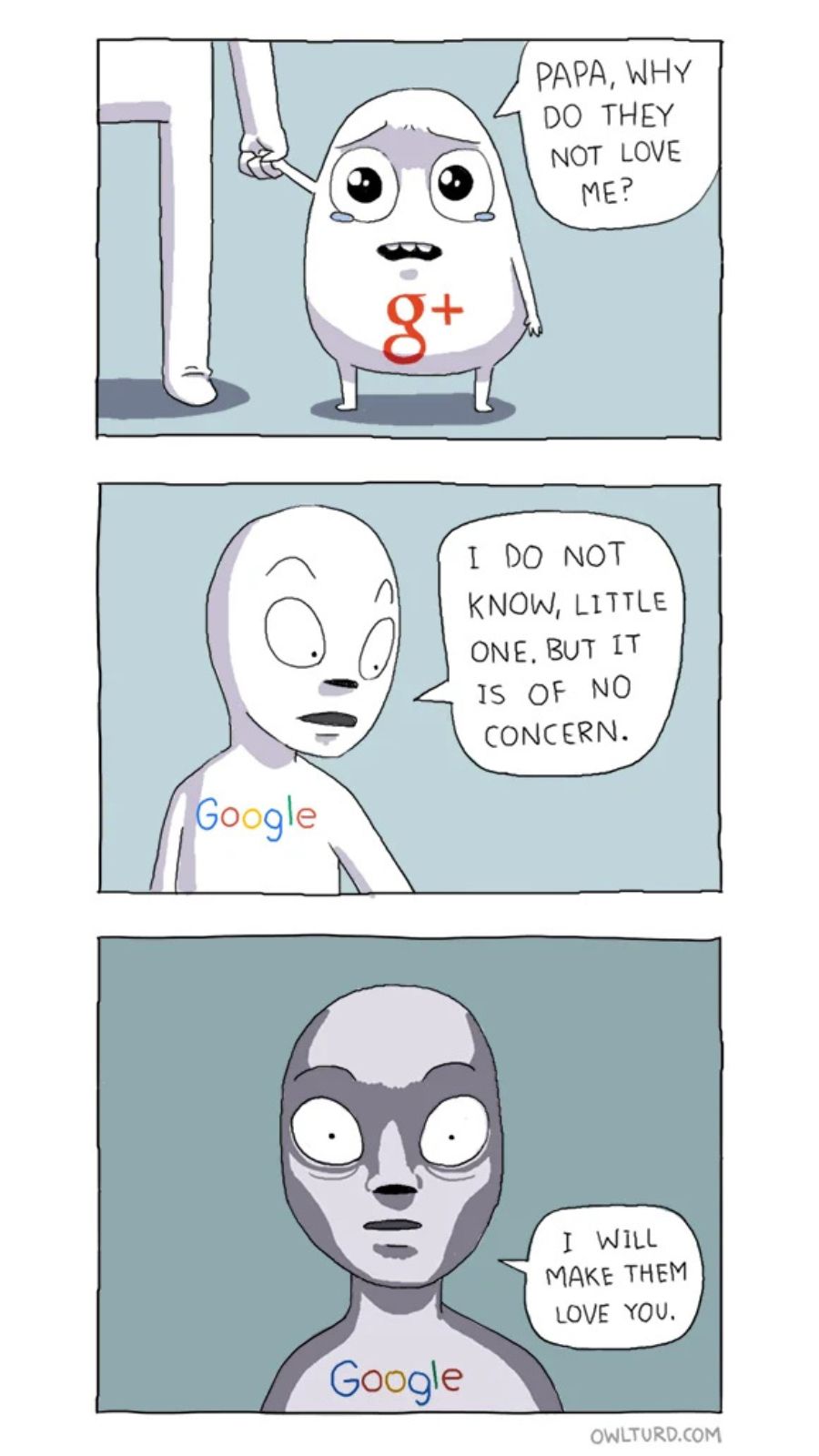 Once upon a time, there was a social network called Google Plus (or +). It’s not spoken about much. Not since it was quietly taken out back and shot in the face. Nobody liked it. Nobody. But the company forced it, much as it’s forcing Gemini integration into every little thing it can, as hard as it possibly could. It eventually led to the immortal Owlturd webcomic above. Google+ cost the company a little under $600 million. Do you have any idea how much the company has spent on Gemini so far?
At best, giving AI features to Chrome users lets the company count them under its DAU (daily active users) figures for Gemini. Having it leap into action every time there’s a form to fill out lets the company pad its ‘time spent using’ metric, even if you have no intention of using AI. After all, most of the internet’s users don’t actually understand the tech they interact with. They push buttons, and things happen. It’s not hard to construct an alternate reality where people use, love, and care about your product. It just needs the correct UX design and a creative thinker to reinterpret the metrics.
Given how unsteady the AI industry currently is — Anthropic’s fresh IPO filing will make or break a lot of companies — Google could be looking to bolster its numbers for investors. It’s certainly after more training data, from whichever source it can legitimately claim. There might also be other kinks that aren’t visible yet. It’s long been the case that if you’re not paying for something, you are the product. That’s worth remembering every time Google, Meta, Amazon, Microsoft, or anyone else gives you something you didn’t ask for.