
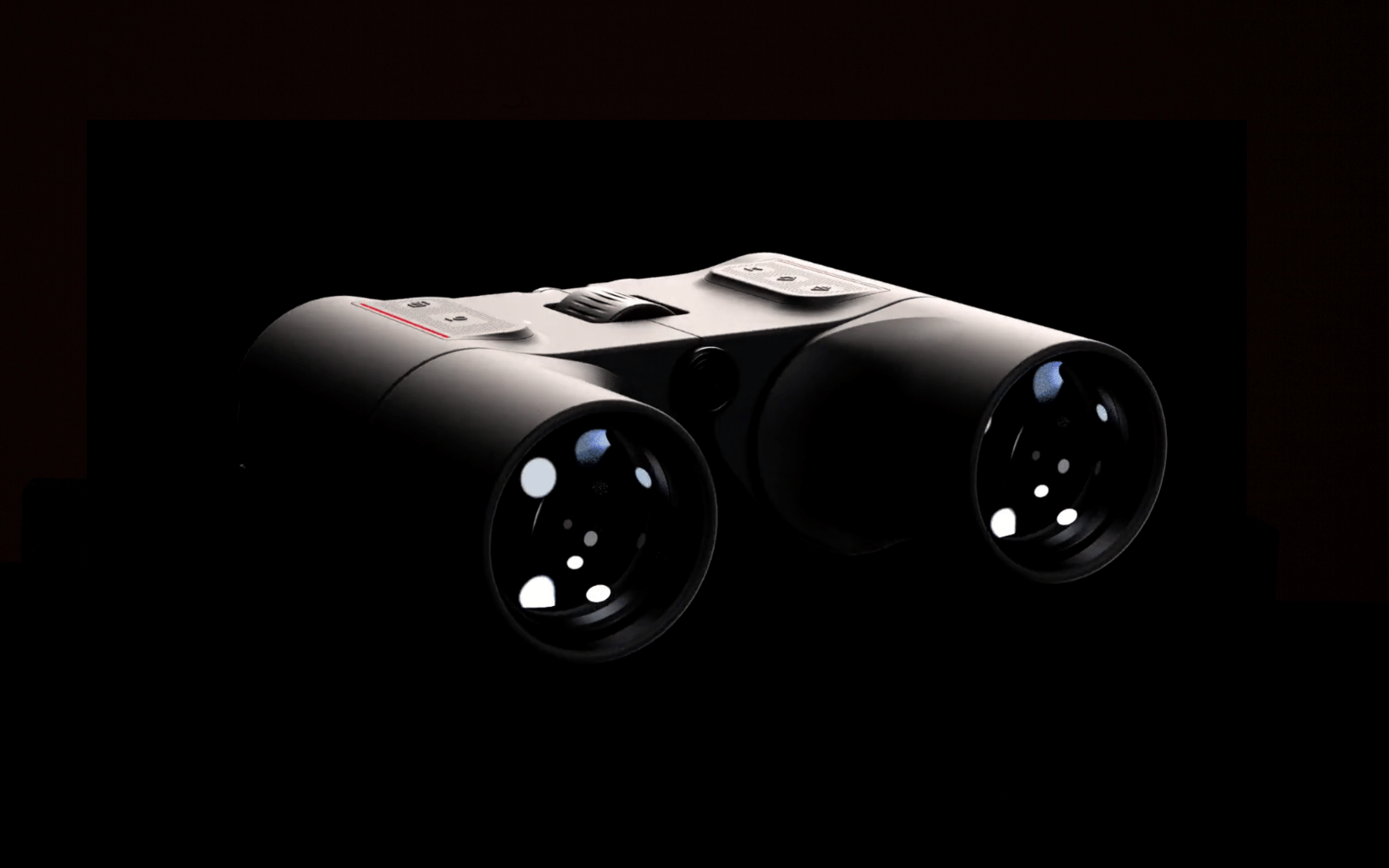
There are ways to improve optical performance. One is more impressive glass; the other involves sticking tech inside. Unistellar’s Envision has taken the second path, placing augmented reality functions inside a pair of 10×50 binoculars.
The sum for a pair (not including shipping) is a somewhat steep R25,000 ($1,500). That’s not far off from a semi-premium pair of binoculars from Nikon, Swarovski, or Zeiss, with the added benefit that you can point them at things and have the world explained to you.
Envision the future
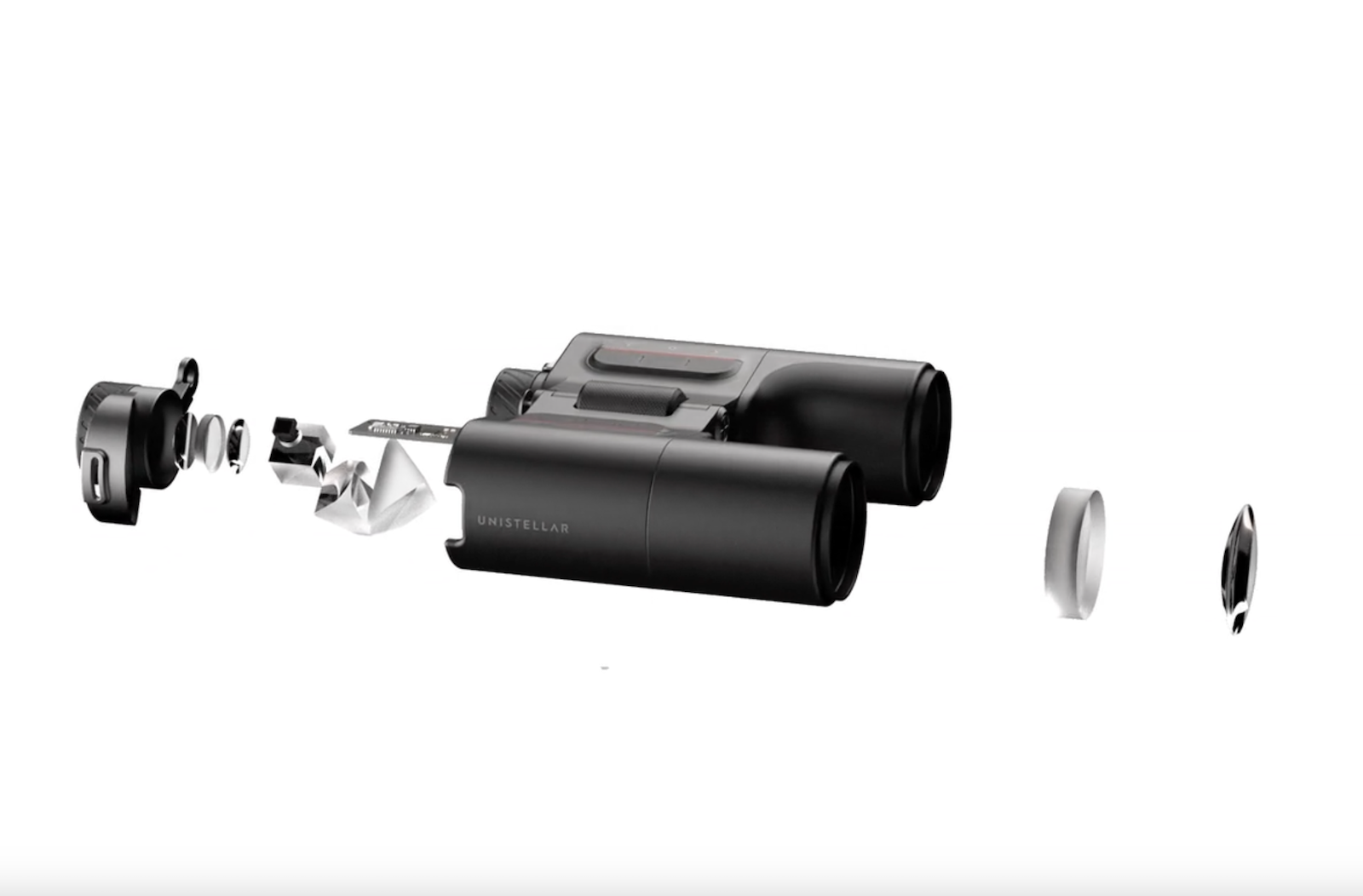
According to the company, the Evision AR binoculars use standard optics as part of the optical train. This part of the process is handled with (or by) Japan’s Nikon, so even if they’re powered off, the images should still be great. But the interesting bit involves an internal 960 x 960 red OLED matrix inside the binoculars’ right eyepiece.
This addition projects AR information about whatever you’re looking at onto the view. The red shade was chosen to retain your night vision when using the Envision to scan the night sky. A variety of sensors — gyroscope, ambient light, an internal compass, and a magnetometer — help to keep the data accurate. Within reason, of course. Unistellar’s binoculars aren’t omnipotent.
The internal database tracks “[m]ore than 1,000 celestial targets and 200,000 visible stars” and “[b]illions of topographic nodes and millions of cartographic features: summits, ridgelines, trails, shelters, lakes, rivers and springs.” It’s an impressive resume, but it’s not all stored at once. Data needs to be downloaded for a region before you head in that direction.
Tracking functions are enabled, so users can lock onto an object and follow it. What’s missing is internal stabilisation, something that would complicate the Envison 10×50 even further. The internal 1,100mAh battery should be good for five or so hours of viewing, while an IP54 rating means it’ll survive somewhat inclement weather. The 1.1kg weight is about standard for a set of porro prism binoculars with these specs, but they might prove a little heavy for beginners. But at least newcomers don’t have to worry much about identifying what they’re looking at.