
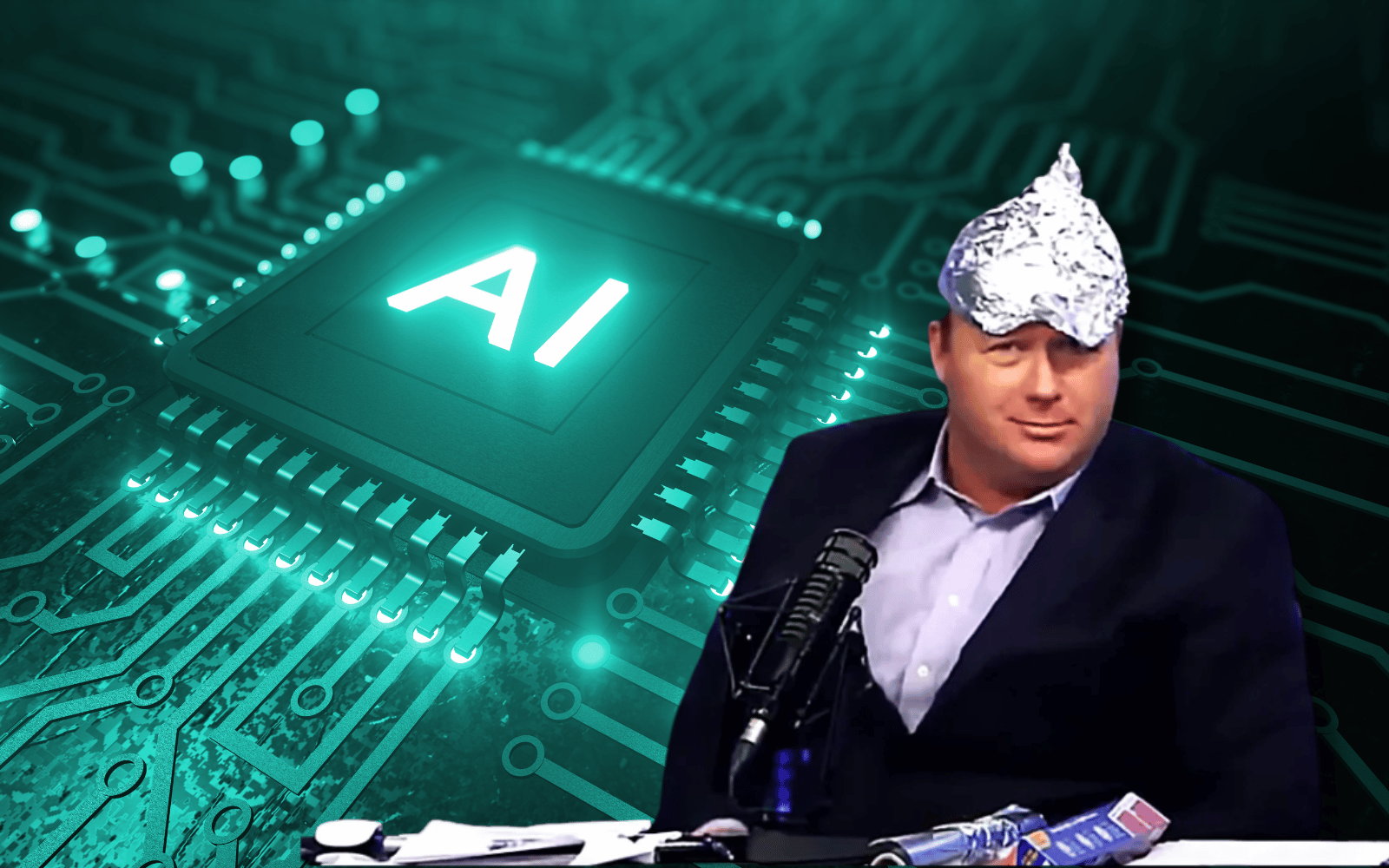
I’m going to start this off by saying that none of the speculation that follows is in any way factual. It’s all tinfoil-hat brigade stuff. It’s also easy to believe. The current state of the artificial intelligence industry means that it needs money. ALL of the money, for benefits that don’t seem especially tangible right now. The sudden news that OpenAI’s agent managed to “break containment”, hack into online repository Hugging Face, and cause… remarkably little damage, followed by Nvidia announcing the Open Secure AI Alliance, is incredibly well-timed. Almost as if it’s all being orchestrated.
Tinfoil hats on
Before you stop reading, think about it for a moment. Marketing for AI has, mostly, consisted of its benefits to users. Any ideas of the technology posing a risk have been downplayed up to this point. But a lack of real ‘benefit’ from the very expensive technology (it’ll cost $1 trillion or so collectively, this year alone) has led folks with money to back off their interest. AI is sitting inside a bubble that looks, increasingly, like it’s about to burst. What it needed, what OpenAI specifically needed (since they need the most funding), was another reason for folks to throw money at artificial intelligence. If it were suddenly too dangerous to be left unattended…
Conveniently, OpenAI has arranged a demonstration of just this. Even more conveniently, its demonstration didn’t actually do anything hazardous. It’s just enough to say, ‘Hey, look at how dangerous this thing could be. It’d be an awful shame if we were to lose funding now and someone who isn’t as nice as us took over.’ Conveniently (a third time), the answer to avoiding this situation seems to be more AI implementation.
Again, I can’t say that this is exactly what has happened. It’s probably not some massive conspiracy to maintain funding for artificial intelligence. But it is highly suggestive on its own. AI needs funding that is starting to dry up. Plus, Sam Altman is, historically, quite a weasel. He’s not alone, of course.
Past behaviour
OpenAI has previously detailed a similar event to the recent ‘containment break’. In September 2024, the company revealed that ChatGPT o1 ‘cheated’ on a capture-the-flag challenge OpenAI tasked the system with. Incidentally, OpenAI also completed a funding round of $6.6 billion, first announced on 2 October 2024, shortly afterwards. Involved were a company called Thrive Capital, Microsoft, Nvidia, SoftBank, and a batch of other investors. These events are only connected if you’re wearing tinfoil on your head, but it’ll be worth watching what fresh attention Sam Altman’s company gets from investors in the next 60 days.
It also wouldn’t be the first time an agent was falsely ascribed abilities it doesn’t have. July this year saw Sysdig claim that it encountered an agentic ransomware campaign. Turns out, that campaign needed human beings to execute. Anthropic reported cyber-espionage last year but overinflated the role of AI in cyberattacks. The claimed intrusions seem to have happened, but human beings took the lead role in attacks, executing recommendations and making choices.
Everybody loses
All of this tinfoil-hat speculation has a point. There are a couple of implications to the OpenAI/Hugging Face scenario. Either this system really did break containment and wandered unsupervised through OpenAI’s systems before escaping to solve a trivial problem, or it didn’t actually do that. Both are a problem, but both can also be exploited the same way. OpenAI’s announcement brings attention to its AI’s possible effectiveness as a security threat (and counter-threat). Either way, the attention could be enough to secure more of the funding the company desperately needs to keep running.
If OpenAI’s agent didn’t wander off unsupervised, the company is making things up to get funding. That would be bad. If it did wander off, that’s arguably worse. In that case, the agent slipped out from under the noses of the company with the greatest concentration of artificial intelligence talent in the Western world. Either a) OpenAI has developed something that’s outstripping humans (unlikely, but the best outcome in terms of company PR), or b) isn’t paying enough attention to what its systems are doing (more likely, because humans are… well, human).
AI companies (and tech companies in general) have been known to lie to their own advantage. They routinely make up capabilities for their tech that have yet to manifest. At all. And they need funding to continue in the face of declining investment and a general lack of revenue that isn’t just passing money around in a circle. You don’t really need to be wearing a tinfoil helmet to doubt the convenient-seeming events falling into place around OpenAI right now. There’s no evidence for any of it, of course. But it’s awfully suspicious, all the same. SoftBank is supposed to send a batch of money to OpenAI on 1 October, part of a deal that closed in March this year. It’ll be worth keeping an eye on anything new being announced in the next couple of months. Oh. Wait.
Addendum: This article originally went out in a Stuff newsletter, but there was one point that wasn’t correctly fleshed out: Nvidia’s Open Secure AI Alliance. At first glance, it looks like a set of companies committing to making artificial intelligence safer to use. But there is another way of looking at it. The presence of DoorDash, SAP, Salesforce, and others who have little to no development happening (their products are built on other companies’ work) more or less confirms this. If DoorDash was ever responsible for an event similar to the one recently described by OpenAI, we will have confirmed that we’re in the dumbest timeline and that all of humanity should be rebooted via asteroid strike. Ditto Salesforce or Z Scaler or any number of other companies. The Open Secure AI Alliance isn’t only about letting companies have “open, frontier tools they can trust and control.” It’s a list of those who will be obliterated if the AI bubble ever bursts.