
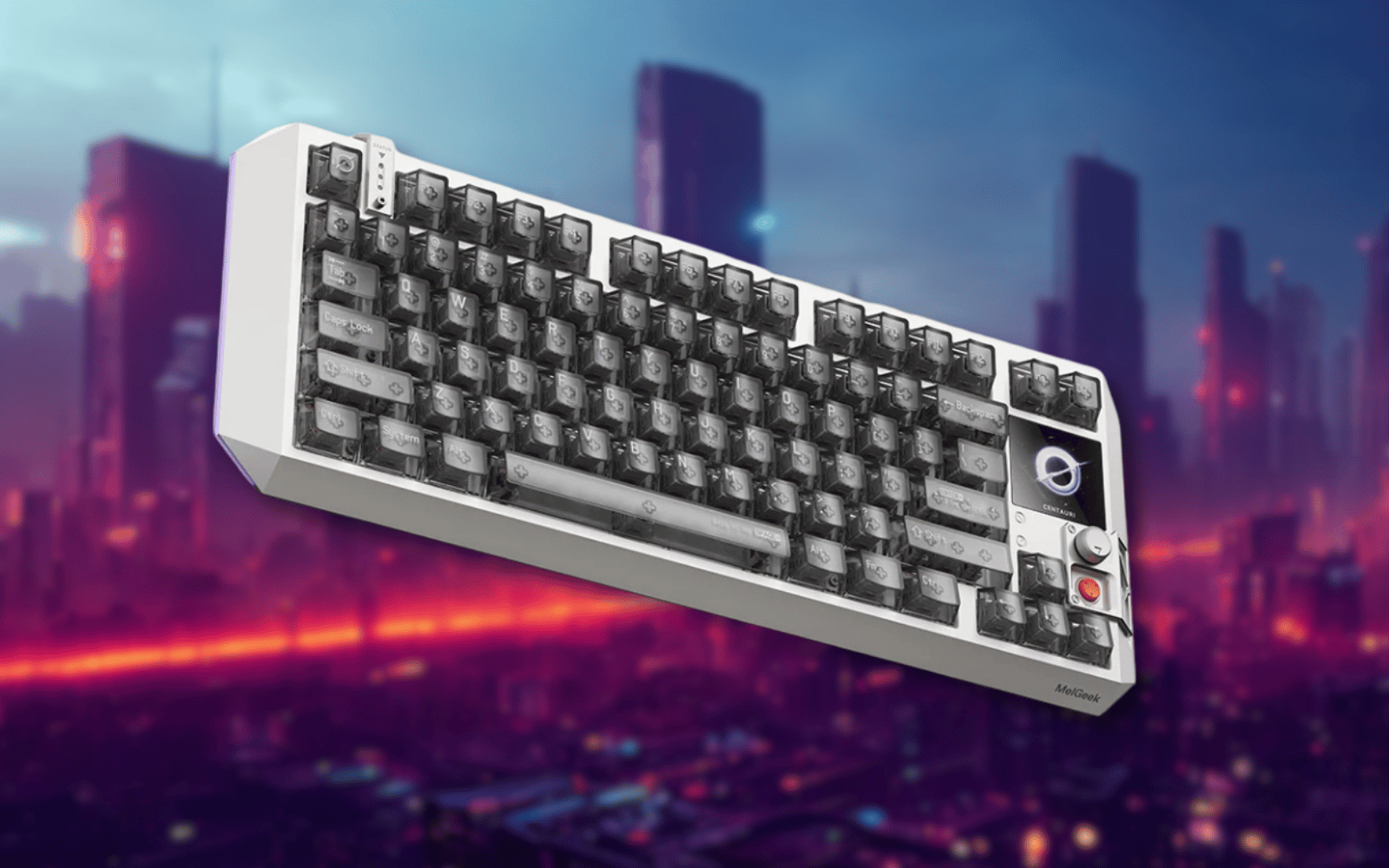
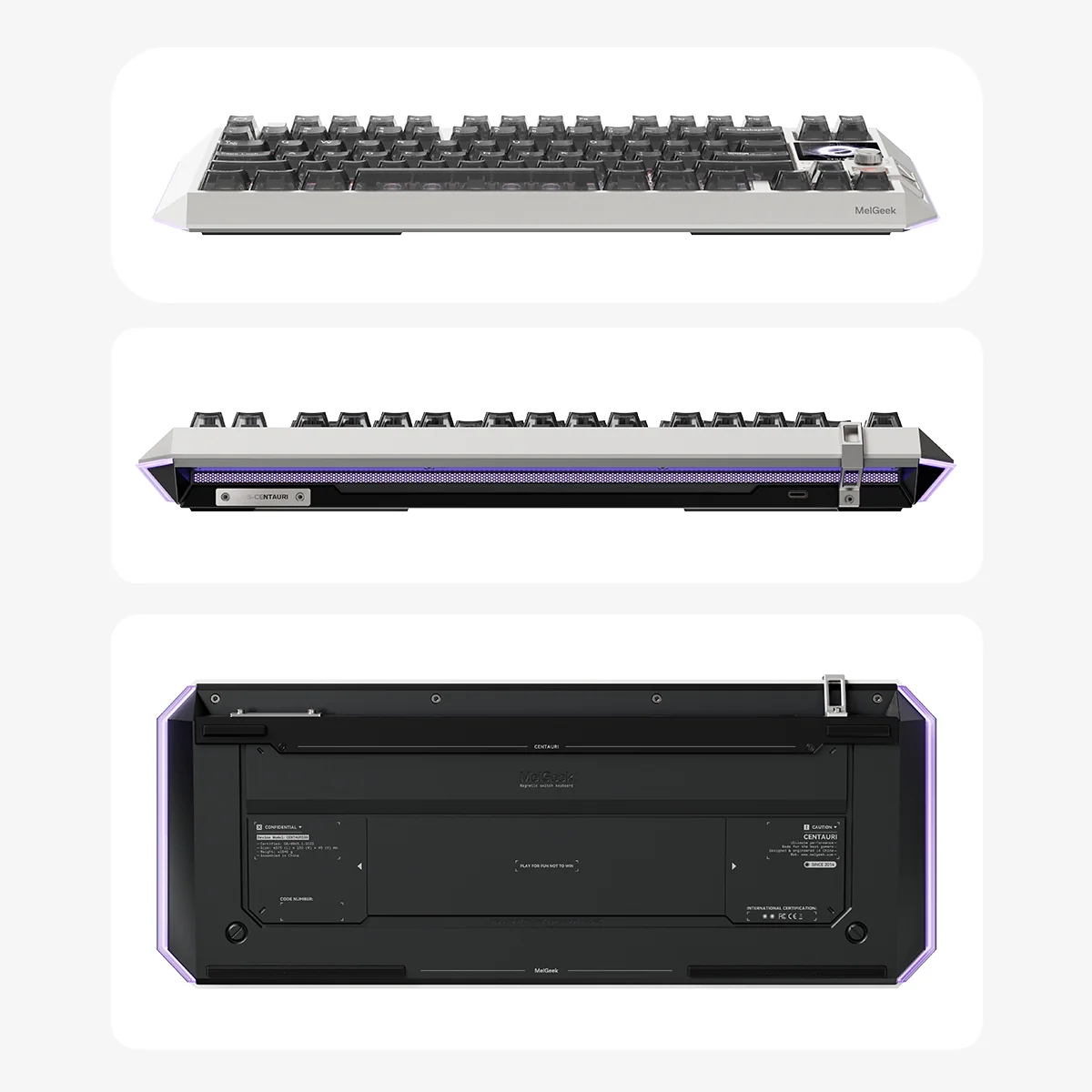
If you’ve ever thought your gaming setup could use a few more screens, and your keyboard doesn’t already have one, the Centauri80 can satisfy that niche. This 80% Hall effect gaming keyboard, from Beijing-based custom keyboard brand MelGeek, sports an aggressive design that isn’t common from established brands like Razer or Logitech. Not to mention the 1.78in OLED touchscreen embedded in the board.
Put a screen in your keyboard
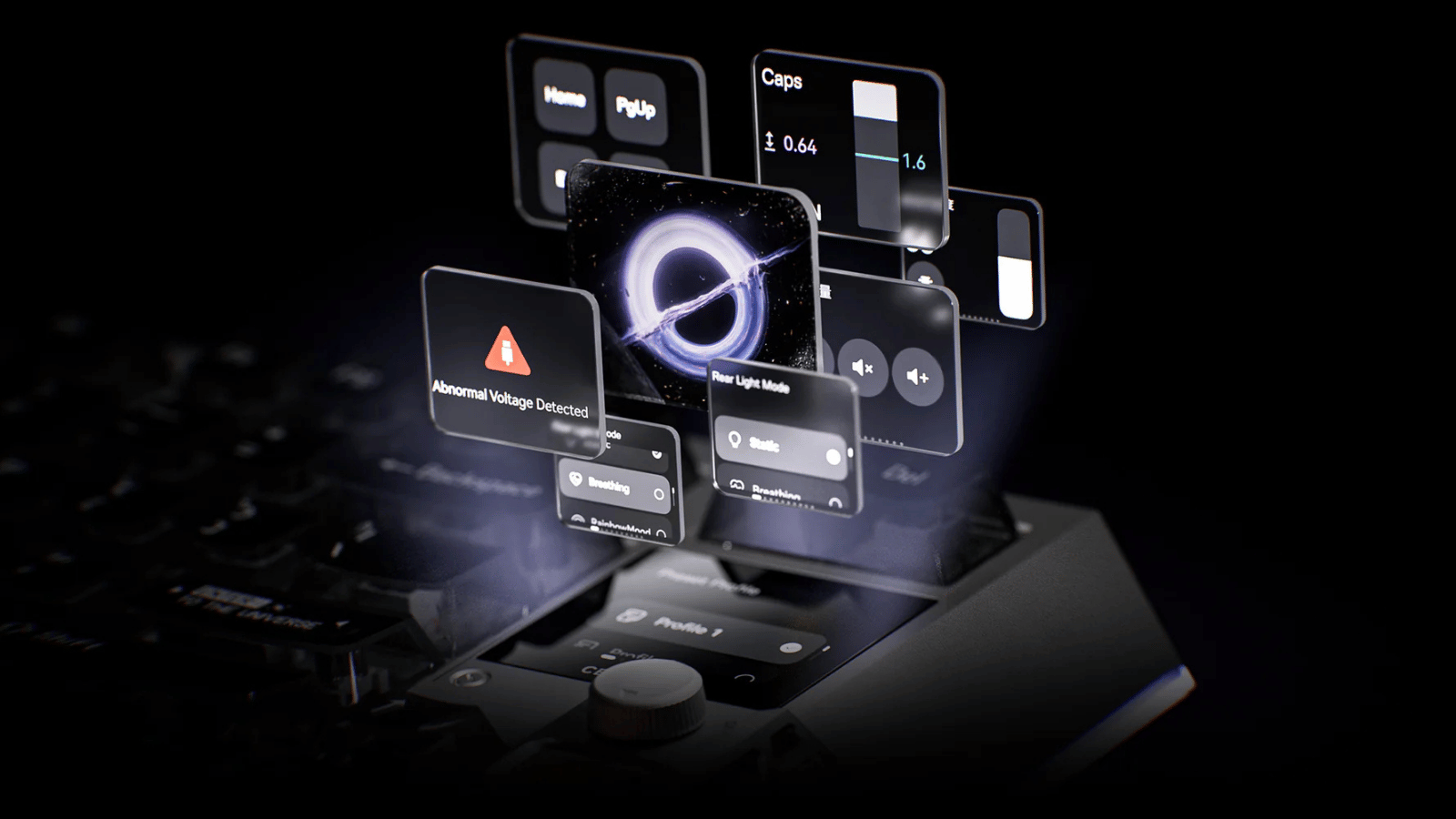
That OLED display runs at 60Hz with a pixel density of 325 ppi (pixels per inch) — about the same as an Apple Watch. It acts as a dinky command centre, controlled with your fingers or the physical dial beneath it. It will display everything from the controls to swap between live wallpapers, macro controls, and controls for the board’s per-key and three-zone lighting. You can also toggle a few of the keyboard’s controls, meaning you don’t have to go looking in your system tray to bring up the software every time you want to make a change.
The ‘80%’ we mentioned refers to the layout and number of keys. With this one, you get the function number row (Esc, F1 – F12, and Insert and delete) and all the letters you’d expect (83 keys in total), but no standalone home/insert/delete island. That’s where the screen lives. Those functions, if they aren’t placed elsewhere, will be mapped to other keys, accessible via the function (Fn) key.
Inside, MelGeek have used what it calls the ‘Flip King of magnetic white switch’. That might be the longest switch name we’ve come across, but other than that, they seem to perform similarly to other Hall effect switches. There’s a magnet in the stem of the switch with a sensor underneath that allows you to set your actuation point from 0.1mm to 3.4mm. You can also adjust the bottom dead zone and enable rapid trigger, where the keyboard will reset the keystroke at the height you select, allowing for, well… rapid presses.
How did they do it?
This is achieved through the use of six microcontroller chips, one as the master, and five that handle processing. That makes sense, given that this board also supports an 8,000Hz polling rate. We’re only starting to see the industry adopt higher polling rates for keyboards, so it’s still unclear whether a higher polling rate makes a meaningful difference, or if it’s just another point for the marketing department to punt.
The heavy cyberpunk-inspired aesthetic, with angular features and geometric accents, might not be to everyone’s taste. Although there are plenty of lighting customisation options, the transparent keycaps should help with that.
This all comes at a pretty steep cost, however. $300, or around R5,870, isn’t what we’d call cheap. And that’s before you tack on shipping fees and whatever SA customs will charge you.