

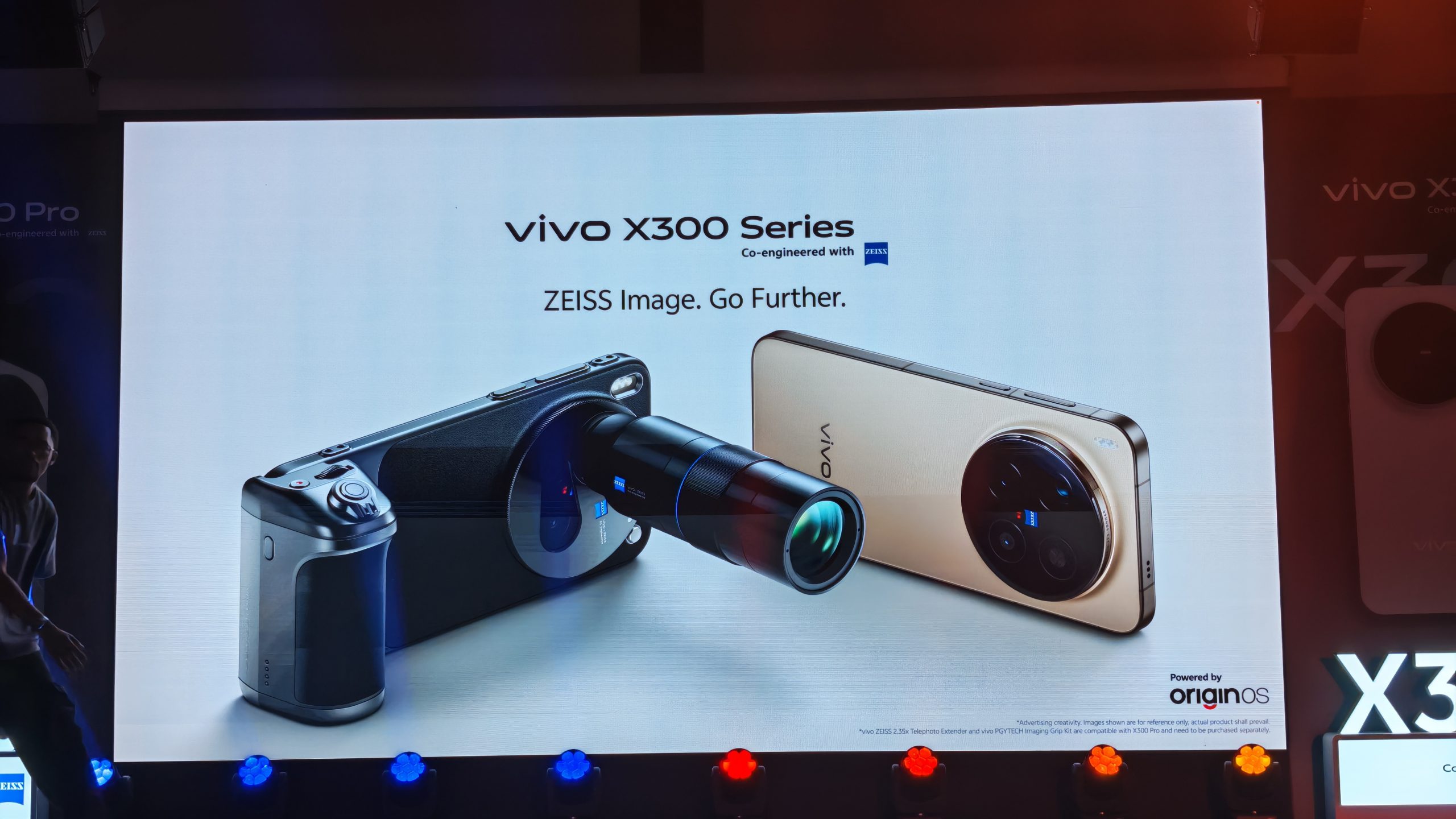
At a local launch event this evening, Vivo unveiled its X300 and X300 Pro smartphones. They are the first lot of new flagship smartphones to arrive in South Africa — those from Samsung, Honor, Huawei, et al. will be along in the coming months.
Having already launched in China in October last year and much of Europe in the months that followed, there isn’t much we didn’t already know, other than the always-elusive local price and availability date.
As with the X200 Pro that launched early last year, Vivo’s focus is very much on photography with the X300 series, in case the prominent Zeiss branding wasn’t enough of a giveaway.
Happy pic snappin’
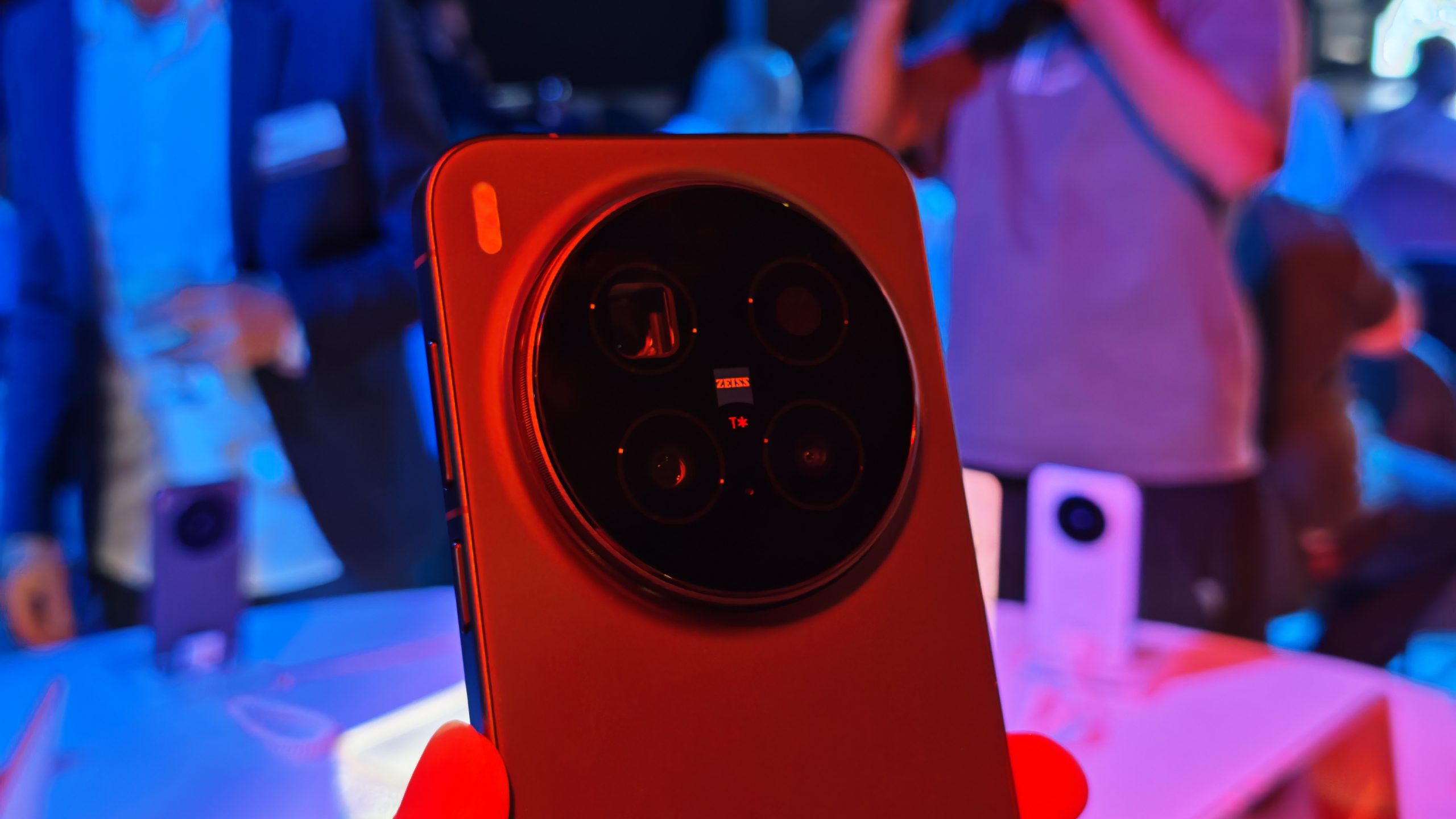
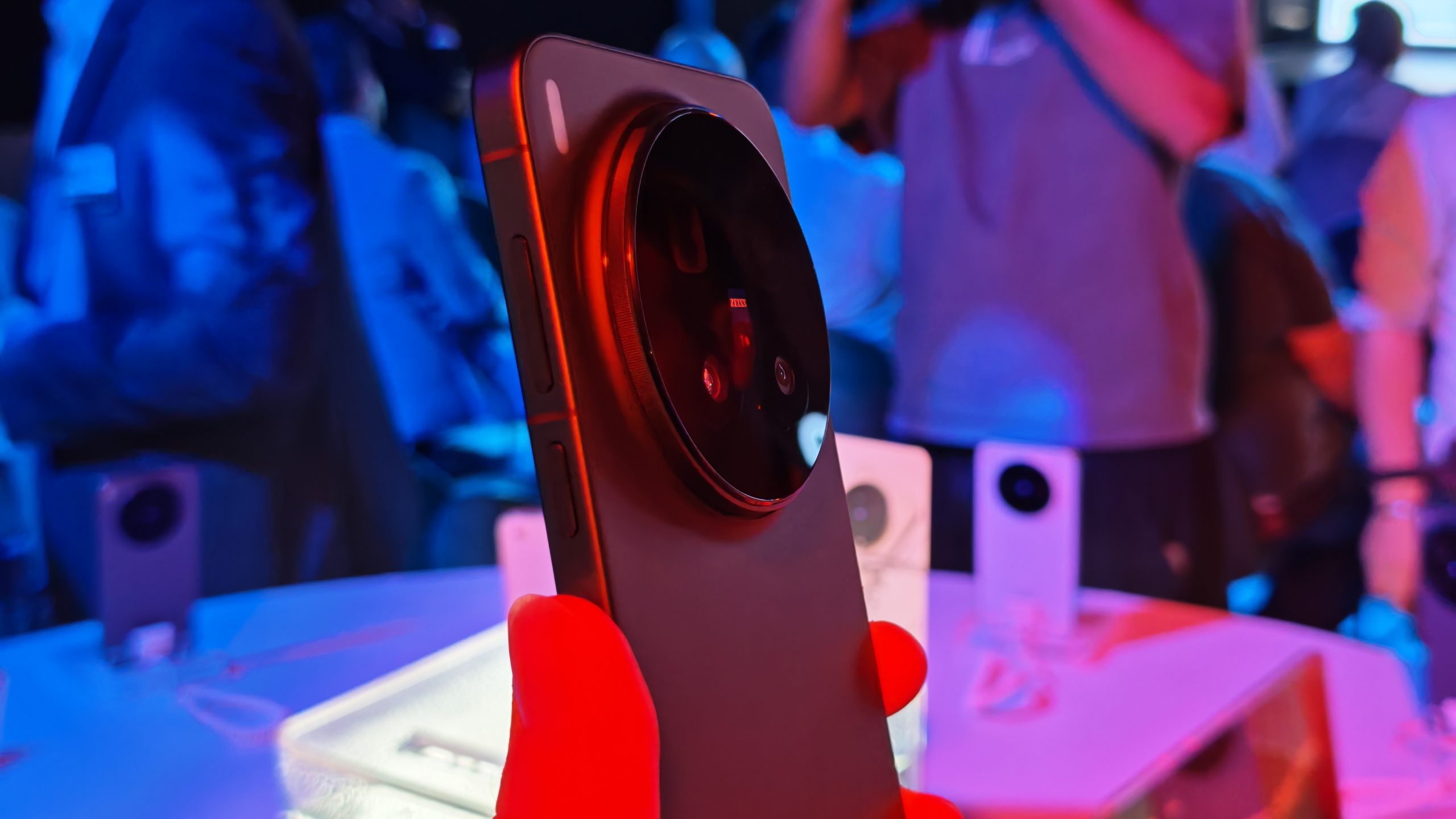
Both devices use a new 200MP ‘HPB’ imaging sensor, co-developed with Samsung. It acts as the main shooter in the base X300, with a snappy f/1.7 aperture and OIS (optical image stabilisation). It is joined by a pair of 50MP sensors for ultra-wide and telephoto shots, with the latter also sporting OIS and 3x optical zoom.
In the X300 Pro, the 200MP HPB sensor serves as the telephoto shooter with a slower f/2.7 aperture, OIS, and 3.7x optical zoom, while a new 50MP Sony LYT-828 sensor serves as the main shooter. It features the same specs as the X200 Pro’s 50MP main camera. Another 50MP sensor joins them as the ultra-wide shooter. Both devices use the same 50MP front-facing selfie cam.
Vivo isn’t only focusing on still images, as all three rear sensors in the X300 Pro support 4K 120fps 10-bit Log and Dolby Vision HDR video recording.
The Vivo smartphones pair feature MediaTek’s flagship SoC, the Dimensity 9500. It is based on TSMC’s 3nm process and uses MediaTek’s ‘All Big Core’ design, which is supposed to deliver “unmatched performance, stunning graphics, and advanced intelligence”. We’ll see about that.
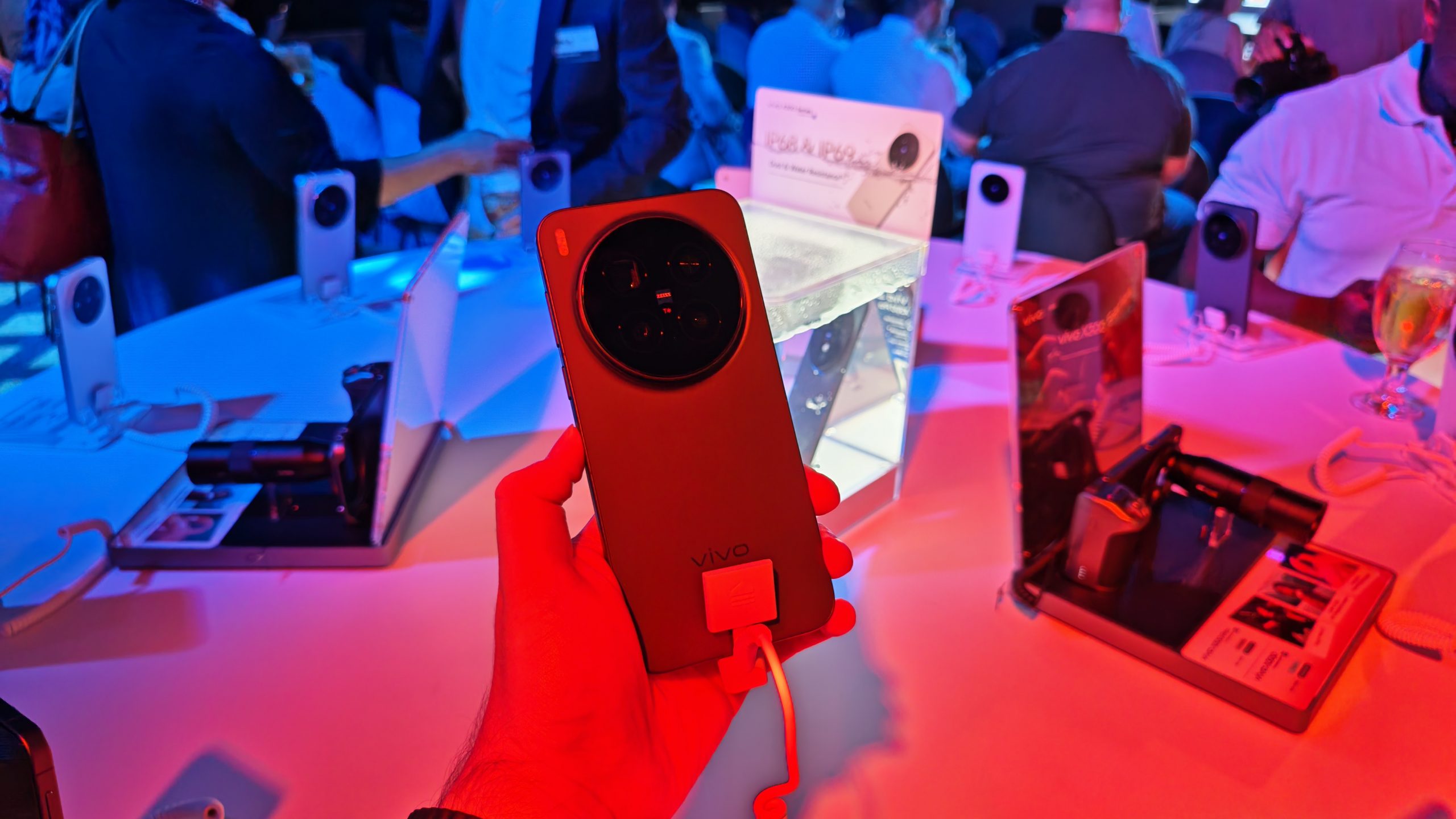
Vivo has supplied both devices with 16GB of RAM and 512GB of non-expandable storage. Both will ship with Vivo’s newly renovated OriginOS 6, Vivo’s take on Android 16.
That also means Vivo AI will show up on the X300 series, whether you want it or not. Although we think it’s worth pointing out, Vivo’s implementation isn’t as egregious as others. You can mostly ignore it. What you probably won’t want to ignore (if you own an Apple computer, anyway) is what Vivo calls ‘Office Kit’. It allows for features like mirroring your smartphone’s display on your computer, file transfers, and note-taking.
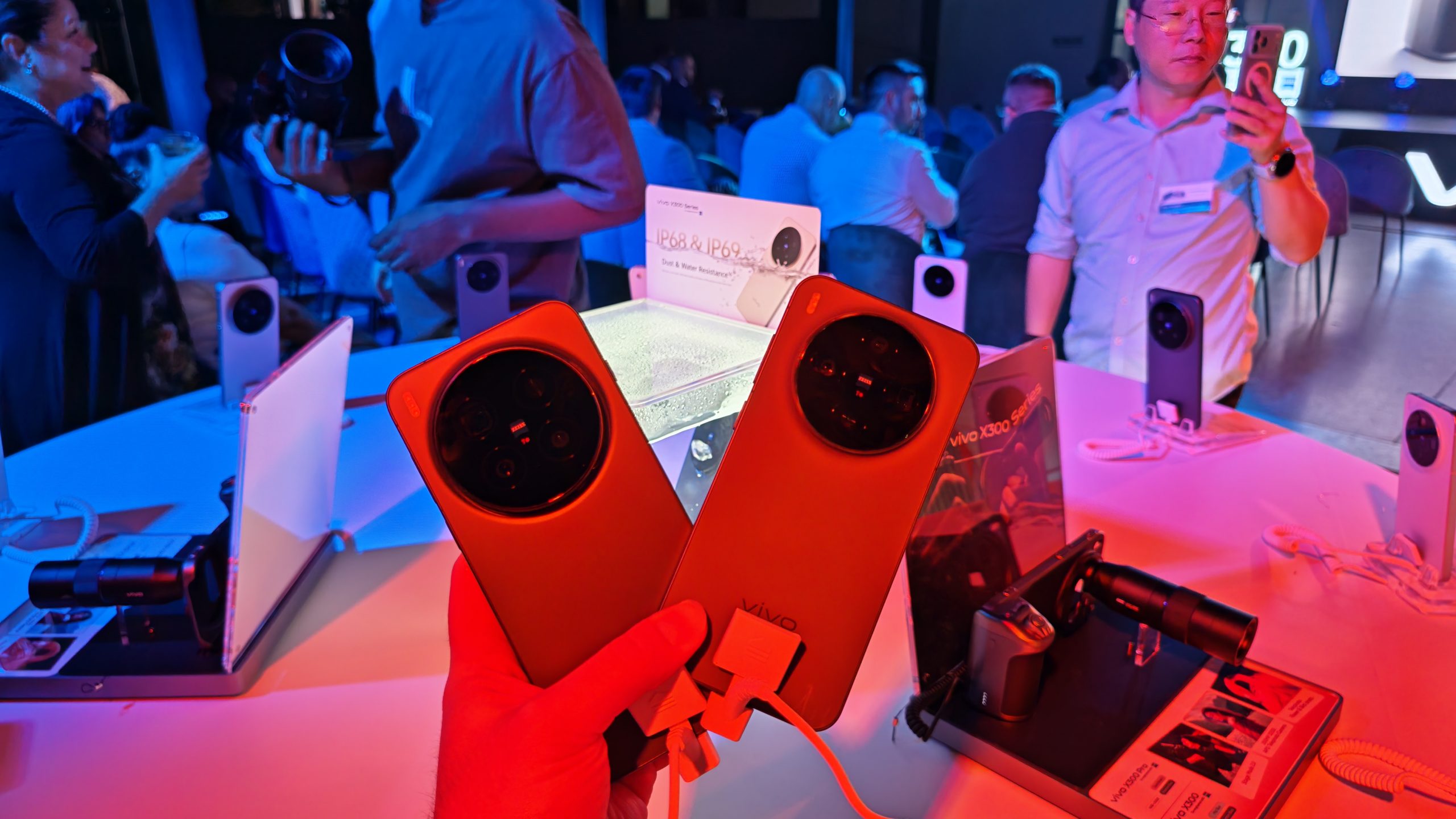
When they’re side-by-side, the larger X300 Pro stands out from its less capable sibling with its 6.78in LTPO AMOLED display. It ticks all the right flagship display boxes, while the slightly smaller, but still well-equipped 6.31in display on the base X300 might appeal more to small-handed folks. No matter the size of your hands, you’ll probably like the flattened side rails and smoothed corners. Well, we did while we were playing with the units on display.
Due to their differing sizes, they offer differing battery capacities. The base X300 houses a 6,040mAh silicon-carbon cell. It’s upgraded to 6,510mAh in the X300 Pro. Both feature the same 90W wired and 40W wireless charging speeds.
Where to get yours?
 Vivo’s new X300 series should be available from 06 February 2026 via most major mobile networks, so it’s not too much longer to wait. When they do eventually become available (you can already pre-order), you can expect to pay R32,000 for the base X300 and R40,000 for the X300 Pro. We’ve had limited time with these devices, so we’ll have to reserve judgment on whether they earn their keep when they show up at Stuff HQ.
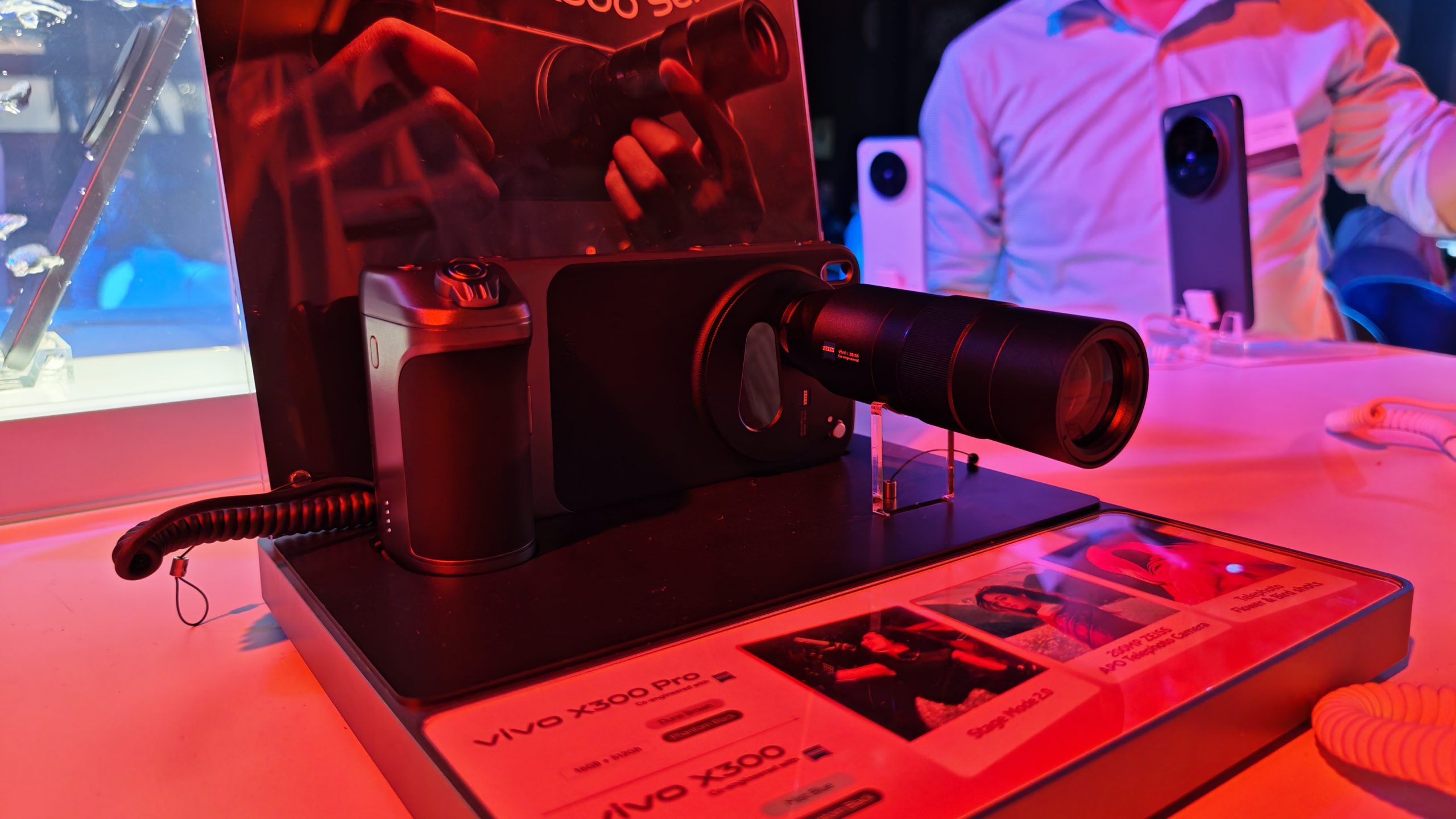
The company is also making its 2.35x telephoto extender kit available to SA buyers. You can slot either device into the custom case to take your zooming to new heights. It requires a separate purchase, however, unless you purchase the X300 Pro from Vodacom. Then you might get the kit for free. If you’re not that lucky, you’ll need to drop another R7,000 to take one home with you.