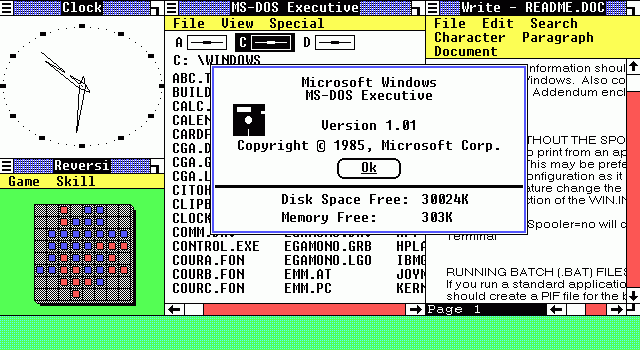

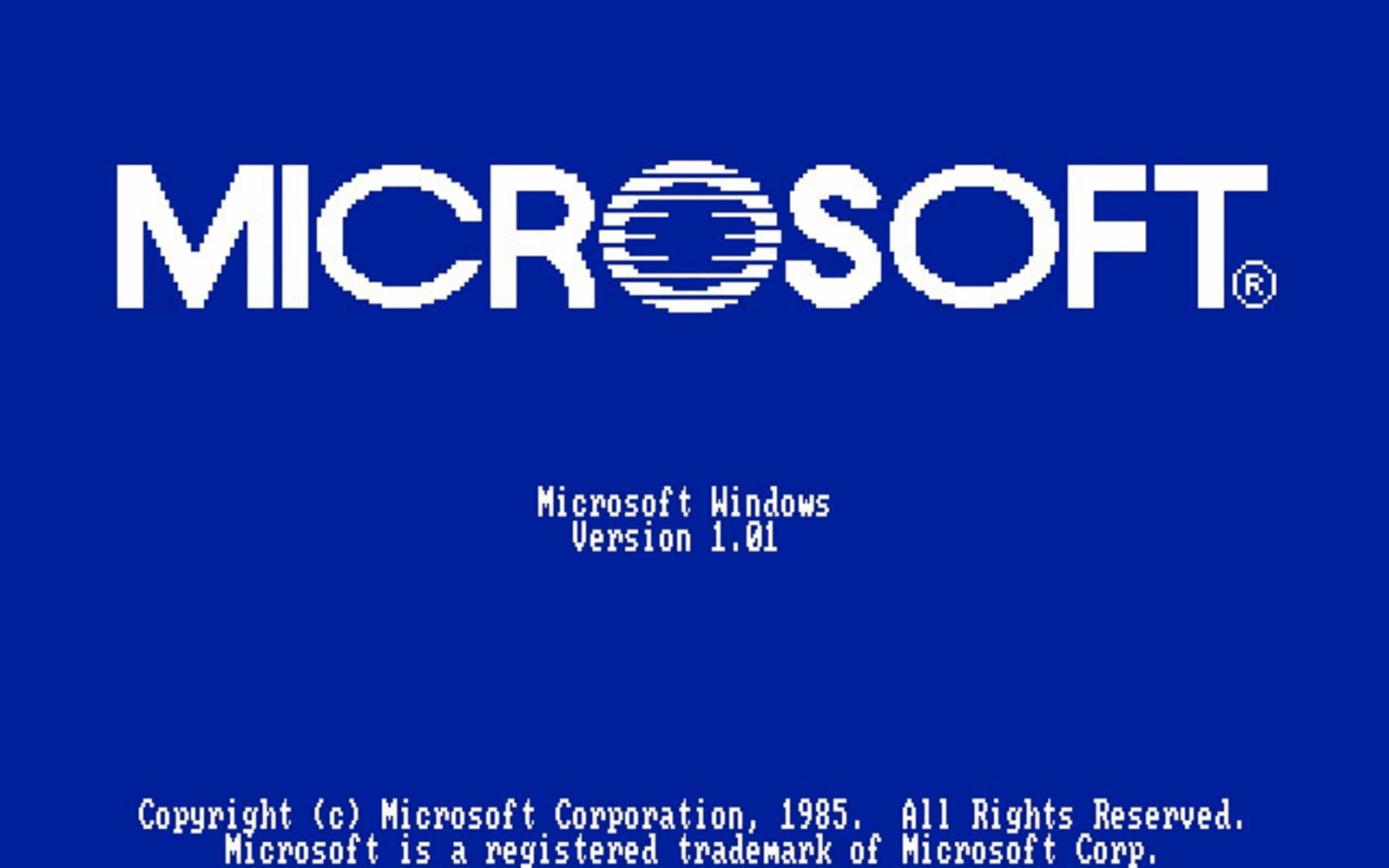
Something tells me you’re not going to say “original is best” for this one…
Even by 1985 standards, Windows 1.0 was clunky and garish. It lacked finesse, and Microsoft had ripped out overlapping windows before launch, leaving a weird tiling system that made multitasking awkward on tiny displays. The result felt like a value-range OS, which was kind of the point: $99 got you a graphical display for the masses, with modest system requirements. And if you were a journalist, Microsoft even sent you a free squeegee to get you excited.
Huh? Were Microsoft Windows’ windows particularly dirty or something?
Maybe someone thought the squeegee tied in with a joke about the launch event giving everyone a “clear view of what’s new in microcomputer software”. At least Microsoft didn’t ship journalists a box of glass shards and tell them to have a smashing time. Regardless, things didn’t improve. Windows was scheduled for April 1984 but slipped to November 1985. By then, no novelty squeegee could scrub off its ‘vapourware’ label – and hacks weren’t any kinder when the finished article arrived.
So not even remotely close to a win-win for Windows?
Not at first. Bill Gates had predicted 90% adoption within months, but even by April 1987 just 500,000 copies had sold. Reviewers grumbled that Windows was slow and pointless and lacked apps. Gates reasoned it was “important to heed the lessons of failure”. A decade later, Microsoft had done just that. Windows was no longer
awful and had obliterated its rivals. And those early adopters? Amazingly, that $99 bought them support until 2001- if they were daft enough to be still running it.