

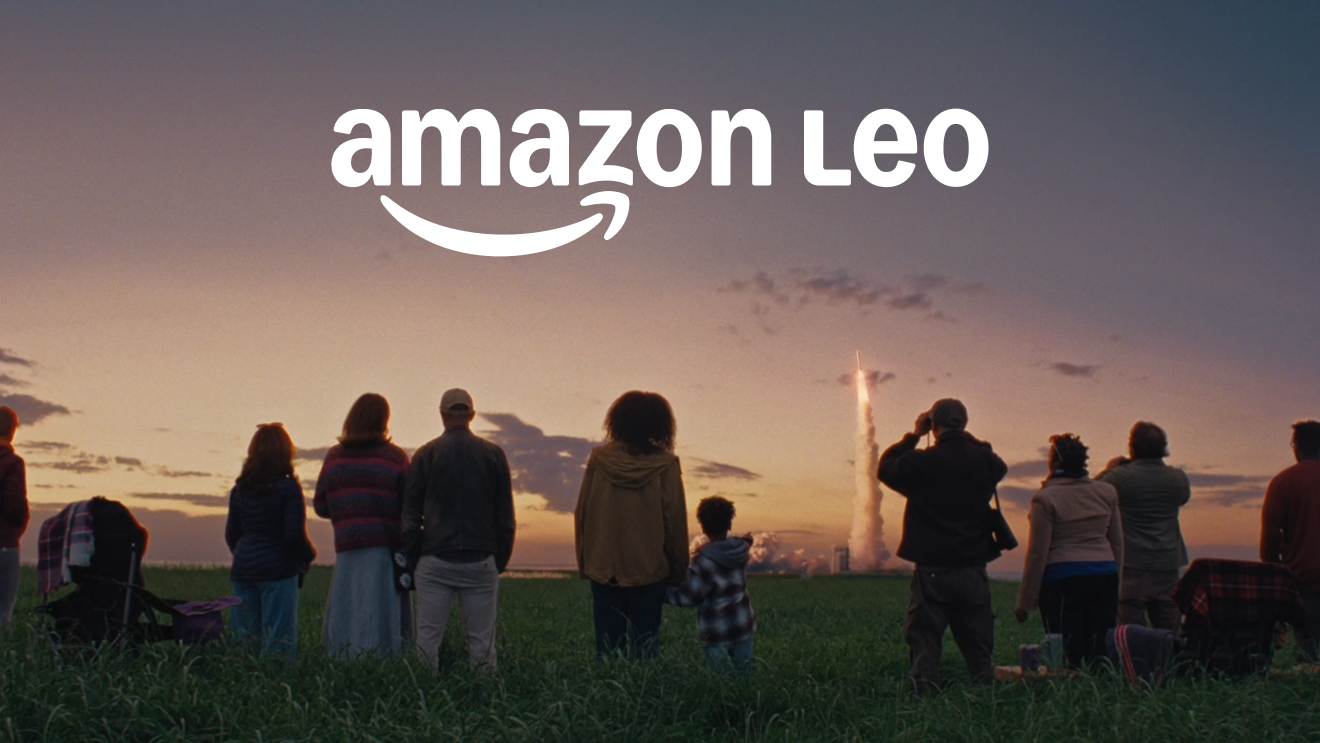
Amazon’s Project Kuiper, the satellite internet competitor to Starlink, now has an official title — Amazon Leo. The name comes from where Amazon’s satellite constellations hang around, in low-Earth orbit.
The rebranding marks the start of ‘proper’ operations, now that the company has some 150 satellites in orbit around the planet. Amazon has some way to go to catch up to Starlink’s 8,937 (as of October 2025) orbiting units, but the hardest part of starting any venture is figuring out a name.
Why yes, I’m a Leo
According to Amazon’s Rajeev Badyal, “[Amazon Leo’s] long-term mission remains the same, and we’re making good progress against it. We now operate one of the largest satellite production lines on the planet. We’ve invented some of the most advanced customer terminals ever built, including the first commercial phased array antenna to support gigabit speeds.”
“We’re continuing to build out our initial satellite constellation, and will begin rolling out service once we’ve added more coverage and capacity to the network.”
One of the ways the company could expand its coverage could be on Blue Origin’s New Glenn rockets. A second test flight just saw the Bezos-owned venture get its rocket into space (for the second time), while its booster was successfully landed on an ocean-based platform.
The test flight also launched NASA satellites into space, a preparation for sending Amazon Leo’s internet-beaming hardware to the same destination. Blue Origin, once its rocket service is fully operational, is contracted to help Amazon expand its network. Amazon has previously used NASA, SpaceX, and United Launch Alliance rockets to send its payloads up, with upcoming 2026 launches planned using the European Space Agency’s Ariane 6 and Blue Origin’s New Glenn rocket systems.