

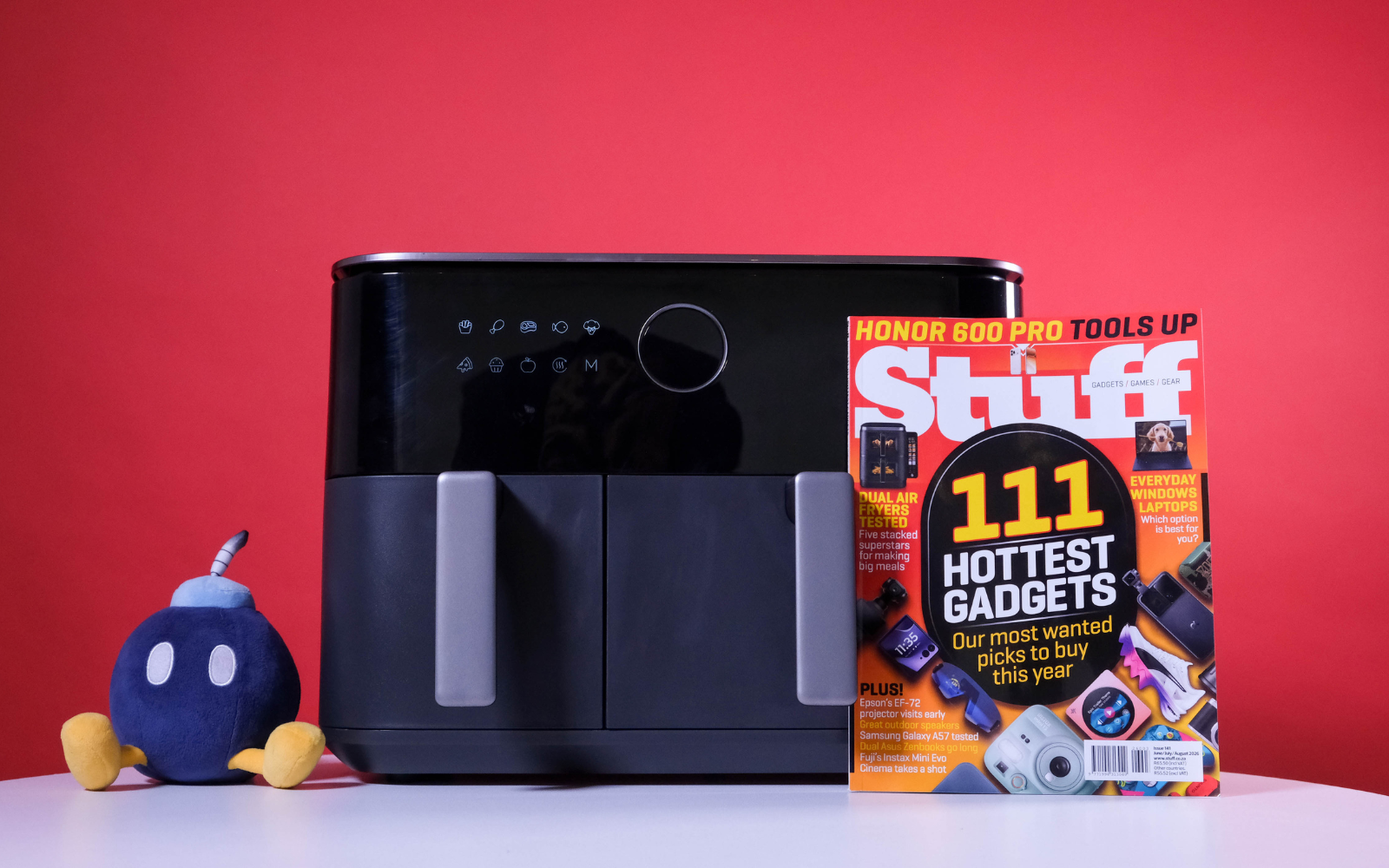
The Xiaomi Dual Zone Air Fryer 10L makes a convincing case for having two baskets instead of one. It's versatile, consistent, and large enough to accommodate the whole meal, rather than just a portion. It's also R3,800, which makes this more of a luxury upgrade rather than an obvious kitchen essential. For that... look elsewhere.
-
Design
-
Features
-
Ease of use
-
Versatility
-
Value
Air fryers are old hat. That hasn’t stopped them from invading every kitchen from here to Timbuktu. The in thing now? Dual-zone baskets, for when the bigger baskets just aren’t cutting it. Xiaomi’s gone ahead and obliged, providing 10L capacity split over two compartments to bring the whole meal together at once.
You’ll pay handsomely for the privilege, however. Xiaomi’s cornering the Saffas with a little more disposable income than the rest, charging R3,800 for the appliance. Sure, it’s a lil’ bit smarter than all the rest, but compared to something like Milex’s 10L oven… it’s hard to recommend unless you’re actively seeking this specific use case.
Two for the price of… two
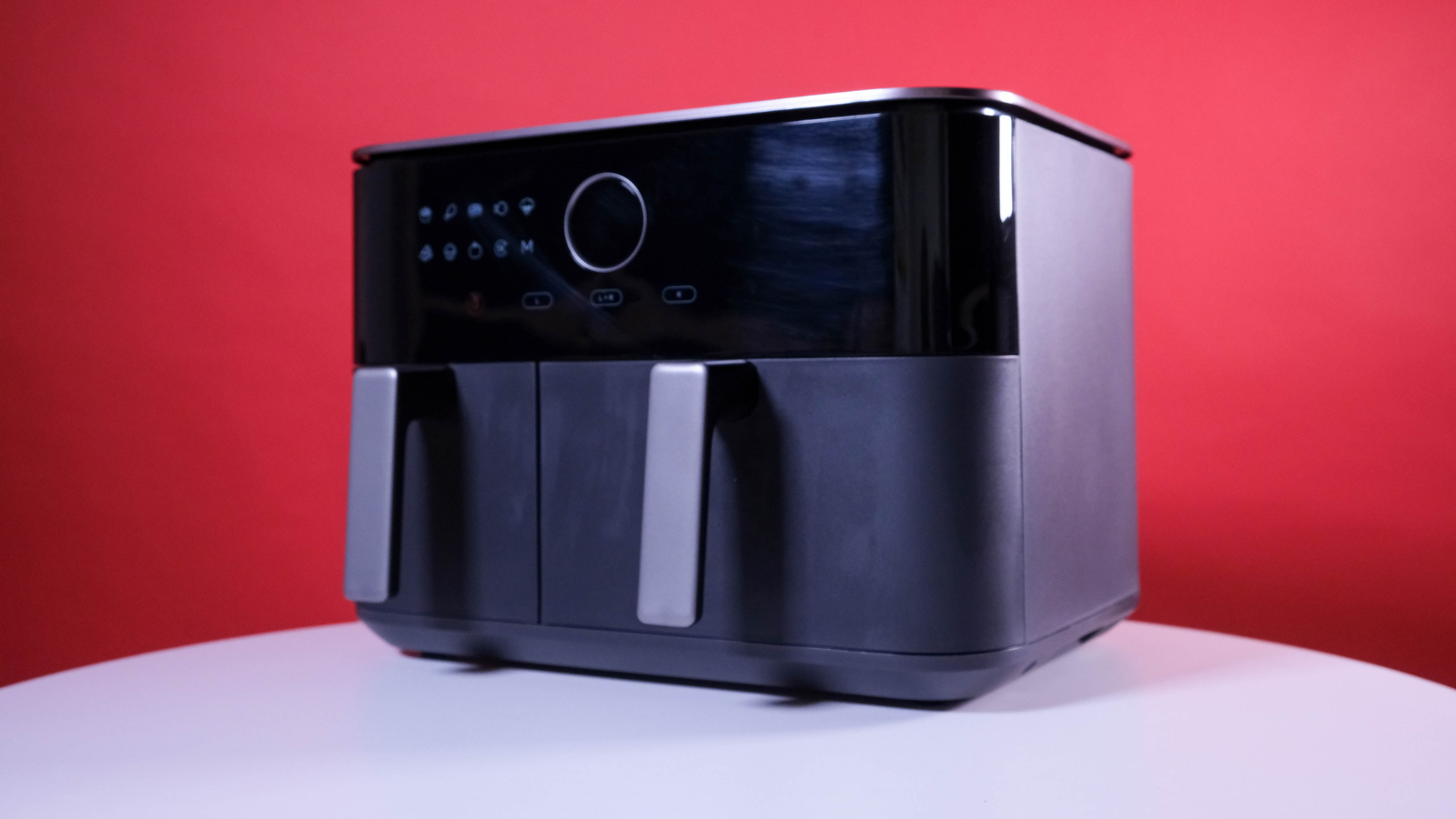
We’ll be the first to admit that having two baskets handy is incredibly useful. There’s no getting around it. Two baskets sit on the face, each with its own respective handle. You’ll be spending most of your time with the right, which holds the bulk of whatever you’re cooking thanks to its 6.5L capacity. The left basket handles the sides — oven crisps were a favourite — and holds 3.5L for the total of 10L. Enough for a full chicken, and a bit extra.
You’ll need to clear a fair amount of counter space before this gargantuan machine can take its place. It’s technically just as capable as other 10L models, but the dual-basket setup means Xiaomi’s gone a little wider here to compensate. The difference is negligible if you’re converting from something similarly rated, though.
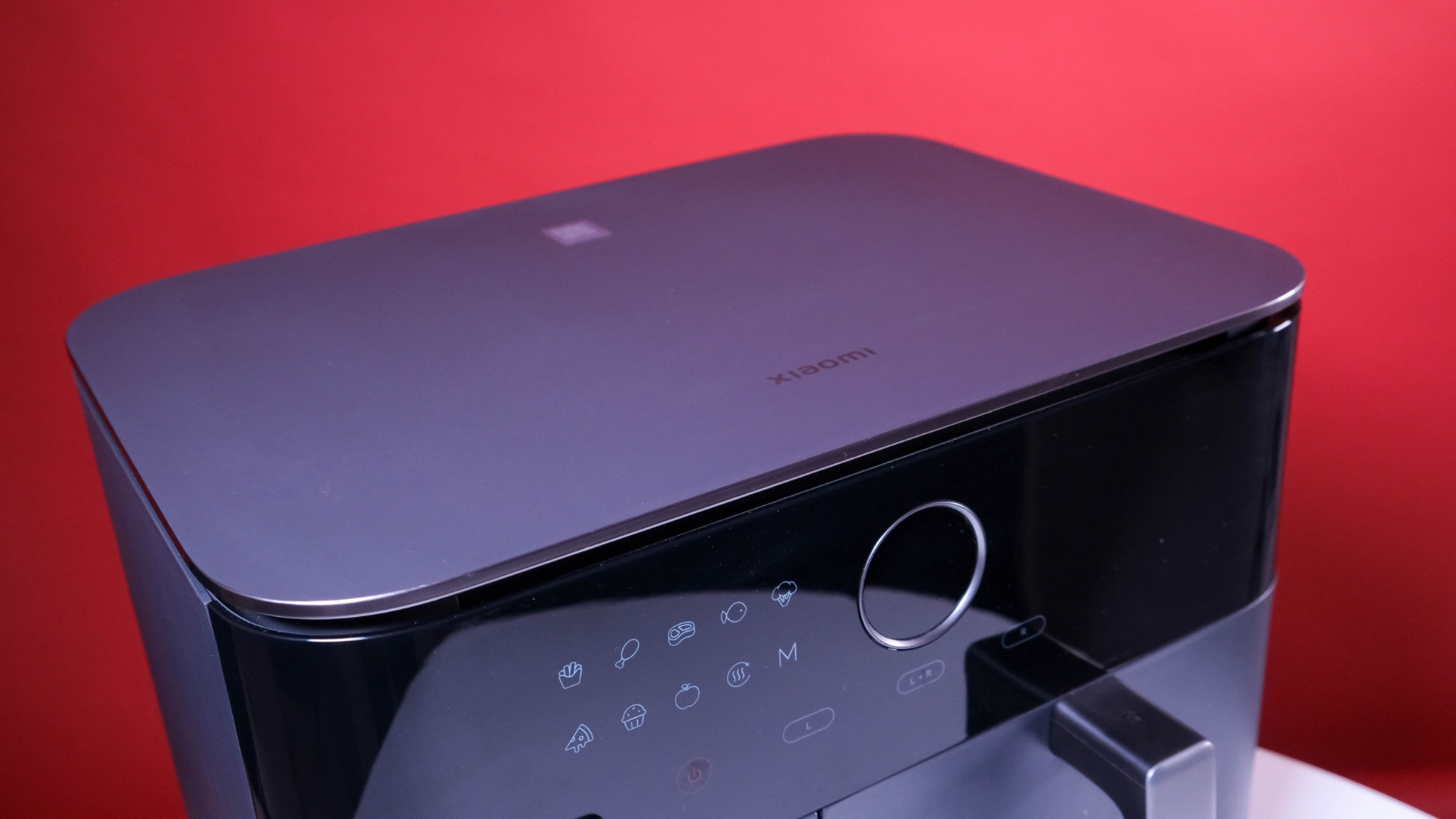
Xiaomi has at least justified the higher asking price by making sure the overall effect is a pleasant one. The all-plastic coating never quite betrays the price, providing a solid, good-looking device we didn’t mind taking up room in the kitchen. It’s a mostly matte affair, apart from the touchscreen face, which has a glossy look. It attracts a fair number of fingerprints on set-up, but since you’ll mostly touch the handles afterwards, it’s fine by us.
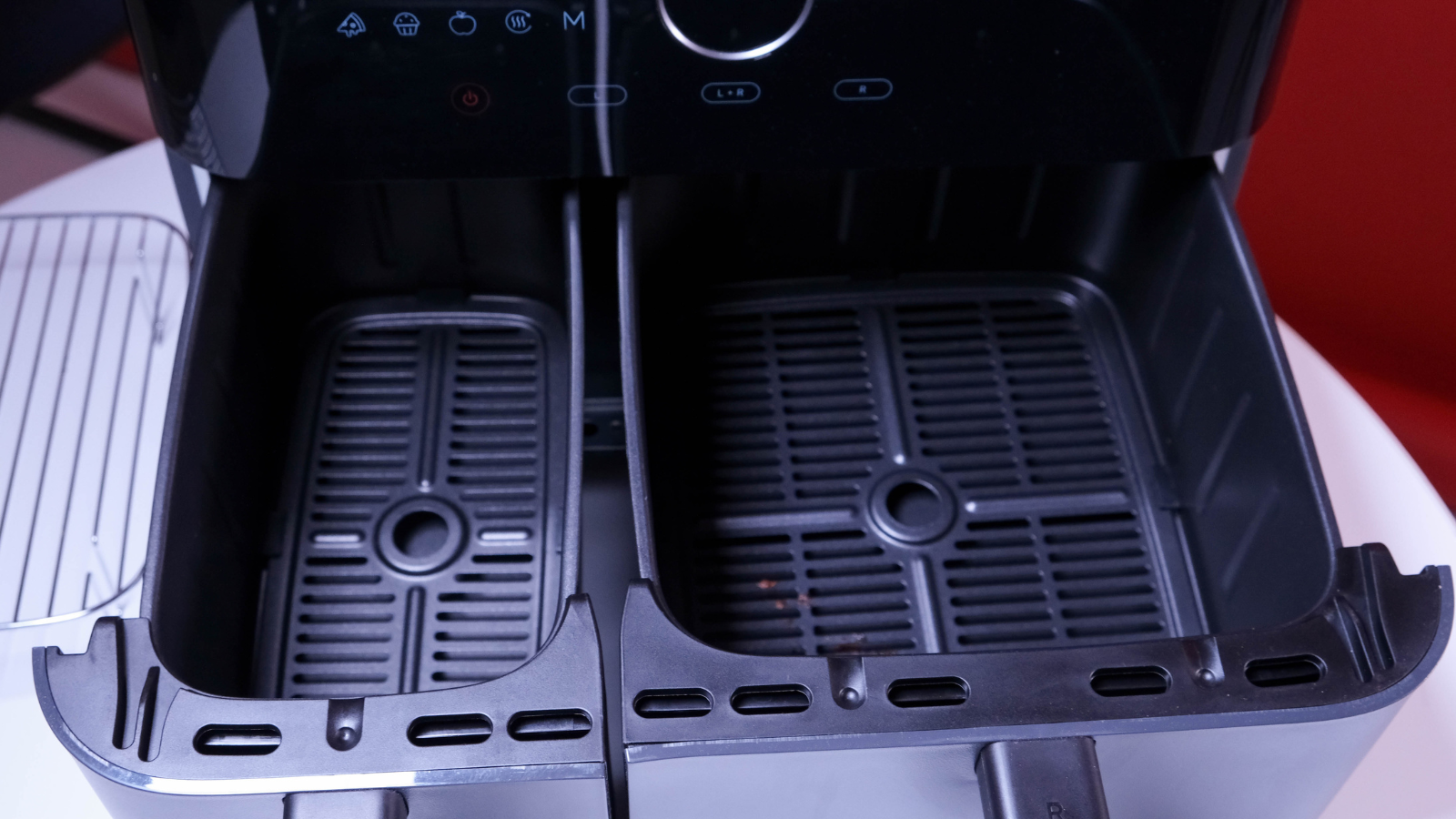
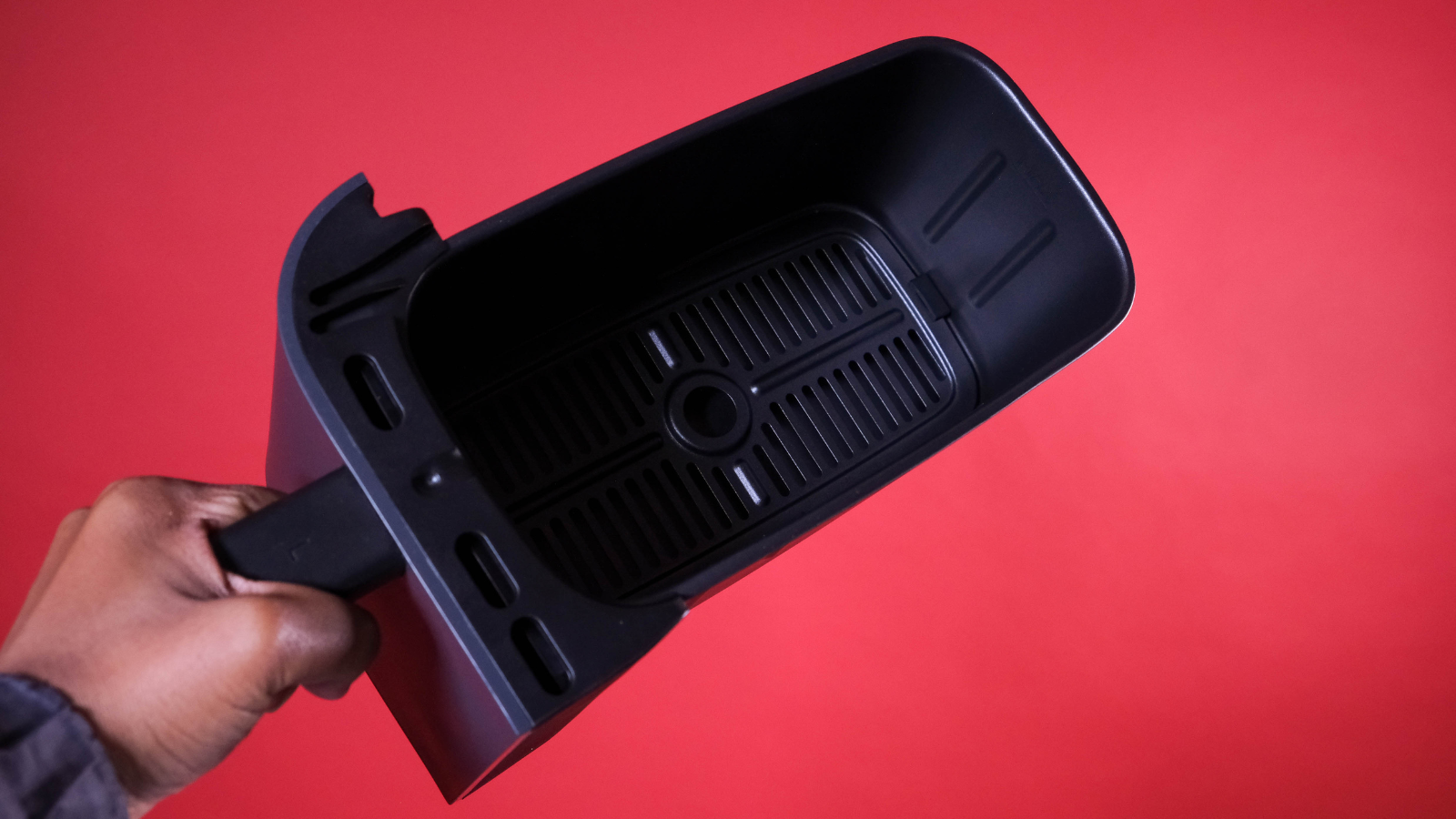
Turn it on, and you’re faced with a bunch of fairly intuitive controls. The usual suspects are there: temperature adjustment, stop/stop, timer, sync, flip reminder, and a bunch of presets to suit whatever you’re cooking. It goes a little further, allowing the user to specifically adjust times and temperature on a per-basket basis, for a more uniform cook. It’s let down slightly by a too-finicky touchscreen that requires multiple presses to get right.
We also faced issues with getting those baskets back in. Six times out of ten, it’ll slide in place with no issues. Every once in a while, you’ll be humbled by the geometry. We’re not ruling out a ‘skill issue’, which may be remedied by getting to know the machine better. Go figure.
It’s worth noting that those touchscreen prompts are loud. Every minute added, every temperature bump, is enough to let all of China know where you are. As far as we can tell, there’s no way to turn it off, let alone turn it down. Nitpick, sure. But it’s something to keep in mind if you’re fond of a midnight snack. Or rather, a full meal.
Out of the frying pan and into the air fryer
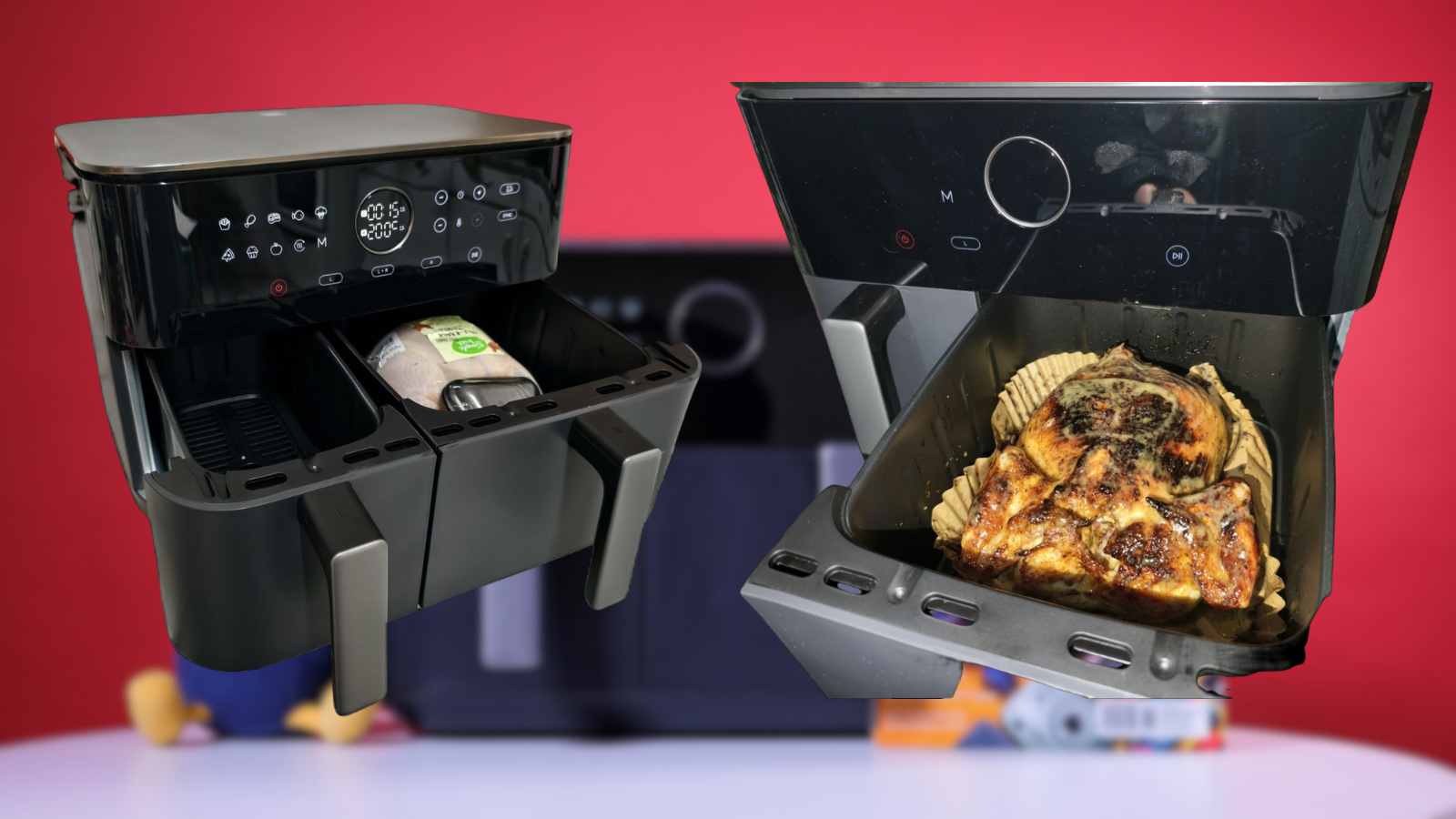
Those nitpicks faded right into the background by the time we sat down to our first Xiaomi-cooked meal. It made quick work of a whole chicken in roughly 40 minutes, while the left basket took point on a few minuscule potatoes. The results were spectacular, with the chicken feeling sufficiently juicy inside, while the skin was sumptuous. Credit goes to the chef’s spices, but we can’t deny that Xiaomi was the star of the show here. Seriously.
Nothing we threw at this air fryer was enough to knock it off balance. It played a big part in most of our meals, and delivered consistent results every time. Meats were cooked through, without overdoing it, while veggies were cooked to perfection. They may occasionally need a bit of aid, but that’ll be up to the user.
Being a mini convection oven, it was never going to be quiet. We were therefore rather surprised by just how quiet it was on a first use. It’s deceptively quiet. After the first minute or so, it returned to what we’d call ‘normal’ noise levels once those fans really kick in. That’s not a knock, but something to keep in mind.
We wouldn’t have minded it being a little smarter, however. We’re not talking about Wi-Fi support or a connected app, the omission of which was actually welcome in this 2026 landscape. For example, pulling out one basket will cause the entire cook to be paused ’til you’re ready to slide that basket back in. Even if the two aren’t in sync, it requires a little more foresight than we’d have liked to ensure both baskets are ready at the same time.
On the other hand, the ability to sync the two baskets up was a godsend. If the right basket needs ten more minutes than the one accompanying it, the left will “Hold” until they’re back in sync, and go from there. The ‘flip’ setting was another win, providing a built-in reminder to flip that steak at the halfway mark, if you ever need it.
Xiaomi Dual Zone Air Fryer 10L verdict
As useful as the dual-basket setup is, it’s simply not enough to justify the price. Particularly when other 10L models barely scratch the R1,300 mark for similarly delicious meals. True, Xiaomi has cooked up a bloody good air fryer here, and you won’t be disappointed if you’ve got cash to burn. The dual-zone setup is genuinely useful, the results are consistently excellent, and the little quality-of-life touches do make a difference, despite our whinging. But at R3,800, you’re paying one hell of a premium for them. If money is no object, go for it. Everyone else? You can skate on by and save a little cash.