
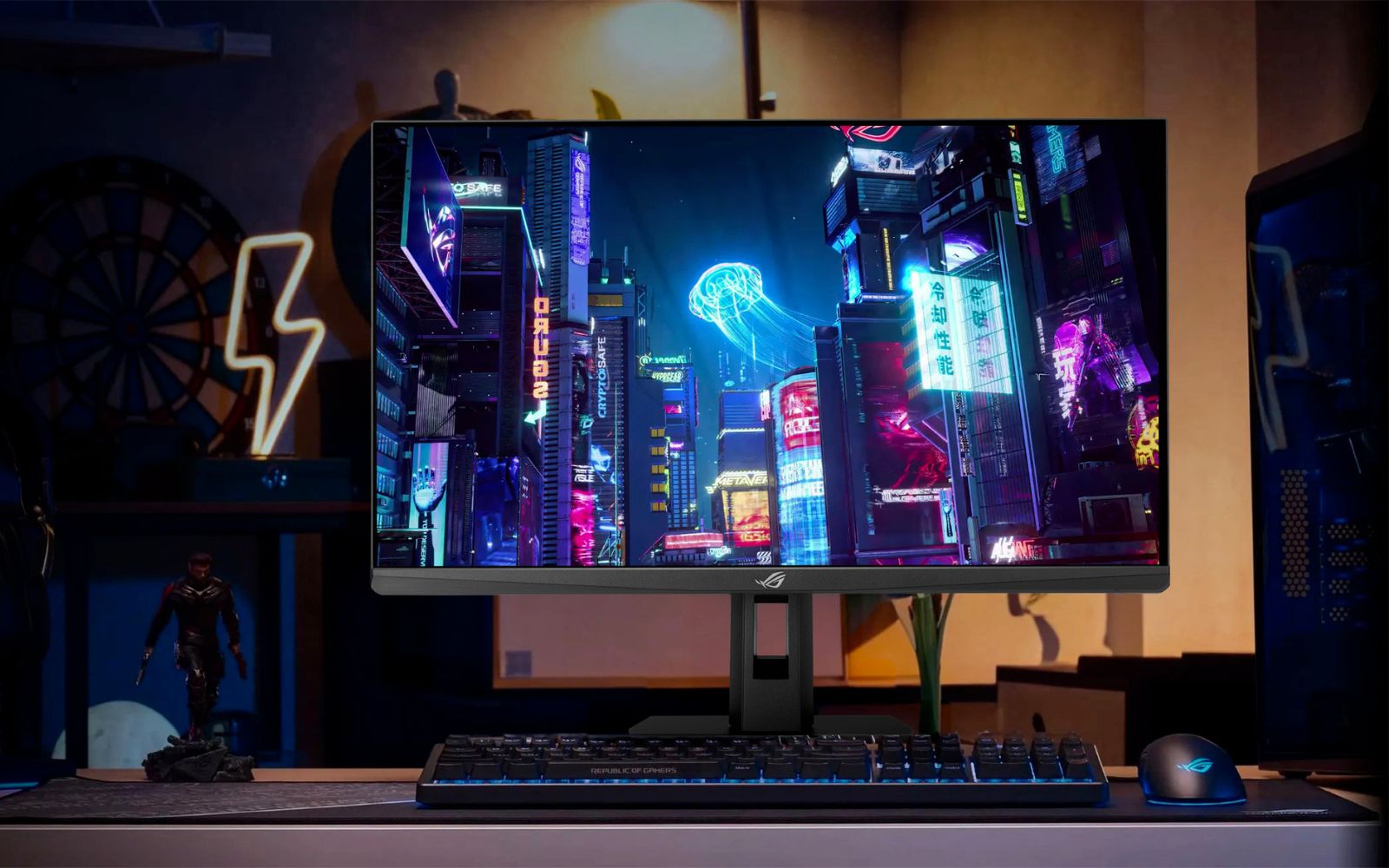
Asus has a pretty consistent record for making fantastic OLED monitors. Its new ROG Strix XG27UCMG might not feature an OLED panel, but the company reckons the three combinations of resolution and refresh rate are enough to make up for that.
Dual-mode monitors have been a thing since early 2024 when Asus unveiled the ROG Swift OLED PG32UCDP, the first monitor to allow switching between 4K at 240Hz and FHD at 480Hz.
So, while the XG27UCMG might not be the first monitor to offer three display modes (those bragging rights go to the MPG OLED 322URDX36 from MSI), it will very likely be cheaper, seeing as MSI’s tri-mode monitor is larger (31.5in) and features a 5th-gen QD-OLED panel.
Are three modes enough?
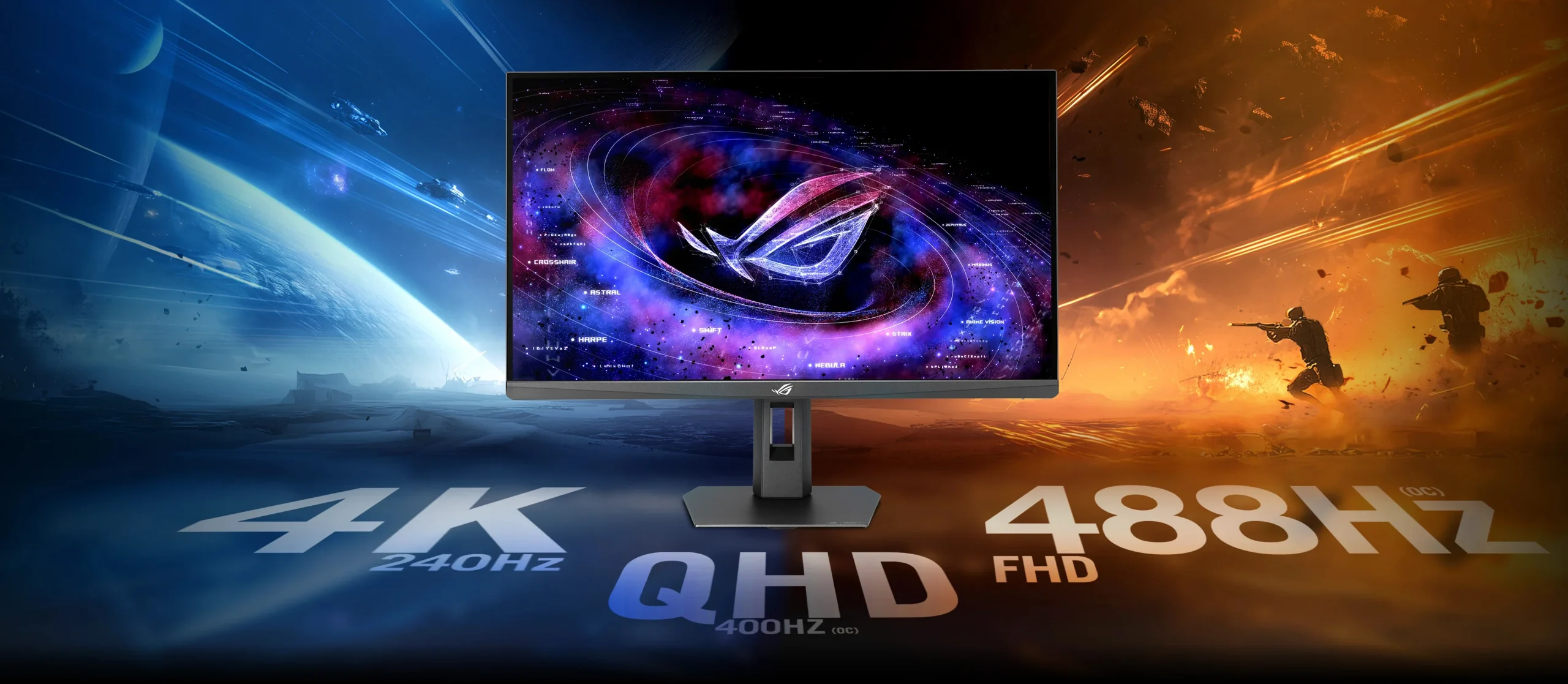
Its three modes are this monitor’s headline feature. The 27in IPS panel allows switching between 4K at 240Hz, QHD at 400Hz, and FHD at 488Hz with an overclock. Why Asus went with those figures might have to do with the technical limitations of the hardware. Or maybe they closed their eyes and took turns throwing darts at numbers on a wall. In either case, you’ve got three options, which is probably two more than you have right now.
Other notable specs and features include a claimed 0.3ms response time and a 1,300:1 contrast ratio. You shouldn’t expect high peak HDR brightness from an IPS panel. Asus lists it as 400 nits, the same as typical brightness. Colour coverage is supposed to be decent, with 95% DCI-P3 and 130% sRGB coverage, along with 10-bit colour depth and HDR10 support. If you’re a Dolby Vision main, you’re out of luck.
It’s 2026, in case you forgot, so it comes with an AI assistant baked in with three AI-powered features: AI visual, dynamic crosshair, and dynamic shadow boost. The first will automatically detect what is on your screen and adjust the visuals accordingly; the second will change the colour of your crosshair so it contrasts better with what’s behind it, and the third will automatically “enhance dark areas of the scene to make it easier to spot enemies.” You should be able to turn these off… we hope.
At least you won’t have to worry about screen tearing or ghosting with ELMB Sync (Extreme Low Motion Blur Sync) on offer, along with all the variable refresh rate tech you could need.
Connecting this monitor is done via DisplayPort 1.4 with display stream compression, an HDMI 2.1 port, or over USB-C with DisplayPort alt mode. There are also two USB-A 3.2 Gen 2 ports, and 15 W of USB-C Power Delivery. The stand will support tilt, swivel, pivot and height adjustments or VESA 100×100 mm mounting if you’d prefer. There will be plenty of RGB lighting, too. Fingers crossed that it arrives in South Africa before too long. If it does, we don’t expect it to be cheap.