
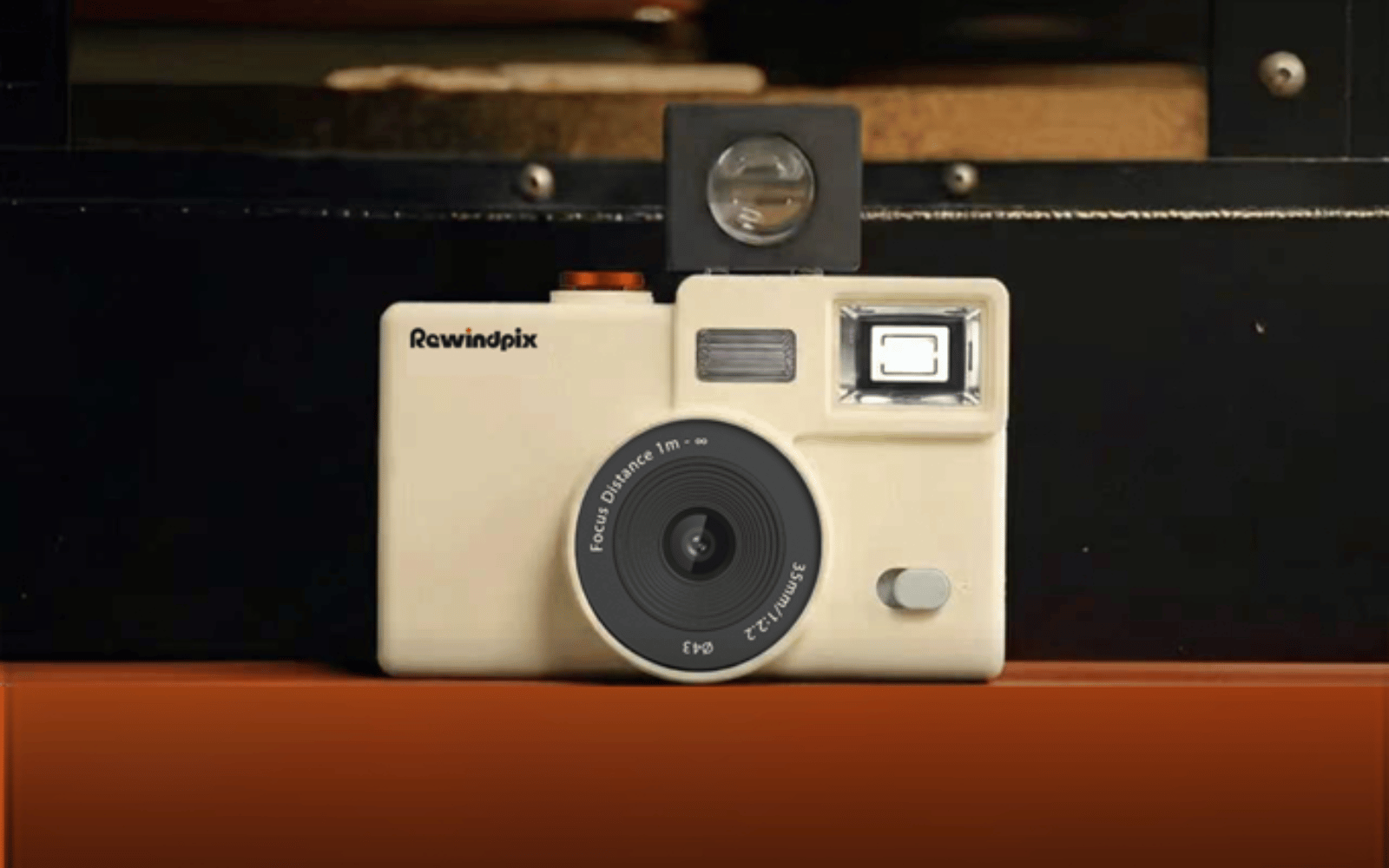
Very small retro cameras seem to be in vogue at present. The Rewindpix is just the latest contender, but unlike Yashica’s Tank or Haru’s super-teeny effort, this one is all modern. Sort of.
The new compact, currently being well-funded on Kickstarter, takes a very modern route to extremely retro results. It’s styled as a “non-disposable digital ‘film’ camera,” which basically means it’ll give you film camera results but without the need for… well, film. Or development. Or you can skip all of that, if you wish.
Be kind, Rewindpix
The Rewindpix uses a modern Sony 13MP image sensor, paired with a 35mm f/2.2 lens. That’s the first combination of new and old that backers can look forward to. There’s no digital display — because that would be cheating — but the camera’s creator, Xiao Liu, has opted for an optical viewfinder. Exposure is automatic; the flash is manually activated. Oh, and even though it’s a digital camera, you’ve still got to wind it. Really.
There’s also an app-based simulation of using real film. Virtual film rolls are loaded to the Rewindpix via a connected app. These behave like actual film, in that you won’t see any results until the entire ‘roll’ has been used and transferred back to a smartphone. Along with the film is a specific filter that will give your shots a specific feel. Or… you could also ignore that entirely. It’s your camera, after all. Or it will be, if you give the Kickstarter project enough money.
The camera supports microSD cards, and arrives with a 4GB card installed. In film mode, users get 36 shots at a time. If you’re shooting directly to the card, you can continue until the battery — we assume it’s rechargeable, but that’s not specified — dies or the card is full.
Rewindpix was seeking $15,000 on Kickstarter. It has blown past that, having raised some $305,000 at the time of writing. If you’re quick enough, you can nab one for R2,200 ($120). If you’re slow, you’ll pay R3,400 ($200), the full retail price for the basic setup. And yes, the camera will be delivered to South Africa once they’ve gone into production.