

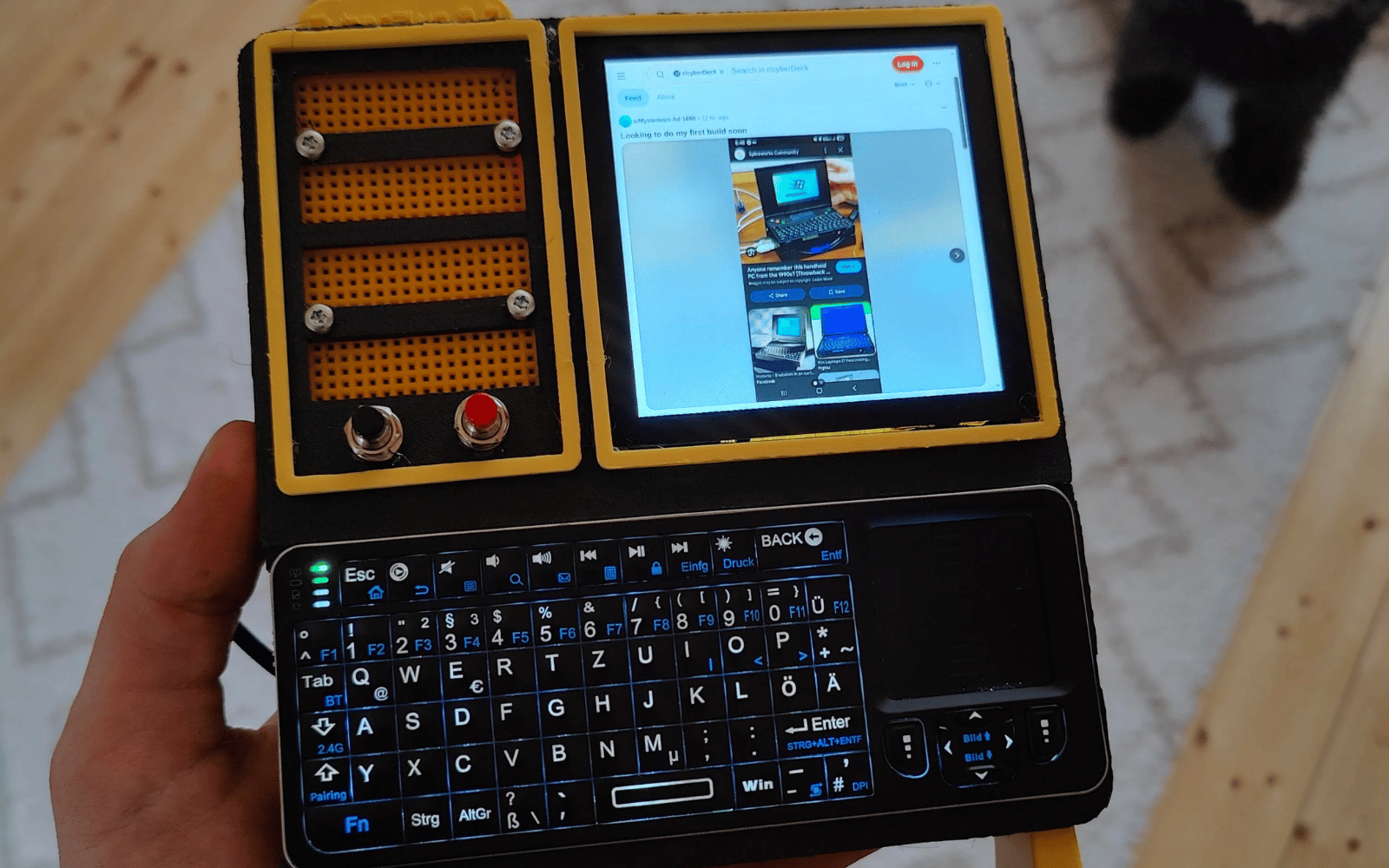
Some people buy computers, others make the hardware they’ve always needed. The creator of the CyberPlug, a person known as PickentCode, is the latter sort. And the result, a portable computer designed to integrate components via an embedded breadboard, is something we never knew we needed in our lives.
Sadly, these are unlikely to wind up at retail. A home project, the CyberPlug is in its third generation after the first two “had issues that made them unpleasant to use.” The components for making one of your own are, happily, easy to get and not all that expensive.
CyberPlug that gap
Well, not that expensive if you happen to have a 3D printer handy. PickentCode’s hardware comprises a Raspberry Pi 4 main board, a Rii K06 keyboard (which even has a tiny trackpad), and a 4in IPS touchscreen display, alongside a breadboard soldered to the setup’s GPIO (general-purpose input/output) pins.
A 5,000mAh power bank runs the whole setup, while the 3D-printed chassis has been improved over previous generations of the device. The ergonomics have been tweaked, the breadboard and motherboard can be accessed by removing the rear panel, and it even supports a secondary monitor and desktop usage if needed.
What would we do with a CyberPlug if one happened to drop into our laps? That’s not a question we’re comfortable asking, but it would probably start with a few purchases of integrated circuits, diodes, resistors, and other bits to plug into the solderless breadboard. For now, though, we’re just going to stare at it from afar and wish we had one.