
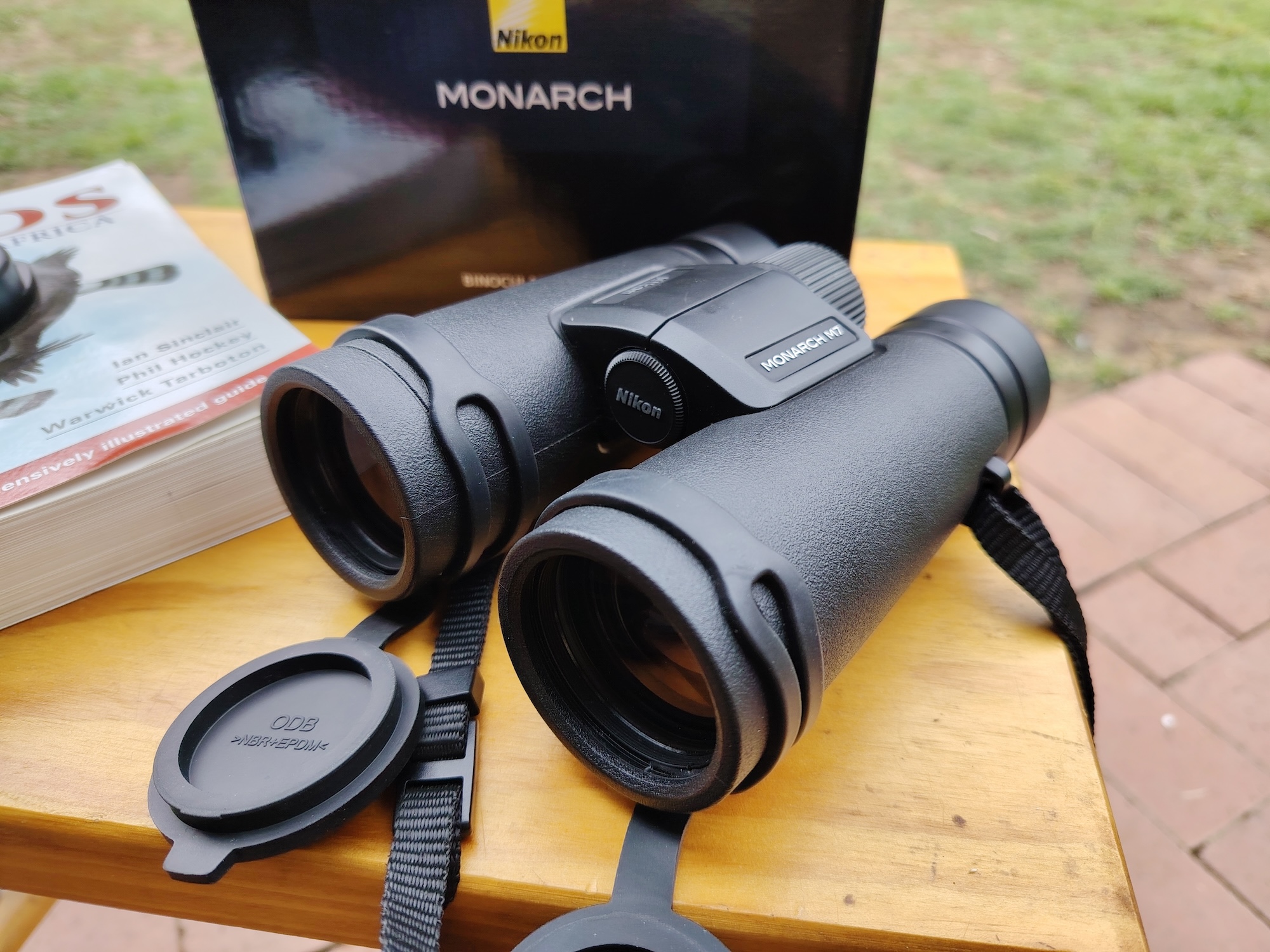
Binoculars are like rabbits -- they can multiply when you're not looking. But if you're adamant that you'll only own one pair, Nikon's Monarch M7 10 x 42s are a compelling choice. The objectives are large enough for day or night use, the China-sourced ED optics are excellent, and they should withstand inclement weather. They'll also shrug off common scenarios that can degrade images, thanks to these roof prism binoculars' brilliant internal baffling.
-
Comfort
-
Lens quality
-
Versatility
-
Value
The Nikon Monarch M7 10 x 42 binoculars are one of the rare distance-shrinking gadgets that pass through Stuff‘s doors in search of assessment. That’s a pity, since they’re so fun to use. Previously, we’ve seen the surprisingly affordable Svbony SV202 8 x 32s and Fuji’s high-tech Tecno-Stabi 12 x 28 bins, but this new pair from Nikon may be the best general-purpose set we’ve seen for a while.
There’s plenty to like about the Monarch M7. They’re fairly rugged, compact, lightweight (as 10 x 42s go), and feature excellent optics for their R11,900 price. That price puts these into the mid-range as far as binocular optics go. They’re no Swarovski NL Pure 10 x 42s, but they’re also not priced like them either.
Birds in the hand
 Nikon’s Monarch M7 weighs in at just shy of 700 grams, but the weight is packed into a delightfully compact roof prism frame that makes them easy to handle. You’ll get some forearm strain if you’re observing elevated positions for a while (and aren’t used to it), but general use will be remarkably fatigue-free.
The 42mm objective lenses incorporate ED (extra-low dispersion) elements, offering better colour correction than cheaper sets that do without. Nikon also uses phase-correction coatings, with the glass surfaces treated with a multilayer dielectric coating that promotes light transmission. We’ll get to how that affects the view through the generous field lenses in a bit.
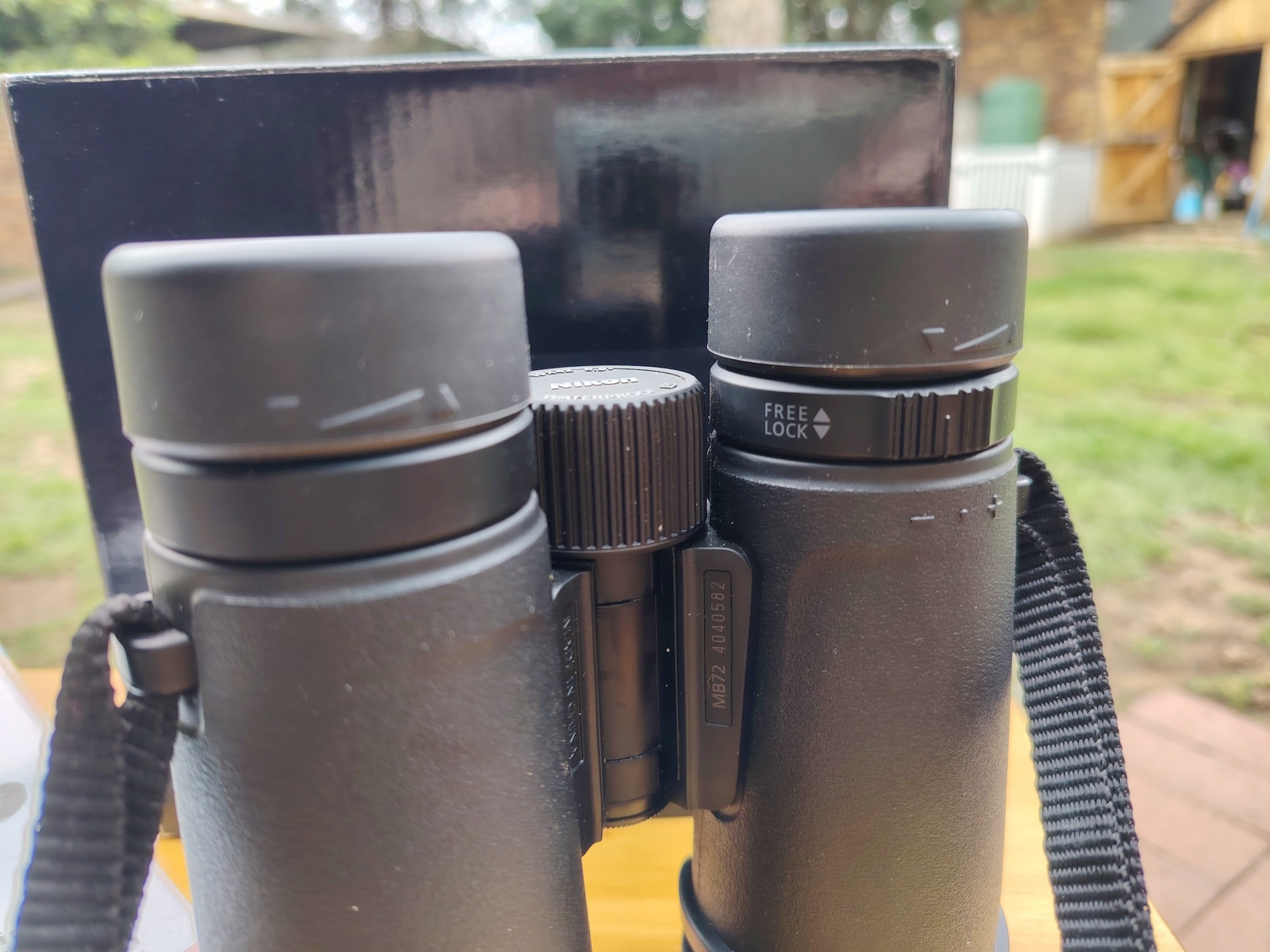
A couple of neat features are worth noting. Lens caps and one of Nikon’s straps live inside the Monarch M7’s box, as does a rugged nylon case. The M7 itself is fog- and waterproof (up to 1 metre, so don’t take them diving), but there’s one more bit we particularly liked. The diopter focus on the right-hand eyepiece can be locked down once the compensation is dialled in, meaning that fumbles when packing and unpacking won’t mess up your arrangement. Just pick your target, swirl the central focusing knob, and off you go.
An eye on the birdie
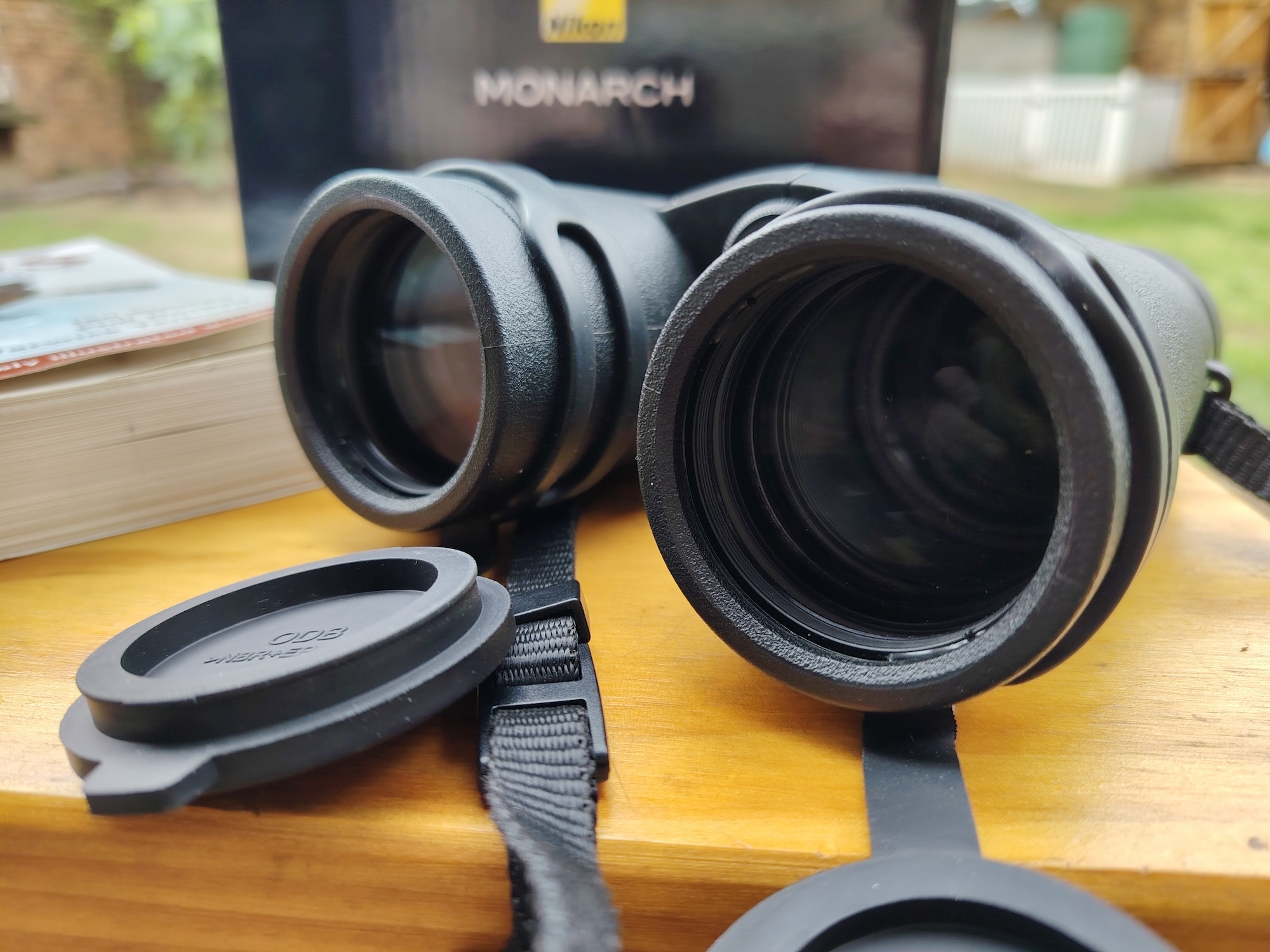
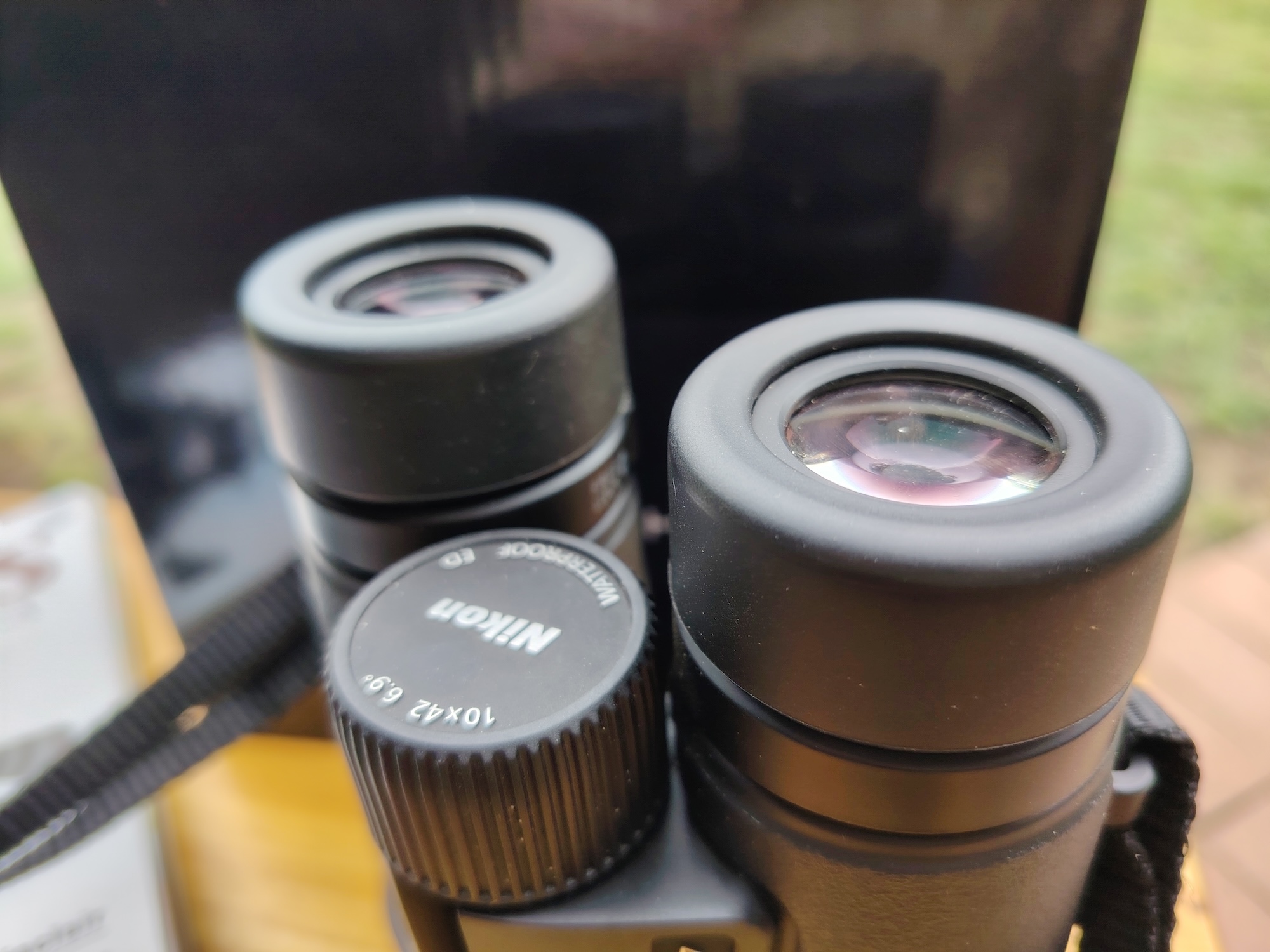
The Monarch M7’s are, strictly speaking, optimised for daytime use. Think game drives, sporting events, that sort of thing, but the specs and performance suit them for pretty much any conditions, whether that’s lighting or weather. During the day, we found that the M7s provided a clear, bright image — a product of Nikon’s coating expertise and those ED glass elements that outdid anything we had to compare them with.
That said, the lens quality is typical of mass production. We stacked these up against a vintage pair of Carl Zeiss Oberkochen 8 x 30s and, in terms of sharpness, the old German binoculars have a distinct advantage. But that advantage doesn’t last. The Oberkochens suffer, as many older (and cheaper) binoculars do, when lighting isn’t ideal. Overcast conditions, or when low-angle light (just after sunrise) is prevalent, can often fog out some of the view. The Monarch M7, thanks to its modern coatings and the excellent baffling visible through the objective lenses, suffers almost no ill effects in these situations.
The result is crisp, clear visuals during the day. Focus is smooth and controlled at any distance, colour correction and chromatic aberration are exceedingly well handled, and if you wanted to spy on rare avians in your back yard, this is the set of binoculars you should do it with. Unless you can afford a pair of modern Zeiss or Leica roof prisms, in which case you don’t need to read this assessment.
For the birds?
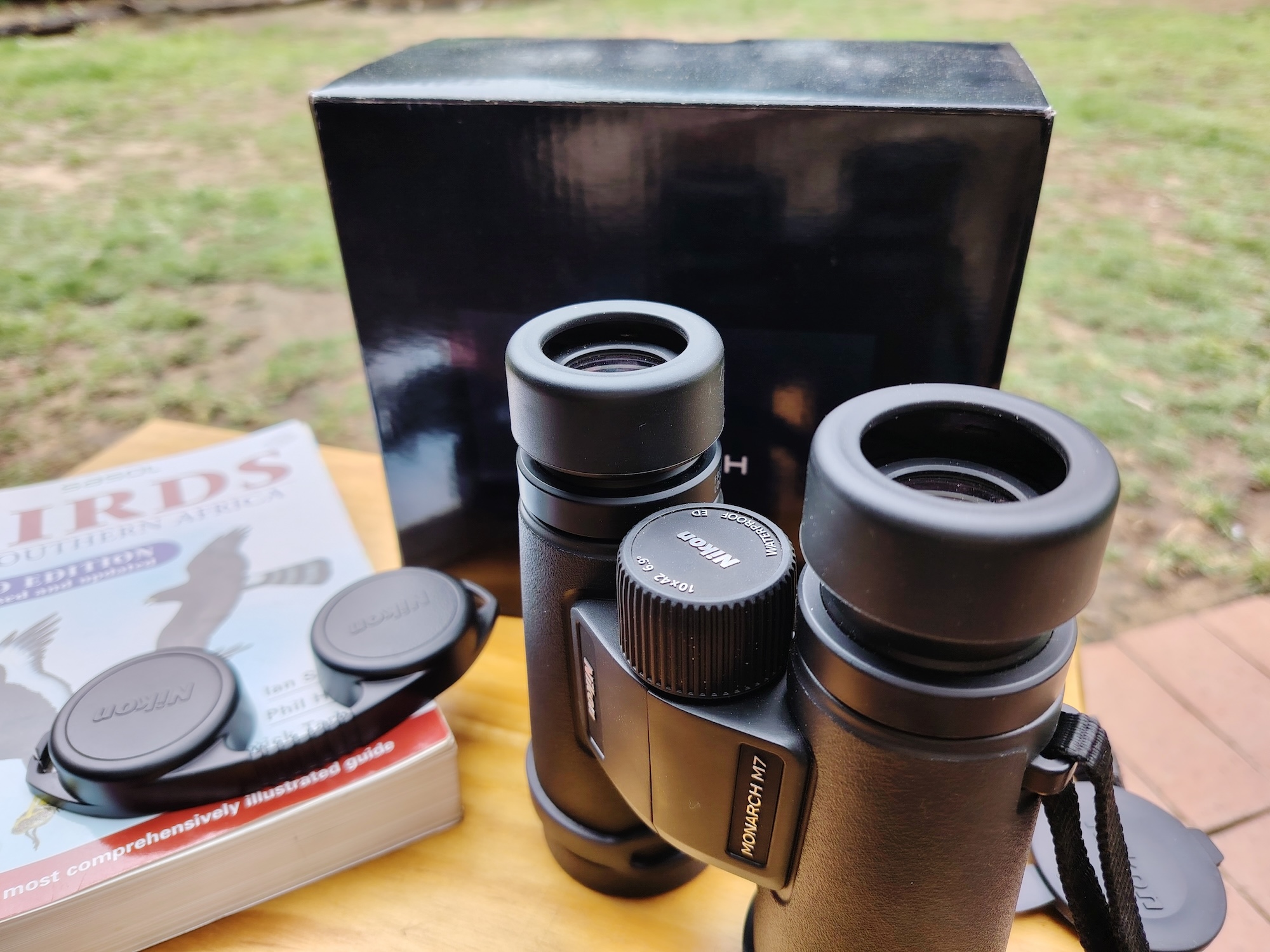
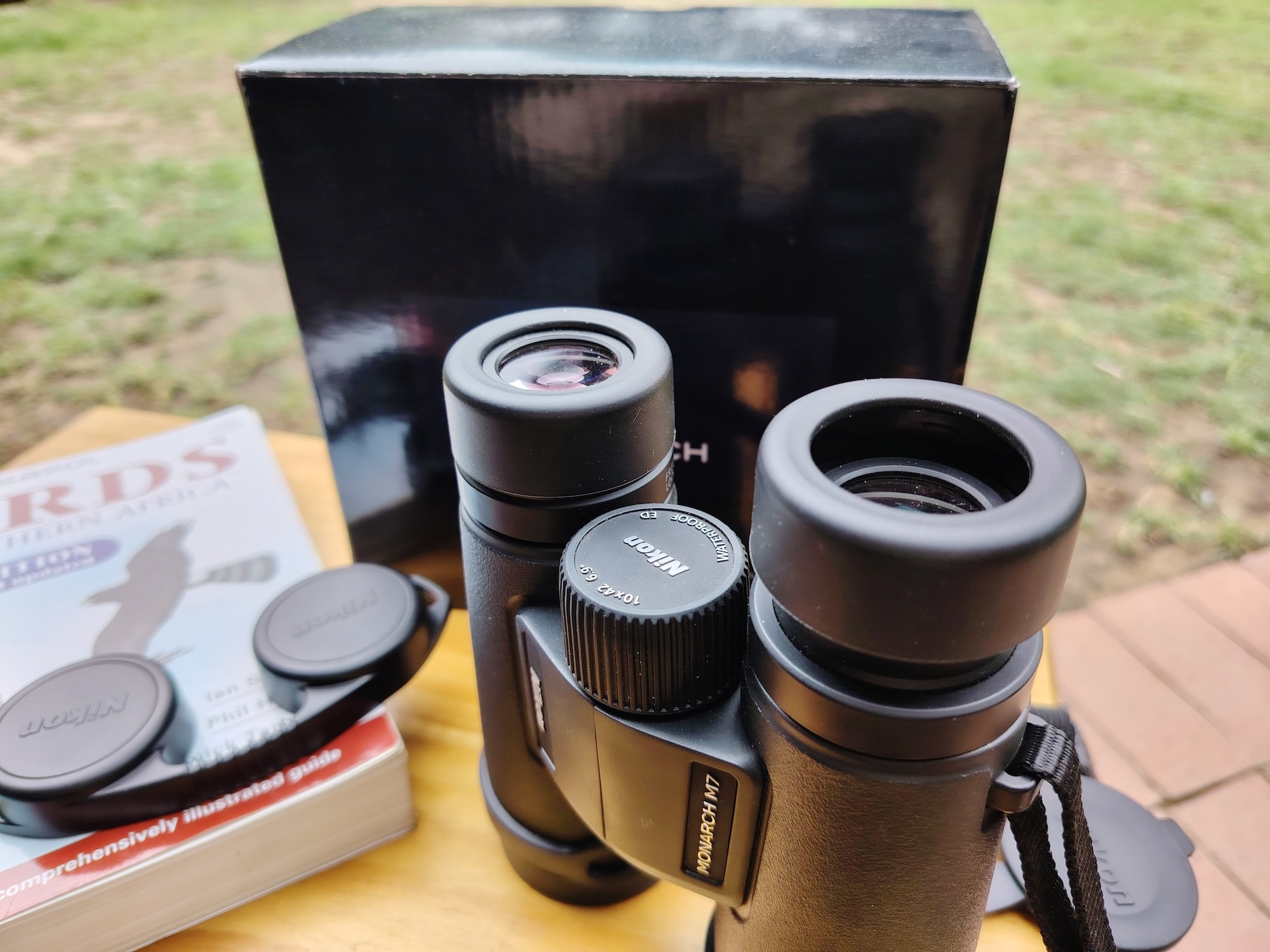
Night-time performance is equally good, though we’d prefer 50mm objectives for scanning the skies in the dark. We stacked these against a pair of Nikon Sporter EX 10 x 50s at night and the visual quality was about even, despite the Sporter’s being almost twenty years old. It’s not exactly a fair fight, however. The older bins’ increased objective size made for a brighter image with more reach, whether we were scanning star fields or observing the moon. Lunar features were also more visible, as they tend to be at 10x vs 8x.
That said, the Monarch M7’s night escapades were enormous fun. Colour rendition of stars were better here — again, Nikon’s modern coatings and particularly the phase correction layer do what they were designed to. Light loss through glass elements is kept at a minimum, while flooding from side light sources (whether it’s coming in to the objective or eyepiece) is kept at a minimum.
Speaking of side light, there’s plenty of eye relief in the Monarch M7s. Nikon reckons there’s 16.5mm, we reckon there’s more than enough space to see the entire field while wearing glasses. For finicky types, the eyepieces feature twist-up eyecups, which seat themselves at graduated stops, so you’ll always have your own personal eye placement perfect.
Nikon Monarch M7 10 x 42 verdict
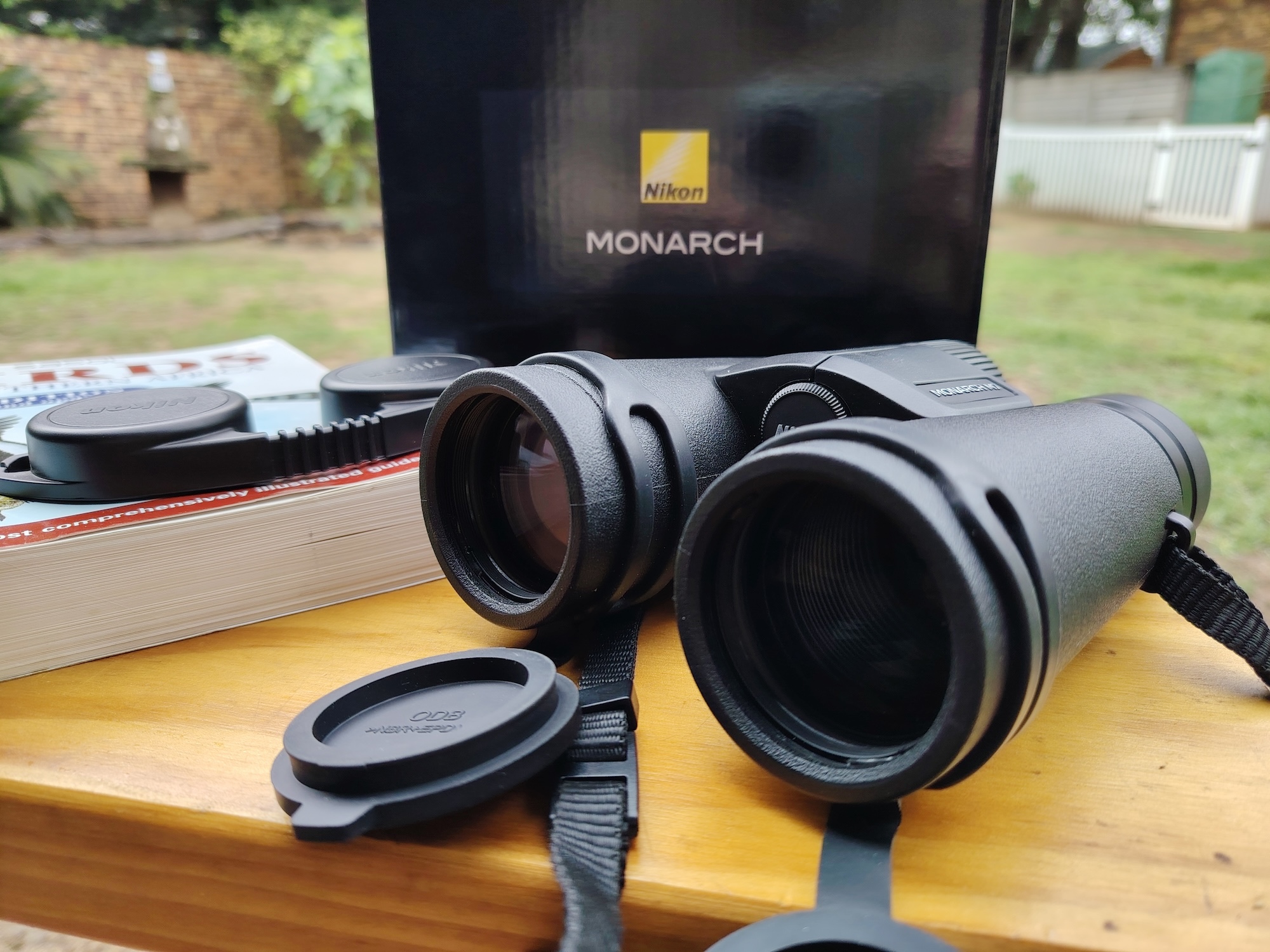 Are we going to recommend the Nikon Monarch M7 10 x 42s? Absolutely. If you’re looking to purchase a single, multi-role set of binoculars that will work day or night, these are an excellent candidate for your cash. Whether you’re bird- or star-watching, a clean, bright image that can be maintained with little effort is the main drawcard. The rugged features and ED glass help to justify the price tag as well.
There are better binoculars out there. Some of them were made in the 1960s. But, much like Sony’s headphones, competitors may do one or more things slightly better than the M7s can, but few at this price will be the complete package. Excellent performance and the compact frame combine to form images that you’ll find yourself staring at for far longer than you’d expect you would.