
Boox is the other other ereader brand on the market, with the Chinese brand maintaining less visibility in the South African market than Amazon’s Kindle or Rakuten’s Kobo devices. Stuff has been watching for a while, however, and there’s something new coming from readers who take the path less travelled.
Boox are for reading
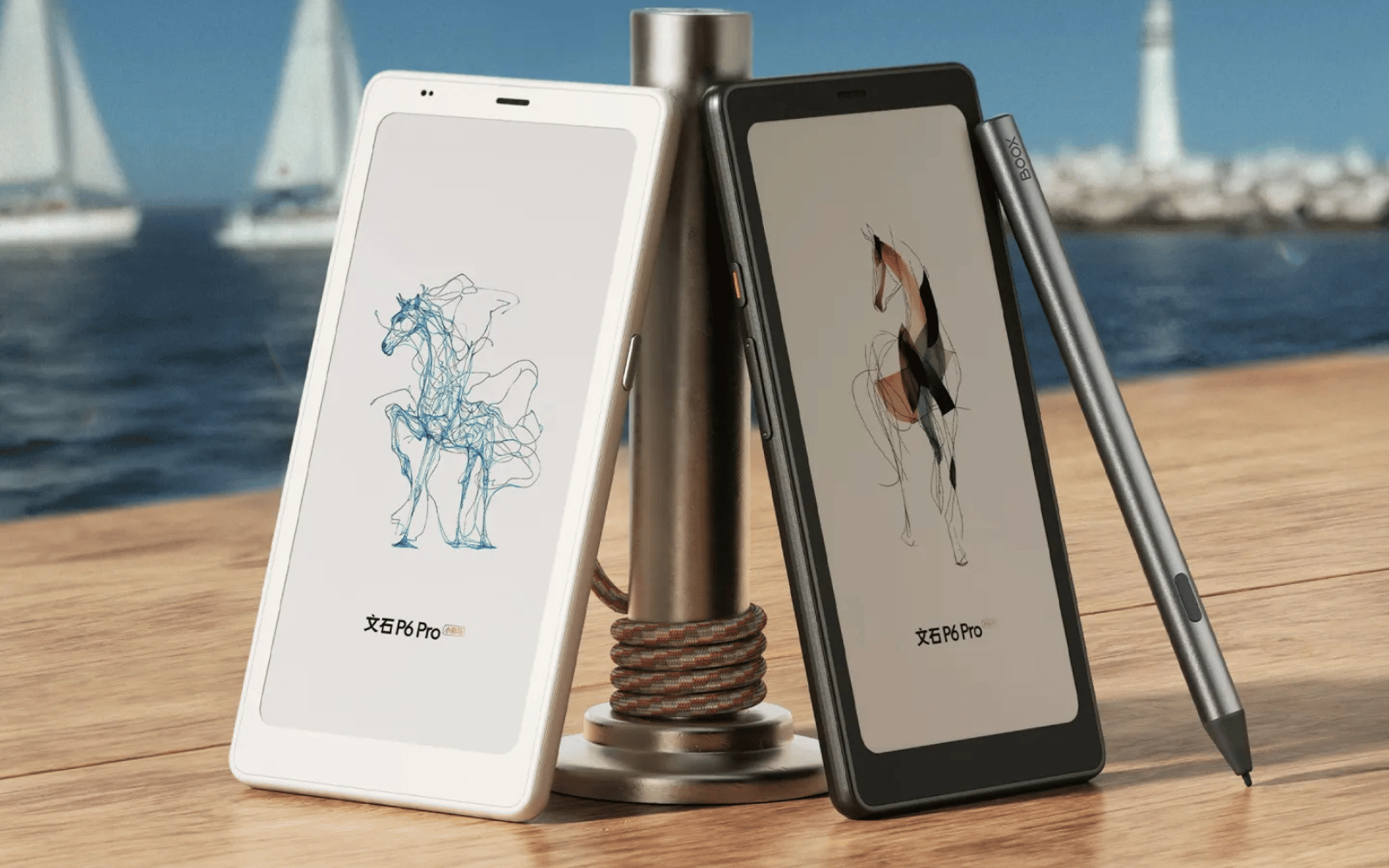
The company has announced its Boox P6 Pro and P6 Pro Colour devices for the Chinese market, with an international launch pending. The notable factor here? They’re about the size and shape of an average smartphone, meaning you can take your penchant for e-paper displays and George MacDonald Fraser’s absolutely dastardly characters everywhere with you. If you’ve got the cash for it.
The P6 Pro and Pro Colour both feature 6.13in displays, arranged in a vertical orientation. If you’re used to getting your information from a smartphone, these’ll be a more comfortable way of stuffing long-form data into your brain. The standard P6 Pro uses a Carta 1300 E Ink display, while the pricier colour-screened version has an E Ink Kaleido 3 screen.
Despite looking like oddly-screened smartphones, Boox’s devices can’t make calls, though they do support 5G SIM cards for data-driven activities. There are also other common elements, like 128GB of storage and support for up to 2TB more if you stick in the right microSD. The P6 Pro features 6GB of RAM, the P6 Pro Colour ups that to 8GB, and both feature 3,950mAh batteries and Boox’s Android 13-based operating system. The Boox P6 Pro Colour also supports a stylus, if you’re likely to use an e-paper display to take notes.
The tricky bit right now is getting hold of one, since they’re available and priced for China only at present. The P6 Pro will set buyers back almost R7,000, if bought from China, and the P6 Pro Colour ups that price tag to R8,000 before you factor in shipping and import costs. An international release is likely, and Boox’s products, while stealthy, are actually available in South Africa. We could well see them make landfall once the company decides that the rest of the world needs a smartphone-sized reader in its collective pockets.