

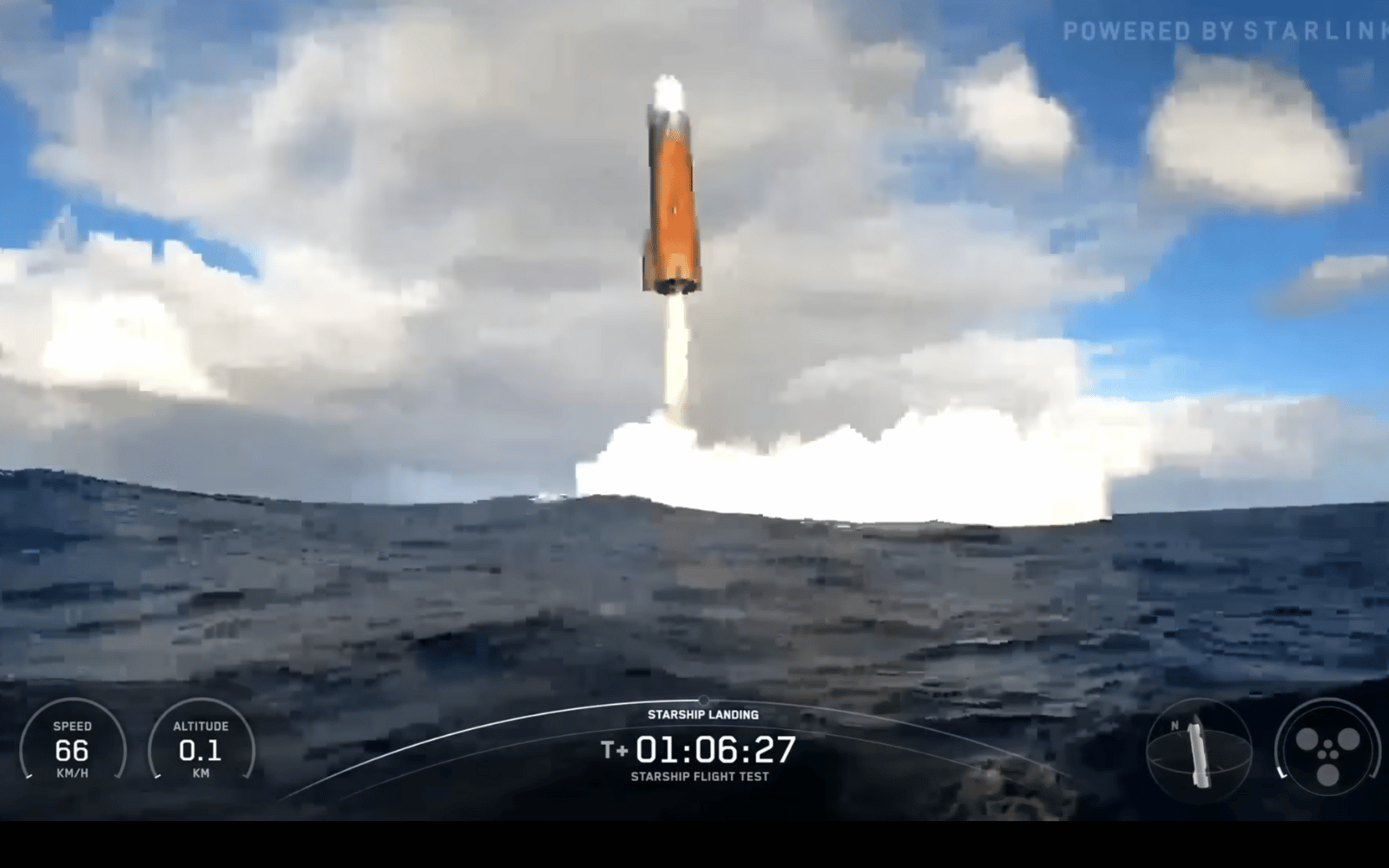
Following several delays, SpaceX’s Starship 10, the first attempt since the last one, lifted off from the company’s Starbase launch platform in Texas. For a change, nothing went drastically wrong until it was supposed to. The massive front section of the spacecraft eventually exploded, but this time, where it was always supposed to — on the surface of the Indian Ocean.
It’s what happened in between that was of most importance to SpaceX. As this was a test launch, a simulated deployment of Starlink satellites took place following “a full-duration ascent burn” that “achieved its planned velocity, successfully putting it on a suborbital trajectory.”
Barkeep! Another Starship, please!
The rocket’s Super Heavy booster performed as it has in the past, with the vehicle’s initial stage touching down where it was supposed to. As part of the test, one of its three central landing engines was shut down, and a backup engine from the booster’s middle ring ignited to complete its ocean landing.
Starship itself shut down its Raptor engines for the mock Starlink deployment, “then completed the second ever in-space relight of a Raptor engine, demonstrating a key capability for future deorbit burns.” The upper stage was “intentionally stressed” during reentry, examining the capabilities of the heatshield and structure before it returned to Earth. Four stabilising fins helped with this section, and the upper stage completed its landing flip before a successful landing burn and soft landing in the Indian Ocean.
There was, of course, still an explosion, but that’s where it was always supposed to take place. SpaceX’s first fully successful test will lead to others, but we don’t yet know what is planned for the eleventh launch of the massive rocket.