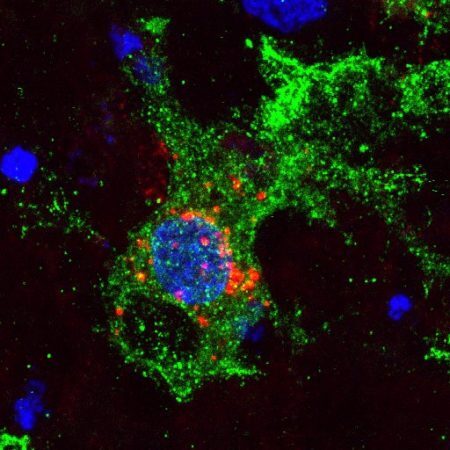
While many people love colorful photos of landscapes, flowers or rainbows, some biomedical researchers treasure vivid images on a much…

While many people love colorful photos of landscapes, flowers or rainbows, some biomedical researchers treasure vivid images on a much…

Personal electronic devices emit more blue light than any other color. Blue light has a short wavelength, which means that it is high-energy and can damage the delicate tissues of the eye. It can also pass through the eye to the retina, the collection of neurons that converts light into the signals that are the foundation of sight.
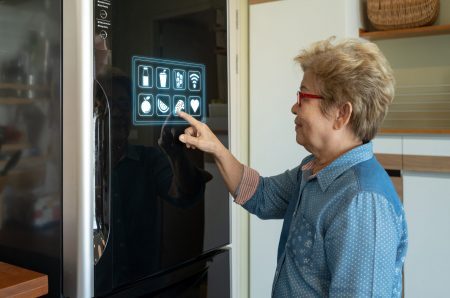
When researchers talk about smart homes, we usually mean technologies that use artificial intelligence to learn your habits and automatically adjust your home in response to them. Perhaps the most obvious example of this are thermostats that learn when you are likely to be home and what temperature you prefer, and adjust themselves accordingly without you needing to change the settings.
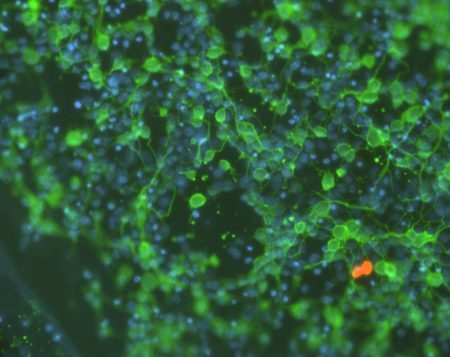
Despite their names, artificial intelligence technologies and their component systems, such as artificial neural networks, don’t have much to do with real brain science. I’m a professor of bioengineering and neurosciences interested in understanding how the brain works as a system – and how we can use that knowledge to design and engineer new machine learning models.
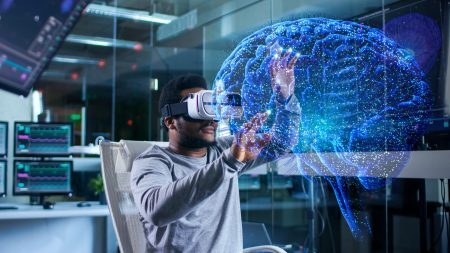
In our lab at the University of Saskatchewan we are doing interesting deep learning research related to healthcare applications — and as a professor of electrical and computer engineering, I lead the research team. When it comes to health care, using AI or machine learning to make diagnoses is new, and there has been exciting and promising progress.

John J Reilly, University of Strathclyde ; Anthony (Tony) Okely, University of Wollongong; Catherine Draper, University of the Witwatersrand, and…