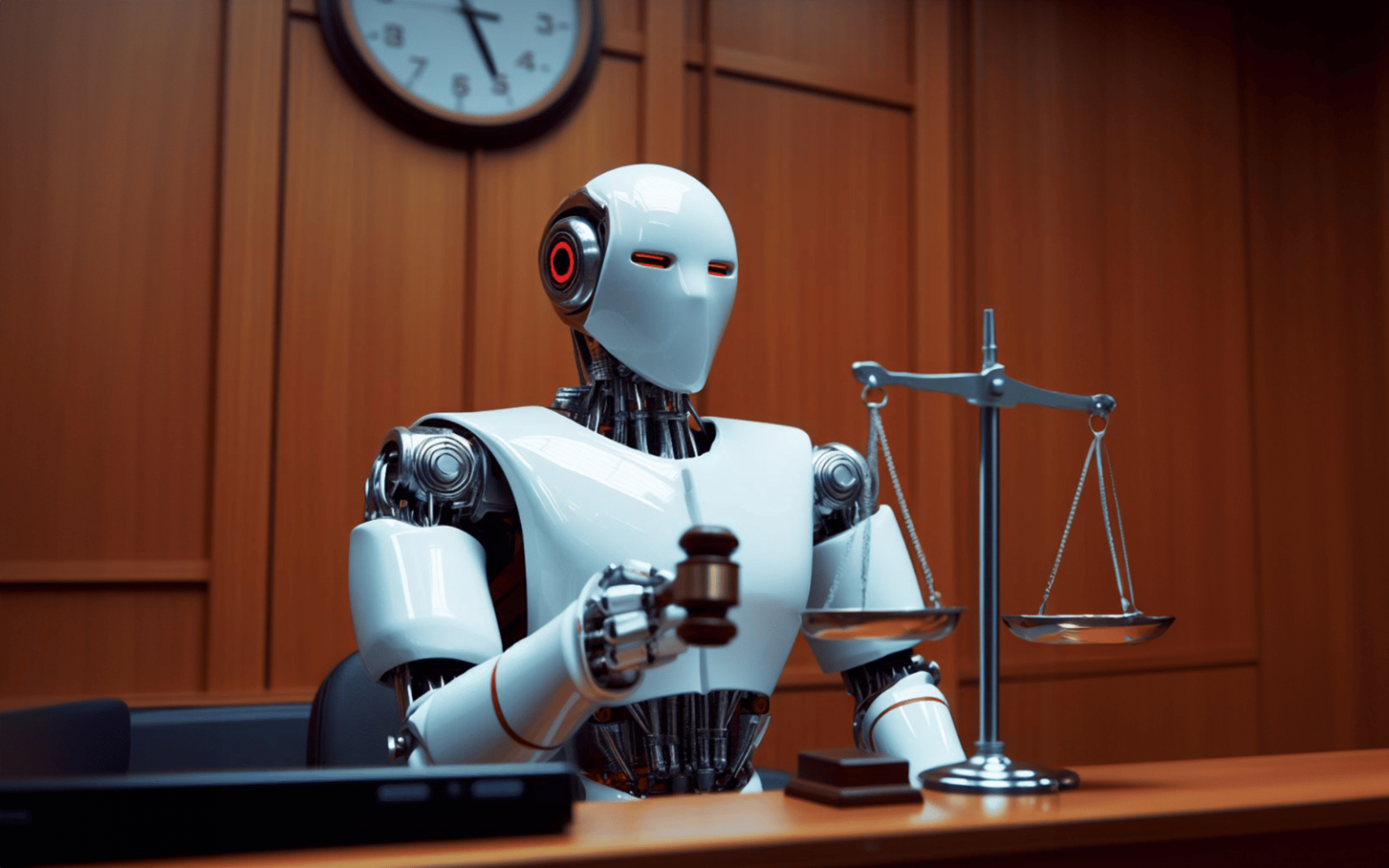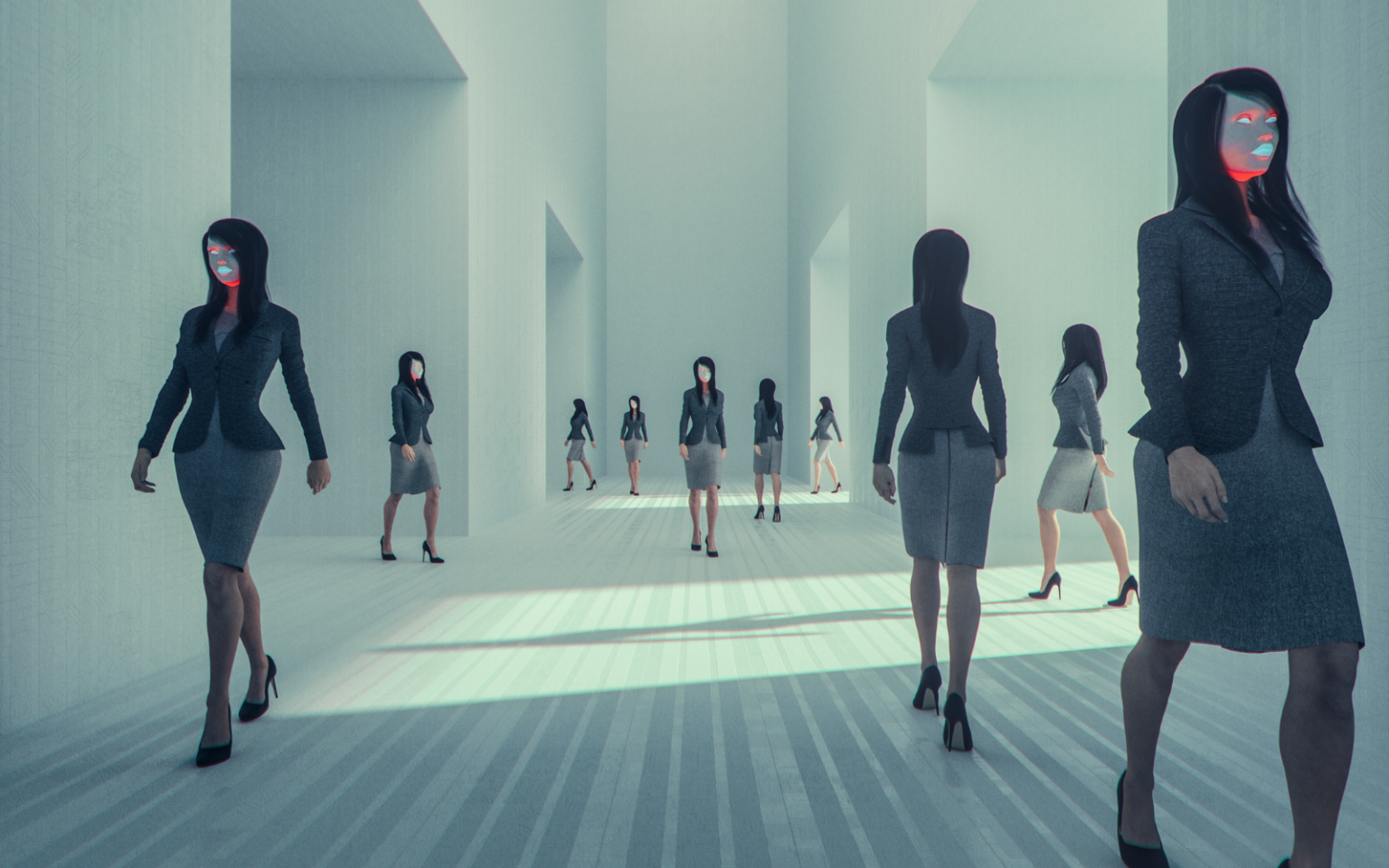
As in-person dating activities make a comeback and the allure of dating apps fade, platforms like Tinder, Bumble and Hinge are becoming passé for millennials and Gen Z. But while the era of dating apps is on the decline, people aren’t ditching the search for love altogether. There are enough heart-shaped chocolates, red lingerie and silicone toys to keep us going for decades. The real question is: who or what is filling the void left by the dating app industry? The answer is artificial intelligence. Tech companies have woven AI into everything from facial recognition software to voice-activated assistants and sexbots. Now, it’s being inserted…
Author: The Conversation
We often forget how wonderful it is that life exists, and what a special and unique phenomenon it is. As far as we know, ours is the only planet capable of supporting life, and it seems to have arisen in the form of something like today’s single-celled prokaryotic organisms. However, scientists have not given up hope of finding what they call LUCA (Last Universal Common Ancestor, the ancestral cell from which all living things we know are descended) beyond the confines of our planet. Where are we looking? Since humans started dreaming about Martians, scientific understanding has changed significantly. The most recent vehicles…
Netflix knows we’re on our phones while we watch TV. Recent articles discuss Netflix’s or streamers’ requests for creatives to produce content optimized for casual viewing, meaning intentionally scripted for distracted viewers. I’ve spent the last few years researching how Netflix shapes European screen production, a region where the streaming giant has invested billions in original content. I first encountered the concept of “second-screen shows” — created with distracted viewing in mind — in 2022. At the time, I was doing interviews with producers, showrunners, screenwriters and directors who had worked on European Netflix originals (due to confidentiality, they have been given pseudonyms here). Two of my interviewees…
Thirty-four artworks created with artificial intelligence (AI) have gone up for sale at Christie’s in New York, in the famed auction house’s first collection dedicated to AI art. Christie’s says the collection aims to explore “human agency in the age of AI within fine art”, prompting viewers to question the evolving role of the artist and of creativity. Questions are not all the collection has prompted: there has also been a backlash. At the time of writing, more than 6,000 artists have signed an open letter calling on Christie’s to cancel the auction. What’s in the collection? The Augmented Intelligence collection, up for auction from February…
Researchers at Microsoft have announced the creation of the first “topological qubits” in a device that stores information in an exotic state of matter, in what may be a significant breakthrough for quantum computing. At the same time, the researchers also published a paper in Nature and a “roadmap” for further work. The design of the Majorana 1 processor is supposed to fit up to a million qubits, which may be enough to realise many significant goals of quantum computing – such as cracking cryptographic codes and designing new drugs and materials faster. If Microsoft’s claims pan out, the company may have leapfrogged competitors…
From the bronze age to the Industrial Revolution and beyond, the discovery and development of new materials have been a driving force in human history. These novel materials have helped advance technology and shape civilisations. Today, we are at the beginning of a new era, where artificial intelligence (AI) seems to be in the perfect position to transform the search for useful materials. This looks set to completely change the approach to their investigation, creation and testing. In ancient times, human civilisations experimented with natural resources to create tools and artifacts. The bronze age, in the mid-4th millennium BC, was a significant milestone.…
The world’s biggest video-sharing platform, YouTube, has just turned 20. It was started inauspiciously in February 2005 by former PayPal employees Chad Hurley, Steve Chen and Jawed Karim – with a 19-second video of Karim exploring the San Diego Zoo. That year, YouTube’s disruption of the media timeline was minimal enough for there to be no mention of it in The Guardian’s coverage of TV’s Digital Revolution at the Edinburgh TV Festival. Twenty years on, it’s a different story. YouTube is a massive competitor to TV, an engagement beast, uploading as many new videos every five minutes as the 2,400 hours BBC Studios produces in a…
Last time you scrolled the “For You” page on TikTok, did you get a video about current events? Politics? Breaking news? If you’re one of the 63% of teens or 33% of adults in the U.S. who use TikTok, you probably have. But where did it come from? Who created it? And should you believe what it told you? As a communication researcher who has studied news content on social media for over a decade, I can share three crucial things to know about news you get on TikTok: What videos count as news, how they got to you, and what you should do when…
Imagine buying a flat sheet from a furniture store that changes into a sofa when you heat it with a hairdryer. Or consider the value of a stent that precisely expands inside a patient’s artery, adapting to their unique anatomy. Welcome to 4D printing, a frontier in material and manufacturing science that has been rapidly expanding over the past decade. While 3D printing has captured global attention for its ability to create objects layer by layer, 4D printing adds the element of time. It involves 3D-printing adaptable objects from materials such as polymers or alloys that can bend, twist or…
Three and a half kilometres beneath the Mediterranean Sea, around 80km off the coast of Sicily, lies half of a very unusual telescope called KM3NeT. The enormous device is still under construction, but today the telescope’s scientific team announced they have already detected a particle from outer space with a staggering amount of energy. In fact, as the team reports in Nature, they found the most energetic neutrino anyone has ever seen – and it represents a tremendous leap forward in exploring the uncharted waters of the extreme universe. To explain why it’s such a remarkable discovery, we need to understand what…