Author: Brett Venter

Samsung promised, not too long ago, that it was launching its range of microLED TVs in South Africa. They were always supposed to be expensive and almost all of them will be brought in to order as a result. Well, if you were hankering for some microLED love in your living room, the time has come. Samsung has announced that its newest (and best) TVs are now in South Africa. Specific pricing isn’t something the company’s giving out. The adage goes, ‘If you need to ask, you can’t afford it”, but if you’ve got R1.4 million, you can have the…

Read More

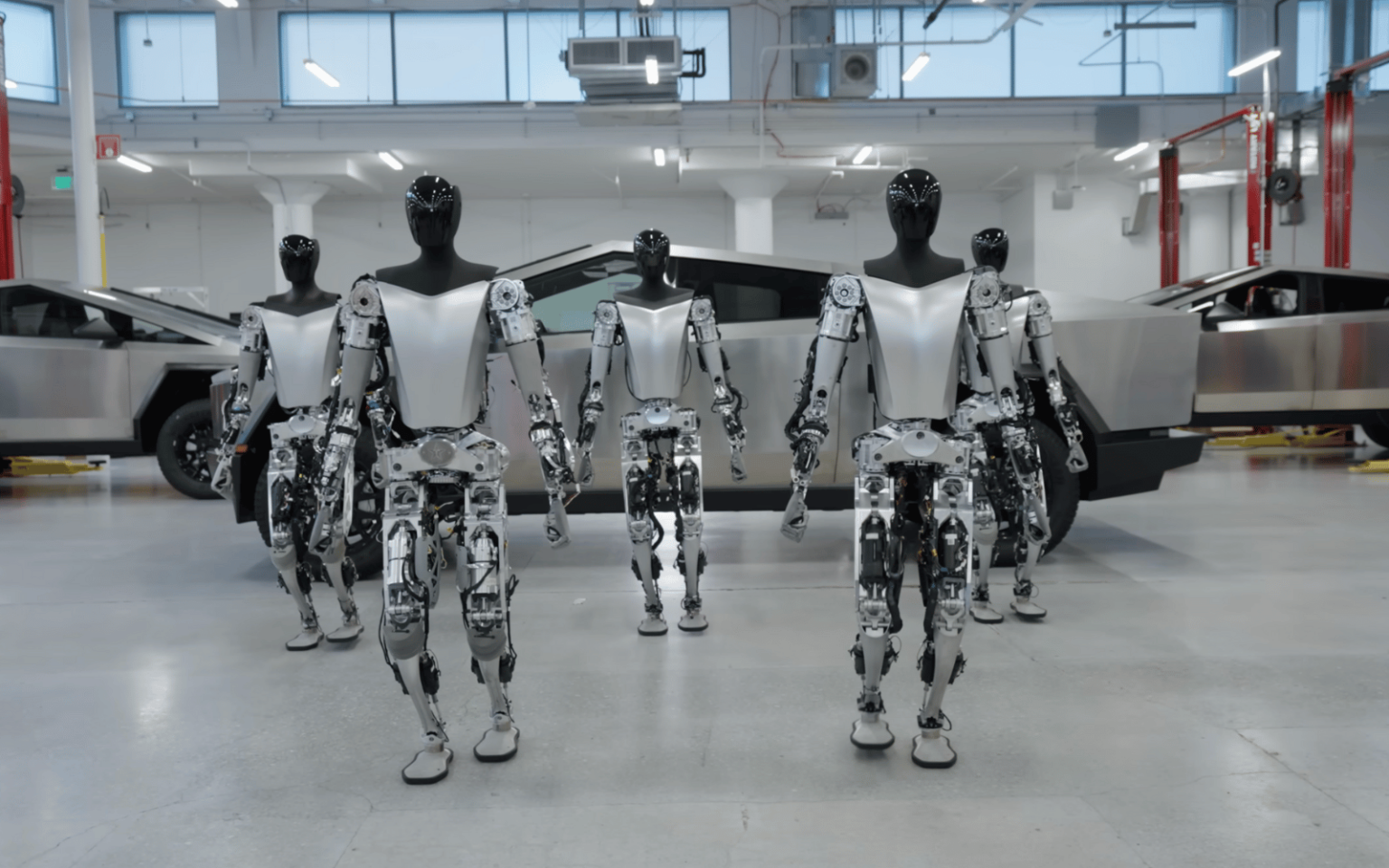
You know how in science fiction files, the trouble starts when advanced AI systems are downloaded into robots? Well, Boston Dynamics’ Spot now has access to OpenAI’s ChatGPT technology. Not only is the world’s second-scariest robotic quadruped mechanically capable, but it’s also now much more intelligent. That won’t end badly. It was only a matter of time before someone stuck the year’s most popular technology into one of the superstars of recent memory. Spot was given access to ChatGPT, which integrated with its usual patrol work, as well as a verbal interface. Long story short, the robot can now talk…

Read More

Everyone’s talking about the abilities that new large language model AI systems are capable of but there’s another that you may not be aware of: emergent behaviour. The term doesn’t just apply to artificial intelligence. It has a tendency to appear whenever there’s a large, complicated system interacting with the real world. You know, kinda like ChatGPT and others are right now. What is emergent behaviour? Emergent behaviour, otherwise known as emergence, refers to the tendency of a system to develop unexpected functions that aren’t suggested by its initial makeup. A definition of it would be “…something that is a…

Read More

It looks like South Africa won’t have much to do with that UAE space mission after all. The Hakuto-R private lunar mission being conducted by Japanese company ispace appears to have ended in failure. We say ‘appeared to’ because communication with the Mission 1 lander, scheduled to touch down yesterday afternoon, was lost just before it was supposed to make moonfall. No, not that one. Hakuto-R you listening? Our HAKUTO-R M1 lunar lander was scheduled to land on the surface of the Moon at approx. 1:40 (JST). As of 8:00 today (JST), communication between the lander at the Mission Control…

Read More

The idea of using 3D printing to create human habitats on the Moon isn’t new. Knowledge of China’s plans to use the technology for the same purpose is quite novel. So far the country has sent several missions in its Chang’e lunar program to the moon, with its most recent bringing back samples from the surface. The country intends to land astronauts on the lunar surface by 2030, shortly after NASA’s Artemis program is expected to have placed boots on the ground there. China plans on a more concrete presence on our lunar satellite and it’ll do it the same…

Read More

It’s hard to land things on the moon. It’s even harder if you’re a private company, as Israel’s 2019 Beresheet mission demonstrated. Japan’s ispace hopes to become the first private company to successfully place an object on the moon and it’s happening this afternoon. The mission is known as Hakuto-R and it’s a really big deal as far as space missions go. Locally, at least. South Africa will play a part in one of the missions hitching a ride on the Japanese company’s lander — the UAE’s Rashid Rover is on board and South Africa will be facilitating ground control…

Read More

South Africa and stargazing have a particularly long history but there’s a time and a place for everything. That time is winter, as well as a chunk of autumn and spring. This is when atmospheric conditions tend to be most favourable in this country. If you’ve ever felt the desire to spend time out among the stars, you’re joining a South African tradition that goes back hundreds of years. Even better, you’re also partaking of a tradition that goes at least as far back as the Assyrian and Babylonian empires. And just like the ancients didn’t need much in the…

Read More

When you think of space telescopes, the SuperBIT program from the University of Toronto in Canada probably doesn’t come to mind. The Hubble, sure. The James Webb Space Telescope, absolutely. But the Canadian program is a little more… low-tech. Specifically, the Super-pressure Balloon-borne Imaging Telescope is a space telescope that doesn’t need a rocket to head out of the atmosphere. That much is obvious from its full title. Instead, the “0.5 m, wide-field, diffraction-limited” telescope is mounted under a massive NASA-made super-pressure balloon at a height of about 33km. As technological solutions go, it’s a little… Eighteenth Century. SuperBIT of…

Read More

One of the most frequently cited statistics regarding firearm ownership is that you’re more likely to be killed by a gun in your home. A new smart gun from a company called Biofire Tech promises to drop that percentage by including a feature not seen in your everyday 9mm semiautomatic. Facial recognition. In a move worthy of Judge Dredd, the company’s handgun won’t fire unless it recognises the person holding it. That alone is enough to make the weapon safer, though not entirely safe. There’s still the threat of violence by the person actually programmed to use it but at…

Read More

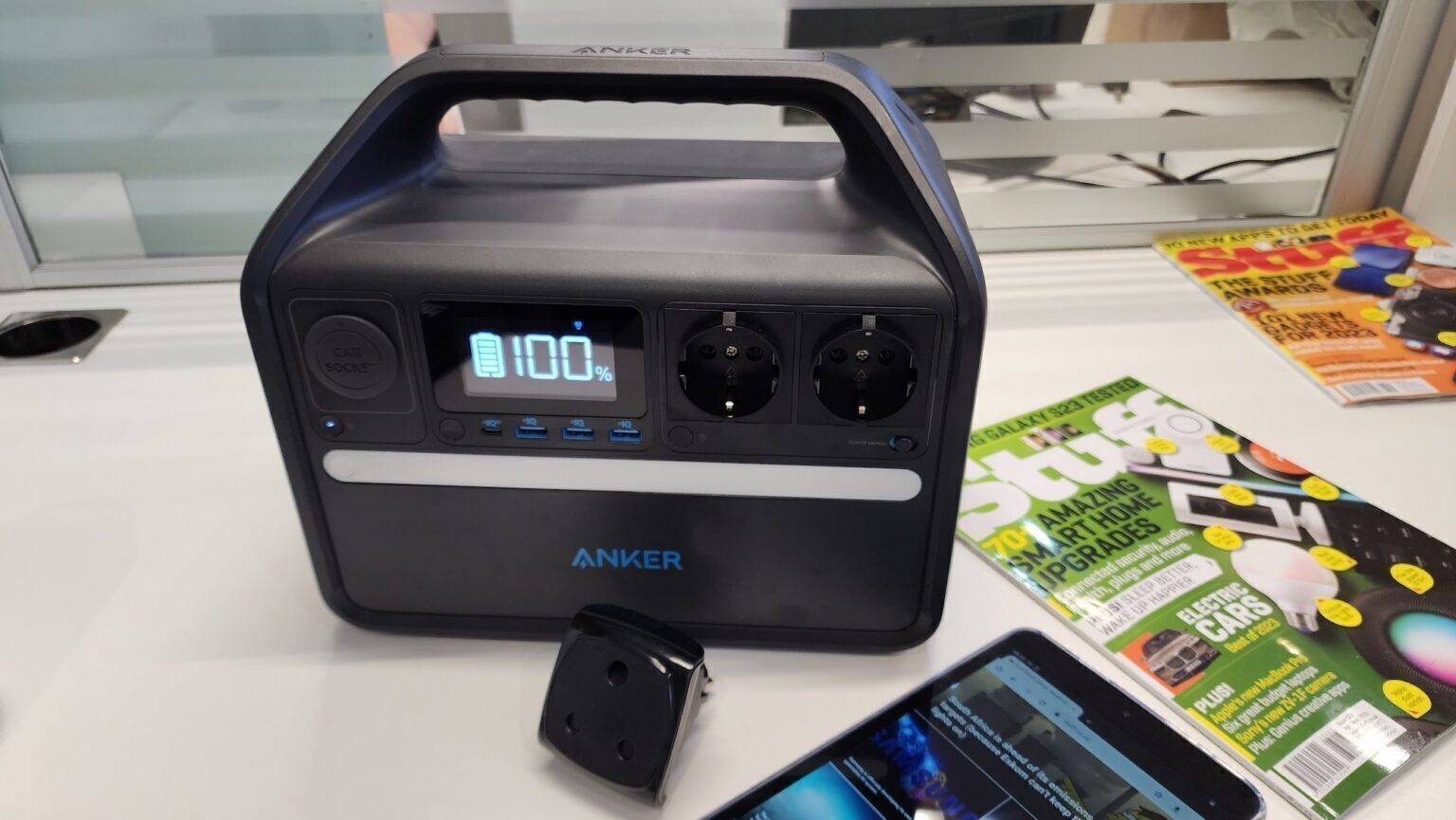
As this review is being written, South Africa is sliding deeper and deeper into the depression that’s known as load shedding. Products like the EcoFlow Delta 2 — that is, high-capacity battery backups — are increasingly becoming essential purchases rather than just nice-to-haves. The tricky bit about choosing what backup option to choose is navigating the capacity/price graph. Is it worth spending R5,000 on a battery backup? Can you get away with less than a thousand Rand? Or should you drop a mighty R25,000, the RRP of the Delta 2, in order to keep some of your electronics running? Actually,…

Read More