

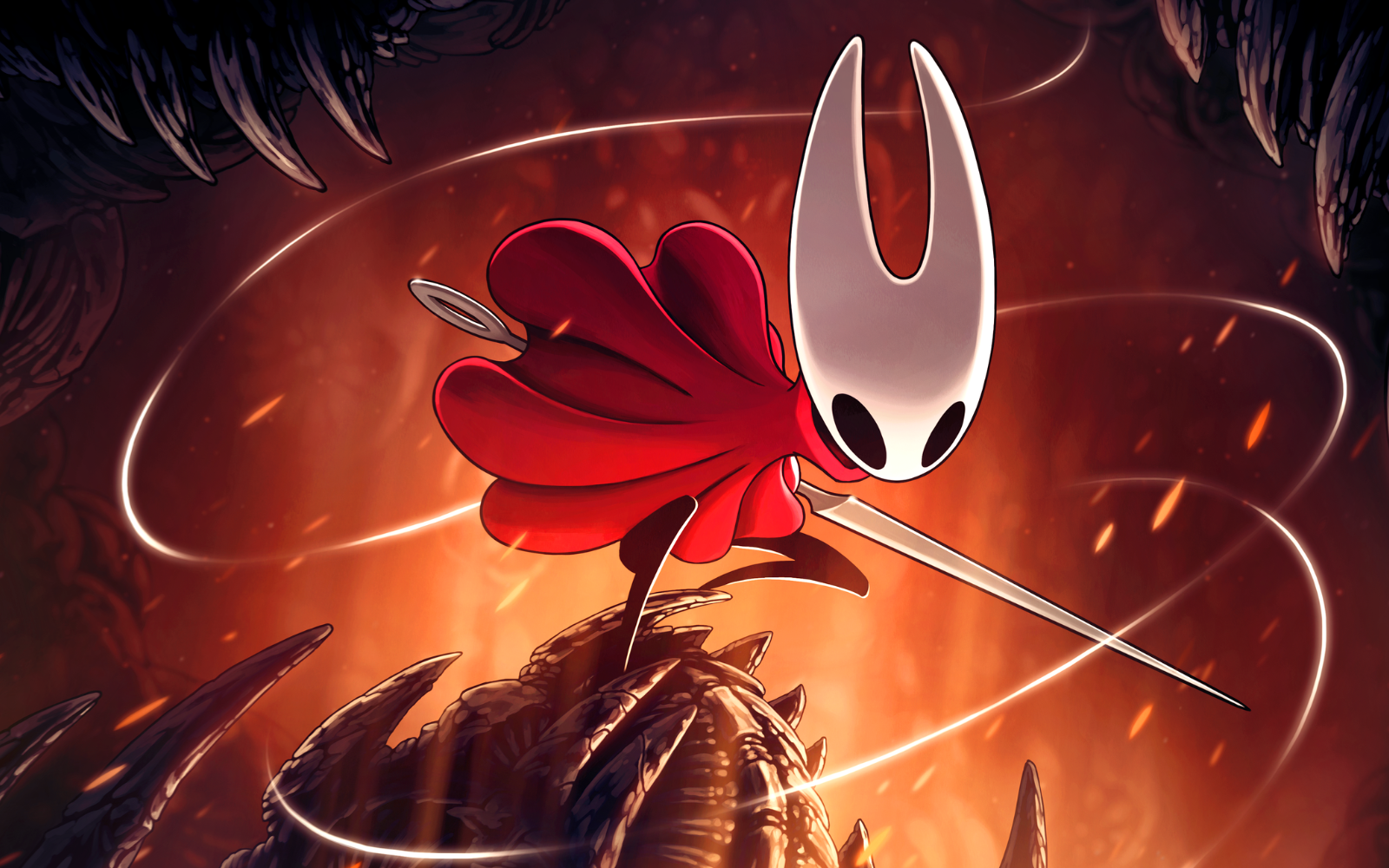
Sure, Hollow Knight: Silksong is difficult. But that shouldn't stop you from digging into one of the most highly anticipated metroidvanias of all time. And at R185, you can't really go wrong, even if the game's vibrant levels, unforgiving bosses, and non-linear story aren't really for you. Was it worth the nearly seven year wait? Without a doubt.
-
Gameplay
-
Visuals
-
Performance
-
Soundtrack
-
Replayability
-
Value
After 31 hours, 36 minutes, and 4 seconds, we got to see the credits roll in Hollow Knight: Silksong. Honestly, though, that’s just how long it took before the credits rolled. In true Hollow Knight and metroidvania fashion, the real game is far from over. There are still entire areas that need discovering, bosses who need spanking, and fleas that need rescuing. And we cannot wait to oblige Silksong‘s developers’ wishes.
Such is the mark of a truly exceptional game that not only values your time and hard-earned money, but rewards that little voice in the back of your head saying: “What’s over there?” It’s a quality we typically associate with something from Nintendo’s catalogue, and in Stuff Towers, there can be no higher honour. Hollow Knight: Silksong truly feels like a AAA triple title in indie clothing, and is well worth the R185 we spent to get it.
Minor early-game spoilers ahead.
Stung by a Hornet
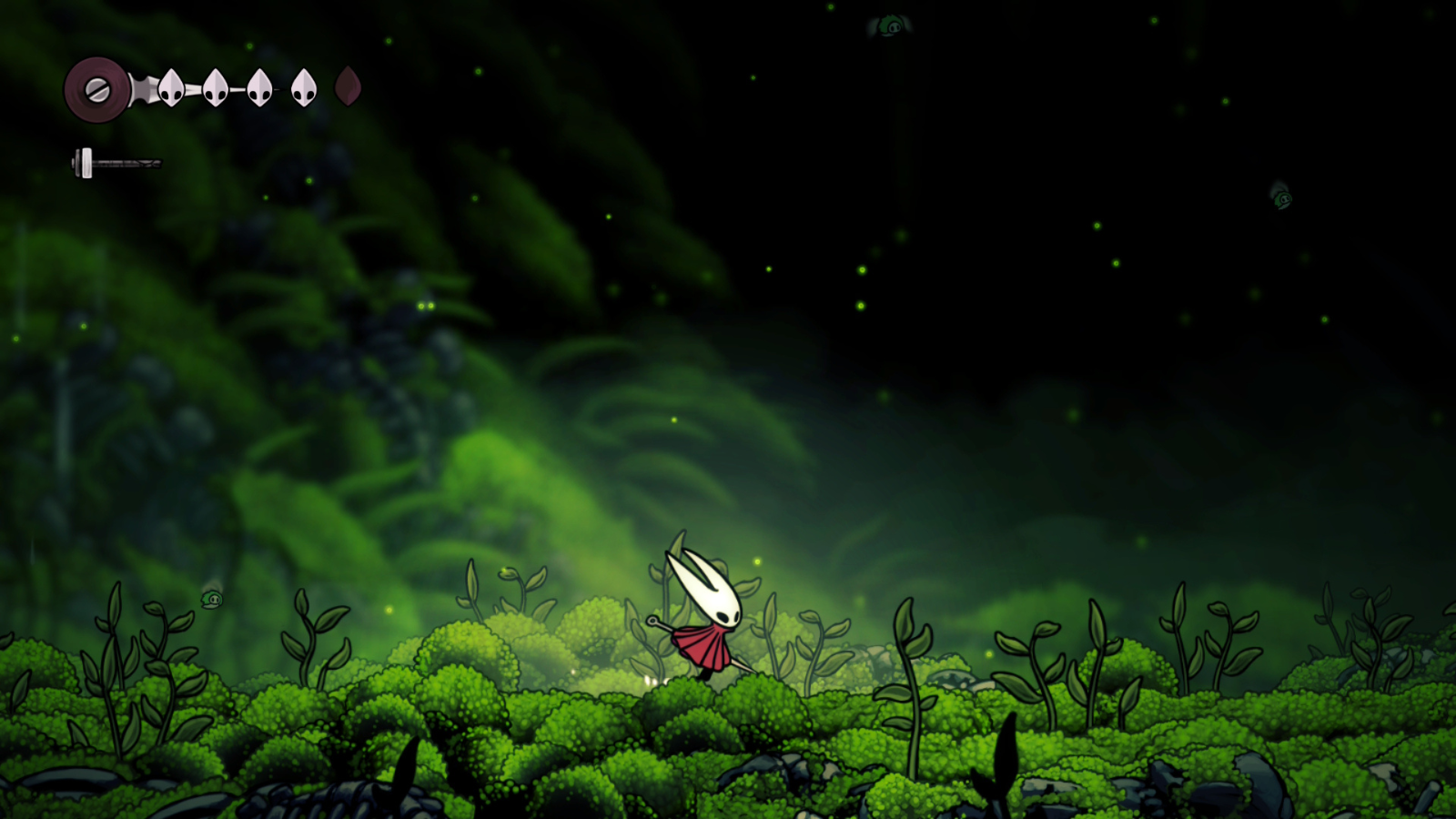
A lot of that is down to Hornet, once-NPC boss turned friend, and now the hero of Silksong. Where Hollow Knight took a more subtle approach to storytelling by putting the ridiculously large world of Hallownest to good use and allowing players to take on the role of the silent Knight, Silksong does it all again, but better.
There’s no denying that Silksong follows a more structured story in comparison to the original Hollow Knight. It’s a bold step away from a formula that worked wonders before, but the right one, considering just how many newcomers to the franchise and the genre as a whole Silksong attracted in its nearly seven years of development. That’s not to say Silksong foregoes the environmental storytelling.
There isn’t much to go on at first. Players are reintroduced to Hornet, who is captured and dragged off to a vast and distant land — Pharloom. After escaping and finding herself right at the bottom of this strange new world, Hornet must ascend to the peak of the realm to seek a quarrel with those who brought her there. We wish we could say more, but we’re more worried about preserving that mystery for everyone else.
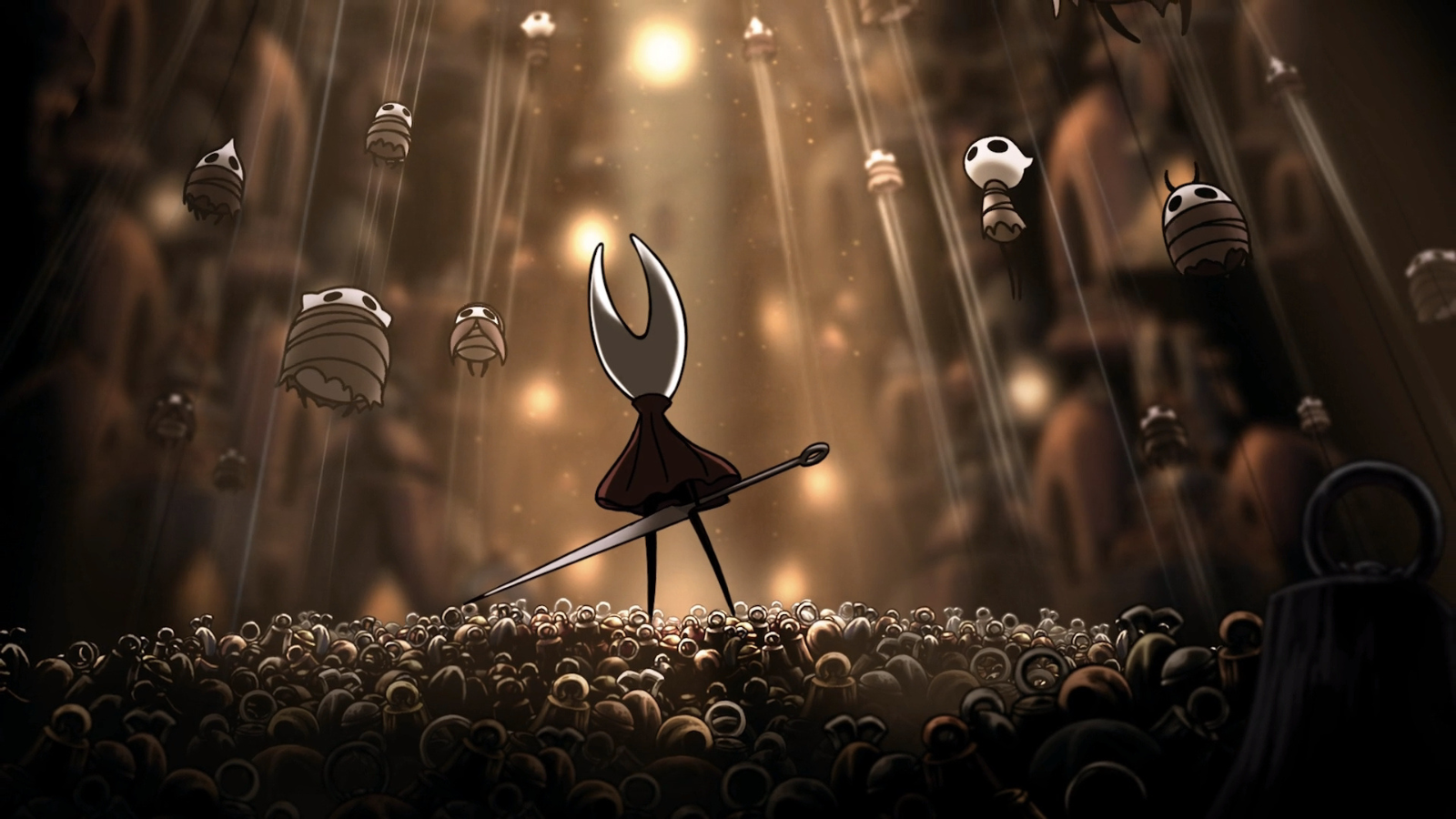
Part of what makes Silksong and the metroidvania genre as a whole so exciting is that feeling of not knowing what’s around the next corner, and also what makes describing the story and reviewing it a tough one. What we can say is that not everything is as simple as it seems, with players quickly finding a place for Hornet in their hearts — not just because she’s the playable character — but because Team Cherry gives you a reason to care.
At first, nothing but revenge drives Hornet on this long climb to the top. She’ll certainly talk to the pilgrims who call this land home along the way, but only as a way to earn money and find her path forward. But as Pharloom continues to grow in scope, so does Hornet’s affection for those around her until eventually, it isn’t revenge driving her to the peak — but rather her drive to ‘fix’ a world that is tremendously cruel to its subjects.
We, the audience, are right there with her. Not only because we can physically see the sort of destruction and cruelty that we toil to save this kingdom from, but rather because of how Hornet’s personality grows as time wears on, all of which is made abundantly clear through her increased dialogue. It was a masterstroke to swap out the cute-but-silent type for a strong-willed and deadly killer that’s mighty talkative.
Enter Pharloom
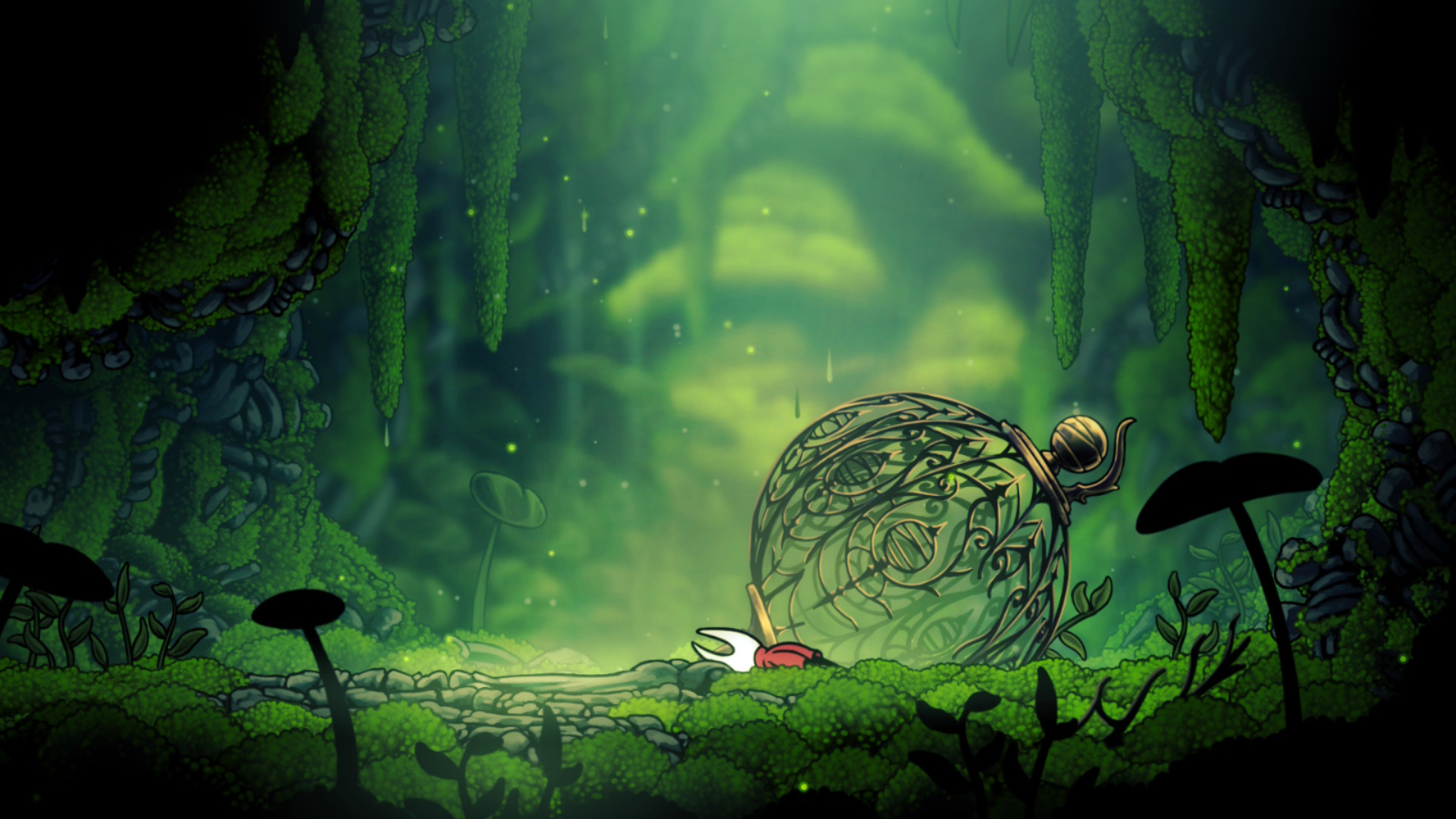
How could you not fall in love with the sprawling labyrinth that is Pharloom? Not only do you quickly fall in love with the intricate pathways that all intersect with one another somewhere, but Silksong is a work of art that we just like to look at. Each area of the map is a hand-crafted wonder teeming with life. Even those bits devoid of any interaction offer up a quiet beauty that serves the larger story at hand.
Pharloom is meticulous, and all the more rewarding for it. Areas flow from one to another in a satisfying manner, and their platforming requirements vary. You might come across a too-high ledge in the early game that requires some special skill to access. Throw down a marker, and move on. You’ll quickly stumble across an area you are meant to go — likely finding even more hidden rooms and secrets along the way.
It’s this aspect that makes Silksong so compelling. Sure, the boss fights offer their own sense of accomplishment (and literally push the story forward), but there’s something about losing yourself in an unfamiliar land before fighting your way out of it that can’t be matched. Enjoy it. It won’t last forever.
Part of what makes Pharloom feel so alive isn’t just the number of enemies or bosses to find — although there are hundreds of different types to bash your head against repeatedly — but the NPCs as well. Silksong takes advantage of the larger map and increased horsepower to fill every nook and cranny with someone to talk to, all of whom not only progress the story, but help Hornet evolve in some small way.
Out of the frying pan (and into the fire)
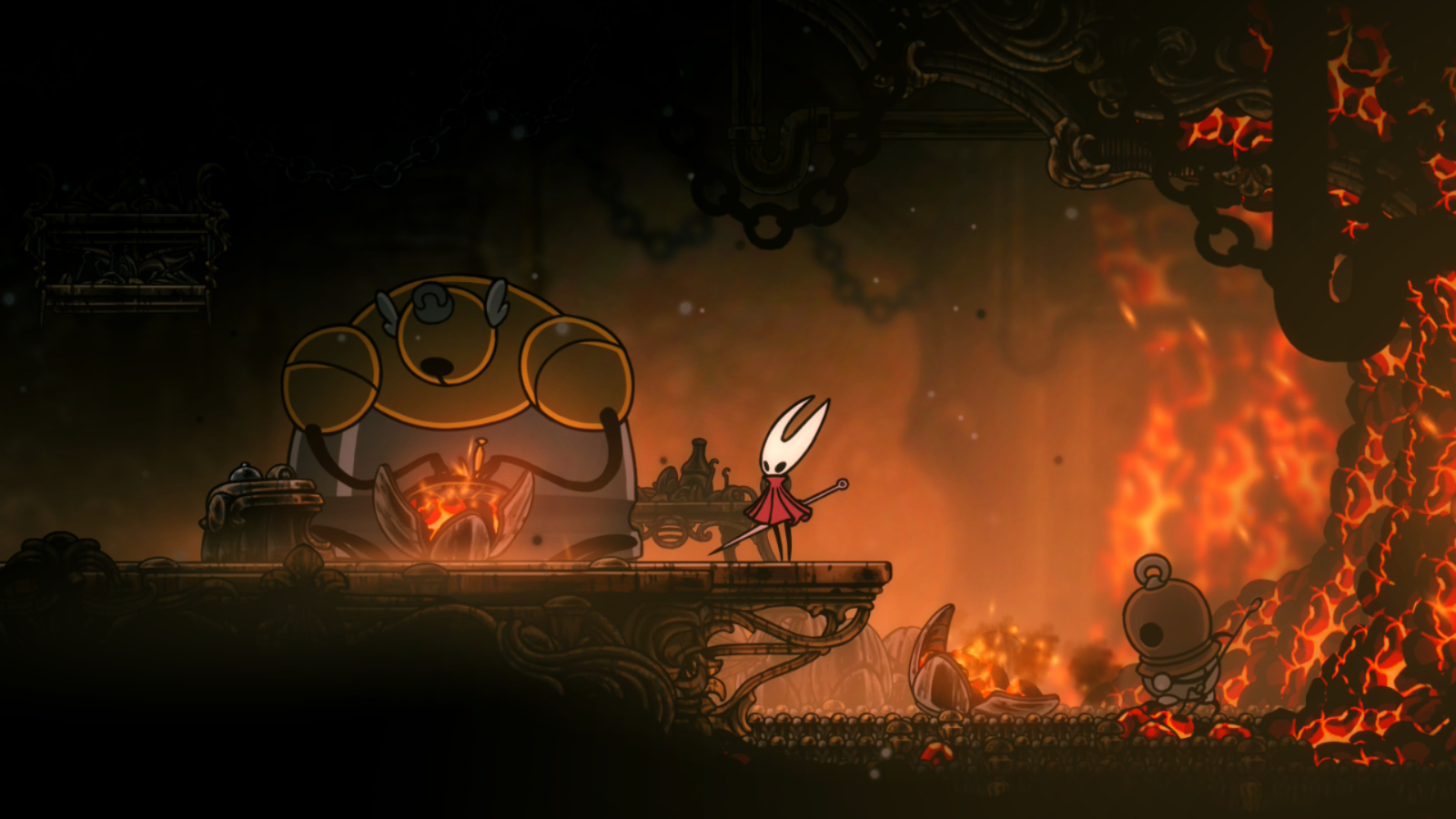
Hollow Knight: Silksong demands mastery in the purest sense of the word. It won’t tolerate players who can’t grasp the tightly-knit controls, the more aggressive play style of Hornet, the oftentimes downright demoralising bosses, or even the basic platforming. You will die. A lot. But this makes overcoming those difficult platforming sections with only one mask left, or conquering a boss on the 14th try, special.
While a sequel to Hollow Knight, Team Cherry has certainly upped its game here. The first thirty-or-so minutes of gameplay might have you convinced this is nothing more than a Hollow Knight clone with an infuriating 45-degree downward attack to balance out the Knight’s usual commands. Give the game room to breathe, however, and those ideas will be ruthlessly beaten out of your head as you become familiar with the landscape.
Get back into the swing of things, and before long, the game will hand out some major new abilities. We won’t spoil all of those here, but the most useful in the early game is easily the ‘Swift Step’, which gives Hornet the ability to dash, spring, and dash-sprint her way into previously inaccessible areas. It’s not an understatement to call these abilities a game-changer, as they very quickly help the player realise they are out of their depth.
One of our favourite additions to Hollow Knight: Silksong was a proper quest system, which helps both the old hands and newcomers alike to better come to grips with the world at large, and what it’s asking of you, the player. Most of these are pretty basic — ranging from generic fetch quests to proper side quests to save an NPC you love — but some bring a ‘Defeat Ganon’ vibe to the whole game that helps keep you on track.
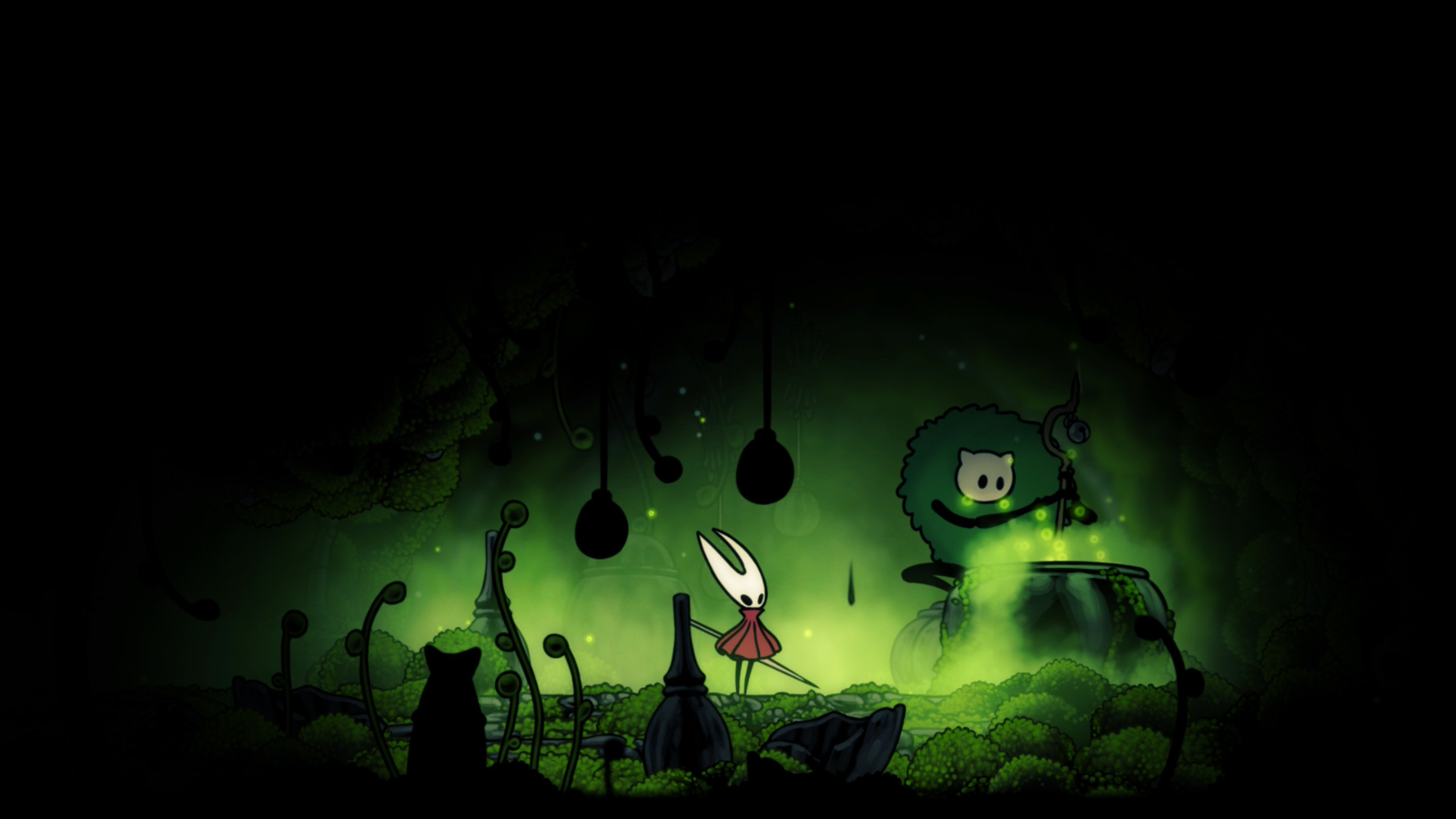
It’s obvious the devs went out of their way to shake out the cobwebs of Hollow Knight, and in doing so, they took some big risks. One of those is currency. Gone are the days when every enemy would give up some money for your troubles. Instead, you’ll get ‘shards’ from every enemy, while only a select few drop rosaries — this game’s currency. Both are vital to overcoming challenges. Too bad they’re so rare, huh?
Rosaries, like every ‘Souls’ game out there, are lost upon death. Everything — blip. They can be retrieved, but that involves retracing those treacherous steps that got you into this mess in the first place. It’s an entirely unforgiving system that teaches players to be cautious with their money and also makes death feel… real?
You’ll be glad, at first, to learn that shards do not disappear. Not like that, anyway. Seemingly pointless in the beginning, players quickly see their value after being handed their first ‘tool’ — a series of additional weapons that help Hornet fight from a distance. It starts basic — like a simple throwing knife — before quickly expanding into the realm of silly. Each death will use those shards to replenish your tools, quickly depleting them.
We’ve already said our piece regarding most of the enemies, bosses, and even the environment dealing 2-mask damage throughout Silksong in our first impressions, and a whole week later, our opinion remains changed. It’s a complaint by many that is already dying down online, owing to those folks literally improving at the game.
Sound as a bell
Now that Christopher Larkin’s entire Silksong OST is lodged firmly in our brains, we can confidently say that it rivals even the giants in the space — with a haunting melody throughout that would make Ludwig Göransson proud. It alone tells a story of revenge and later, growth, which is best heard on a first playthrough.
As for performance, we had no troubles when booting this up on the Nintendo Switch 2 — hitting a clean 120fps in both handheld and docked (at 1080p). While this was definitely the move when putting movement and enemies first, it’s well worth checking the game out at 2160p/60fps if you have the hardware to handle it.
Hollow Knight: Silksong verdict
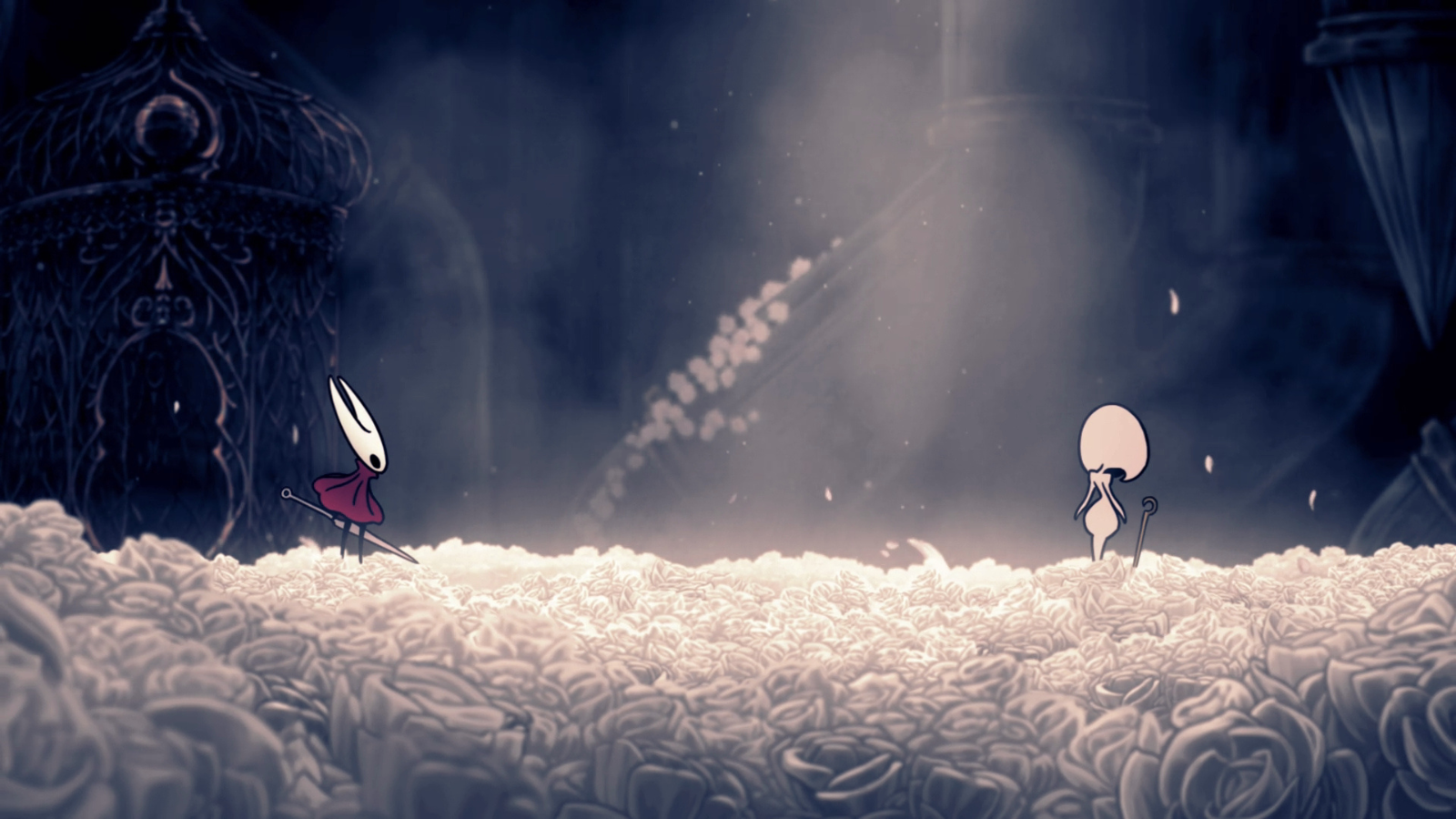
Now that we’ve finally played it, it’s easy to see just how Team Cherry managed to sink nearly seven years of development into Hollow Knight: Silksong. It’s a charming work of art that truly has no ceiling for how high you can go. Whether that’s discovering every single item or stomping out every enemy, the varied moveset and vibrant halls of Pharloom make it an incredible journey that everyone should try — just to see it with their own eyes. And at R185, that’s not only possible, but relatively easy.