

In a desperate bid to turn around the failing TV licence scheme while increasing revenue, at least for the short term, the South African Broadcasting Corporation (SABC) wants to hike licence fees to account for the nearly 80+% of residents currently eschewing the R265/year fees.
On its last legs
The broadcaster revealed its intentions to raise the matter and request an official licence fee hike from the communications department last week during a briefing to Parliament’s Standing Committee on Public Accounts (SCOPA). It mentioned that most of its licence revenue stemmed from existing and diligent holders, the same people who have routinely paid the annual fees for years.
The broadcaster noted that several residents, particularly young people, no longer value the scheme despite it being a requirement to even purchase a TV. Many people get around the requirement through the simple expedient of using a family member’s licence to purchase a TV, after which they will continue not to pay the fees.
Until the SABC can provide a sustainable funding model, it hopes to rely on increased fees to offset the loss of South Africa’s majority failing to pay their annual fees.
“In South Africa, less than 20% of households that should be paying for a TV licence actually pay for the TV licence, unlike globally, where in the BBC, for example, you’ve got more than 80% compliance,” the SABC said.
“It’s very difficult to make them pay because, from a regulatory perspective, there’s no legislation that actually forces them to pay for a TV licence. It’s also critical for us to note that the price of a TV licence has not changed in a very very long time.”
Read More: SABC+ rechristened ‘SABC Plus’ as the platform sees another massive makeover
The public broadcaster mentioned difficulties surrounding these fees, considering inflation and rising VAT. The last time the fee was adjusted was in 2013, when the corporation saw the fee raised from R250/year to R265/year – a 6% increase.
How and when the SABC will hope to introduce these new fees remains to be seen, although judging by the corporation’s 7-step “path to sustainability” plan, as seen on MyBroadband, the new fees are likely a high priority for the group before it can establish a new funding model.
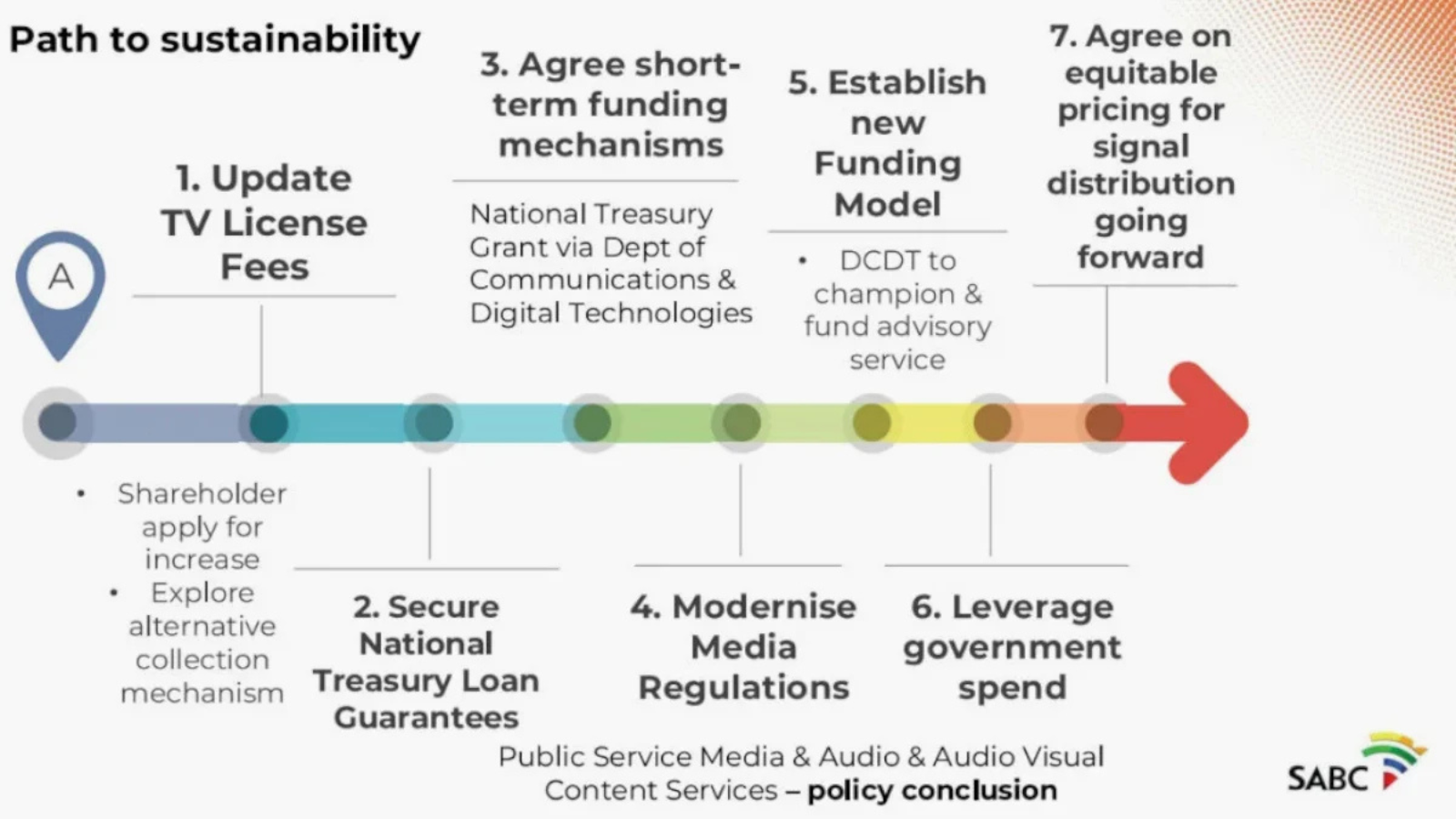
“Through the SABC Amendment Bill, we are actually looking at this particular matter of the revised fund model for it, whether to not it will replace the TV licence.”
At the time of publication, the SABC has not yet revealed how much it would seek to increase TV licence fees, assuming the government accepts its plans to implement the hike. Unfortunately, the SABC may end up driving away more loyal ‘legacy’ licence fee holders by introducing an increase, upon which the brunt would fall.