
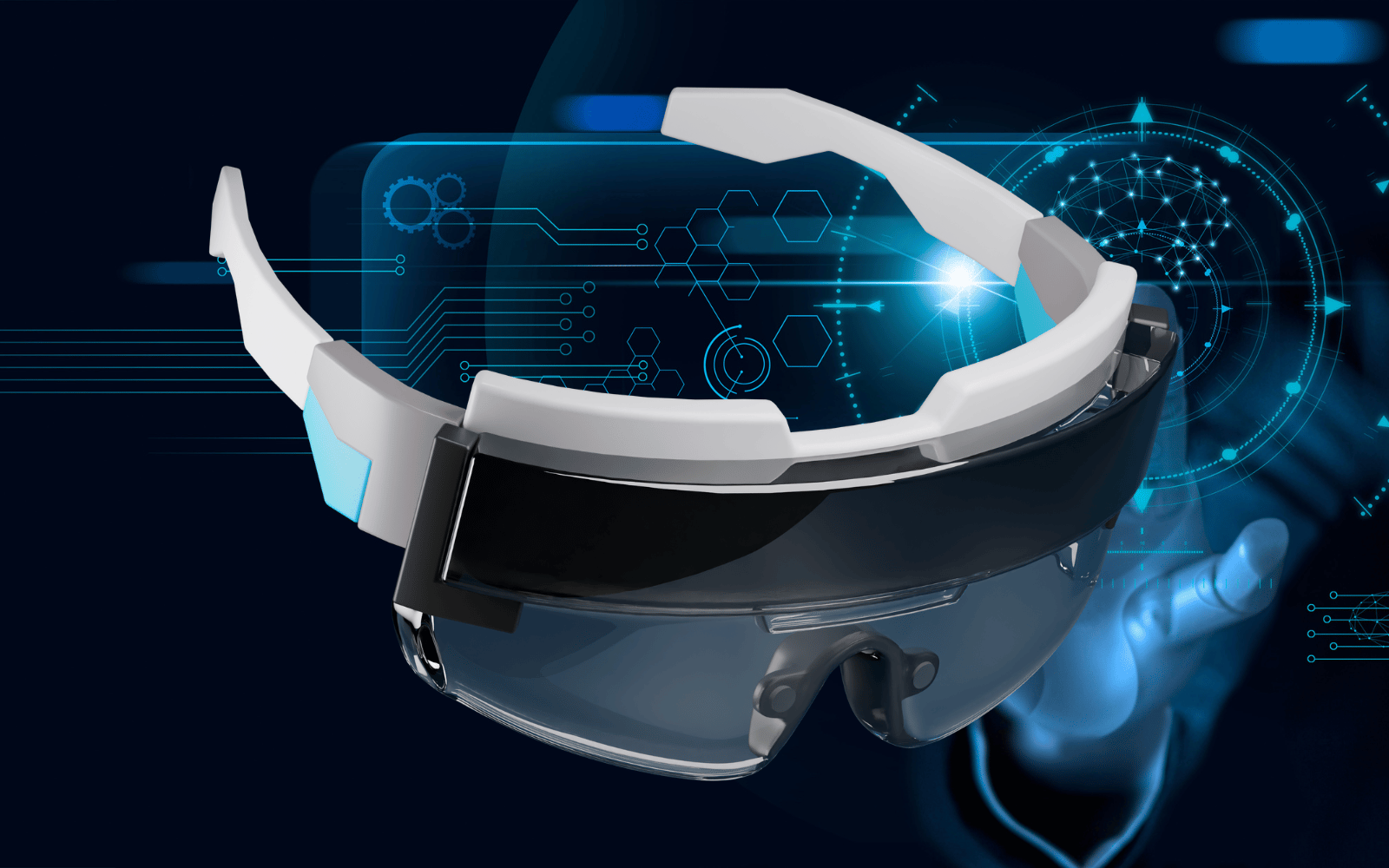
Chinese researchers have published a paper on Nature Machine Intelligence outlining a project that lets blind users navigate the world more effectively. The wearable device, or collection of them, processes multiple inputs via an AI algorithm and generates prompts that tell the wearer what’s coming up.
Researchers from Fudan University, the Hong Kong University of Science and Technology, East China Normal University, and a few others, led by Gu Leilei of Shanghai Jiao Tong University, created the device specifically for the blind but, in testing, found that its effects improved navigation for both humanoid robots and the seeing impaired.
Wearable vision
The innovation is a “human-centred, multimodal wearable system that advances usability by blending software and hardware innovations”. In simpler terms, AI software is used to translate the inputs from wearable devices — in this case, wearable-mounted cameras — to similarly-worn feedback devices. Sensory-motor artificial skin, developed in-house and worn on the wrists, and bone-conduction audio devices perform the latter function. Smart insoles also appear to offer feedback, but it’s unclear whether this forms part of the entire package or if it’s confined to training on the experimental system
The combination of audio, haptic, and artificial visual inputs, the researchers claim, “enables significant improvements in navigation and postnavigation tasks, which are experimentally evidenced by humanoid robots and participants with visual impairment in both virtual and real environments.”
Technology to help those with vision issues is a popular target, with companies all around the world making attempts at an effective solution. This one stands a chance at raising the bar for the medical malady, specifically because it’s not substantially different from how robots see and interpret the world. The major difference is the feedback received. If the inputs from wearable-mounted cameras and sensors can be translated into something humans can understand, the result is a better sense of one’s surroundings. Why should robots have all the advantages, after all?