
Olympus cameras disappeared for a time, only to reappear as OM System cameras. Now, the resurrection is starting to produce some really interesting photography hardware. Anyone can make a point-and-shoot, after all. Not everyone will make a point-and-shoot-the-stars, and even fewer will allow you to look in the other direction.
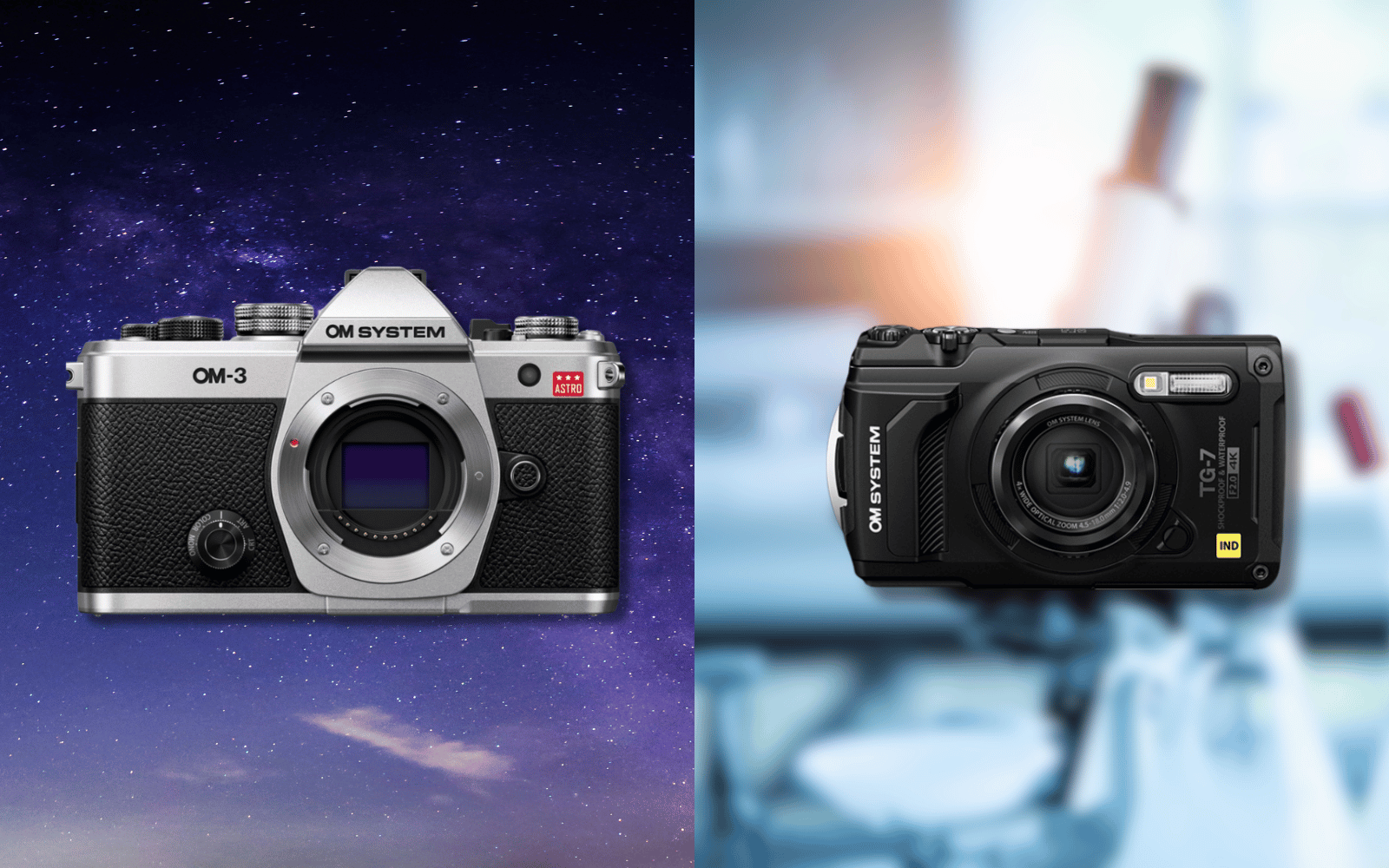
That’s just what the new OM-3 Astro and TG-7 Industry do. The first (obviously) is a version of OM System’s standard OM-3, optimised for astronomy purposes. The second is a little wilder, being a 12MP compact camera designed for photographing the view through a microscope. We’re not going to ask what you’re looking at, but you’ll be able to show the world. If you want to.
OM System of a down
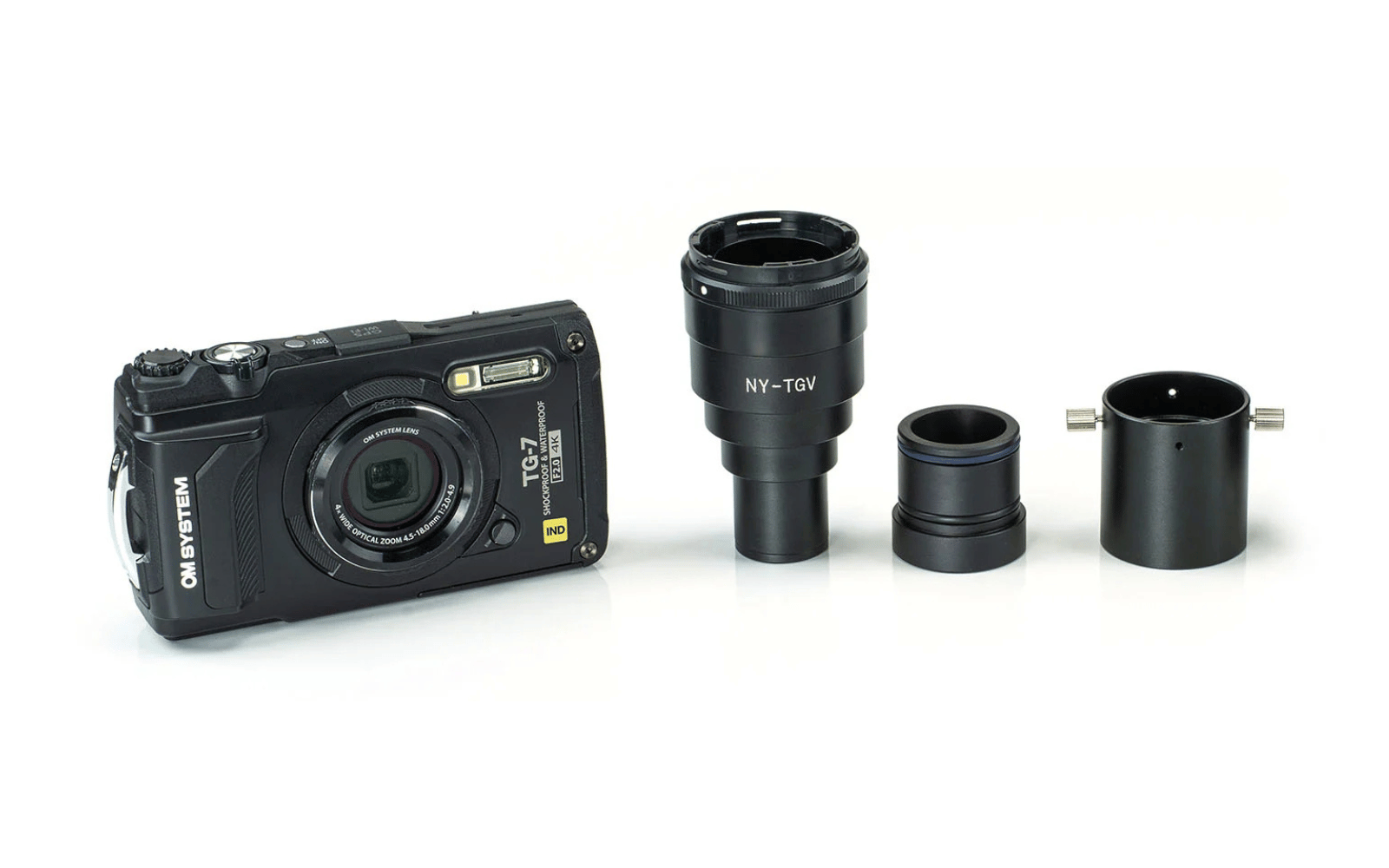 The TG-7 Industry is OM System’s 12MP rugged compact, refitted with a new NY-TGV kit that lets the camera connect to standard microscopes. The unit features an impressive macro mode, even without the aid of a microscope, while its small size allows for fitment to binocular and monocular microscope barrels.
Pairing a camera with a close focus capability of 1cm (at 7x zoom) with a standard lab microscope is one way to net shots of… well, things that nobody else is taking pictures of. Mostly because they don’t have the same collection of spores, molds, and fungi to draw from, right?
Capturing anything with this OM System rugged camera (it’s rated IPX8 for water and IP6X for dust and is supposed to be crush-proof up to 100kg) will cost you, however. The kit starts at R27,100 ($1,700).
And a little up
Both cameras are reconfigurations of existing cameras from the brand. The OM-3 Astro uses the same 20MP BSI stacked sensor and TruePicX image processor as the non-astronomy version, but includes an embedded Hydrogen-alpha (Hα) filter mounted in front of the sensor. According to OM System, this filter is “tuned for near-100% transmission” of the wavelength, making it ideal for capturing shots of nighttime nebulae.
A couple of body-mounted filters, including a city light suppression (we’ve got doubts about how effective this is on modern LED light sources) and a soft filter that “blurs and highlights point-light sources, maximizing their pictorial impact,” are being sold alongside the OM-3 Astro. But there are plenty of other internal features that go along with the IP53 weather-sealed body and its five-axis image stabilisation to make star-photographers happy.
These include three custom colour profiles that are supposed to benefit astrophotography, plus OM System’s Handheld High Res Shot, Starry Sky AF, Live Composite, and Night View modes. Sadly, while Hα filters are also supposed to benefit solar photography, there don’t appear to be other supporting options that’ll keep your image sensor from being cooked if you point the OM-3 Astro at the sun.
Want one? Expect to pay at least R40,000 ($2,500) — more once you figure in import tax and shipping.