

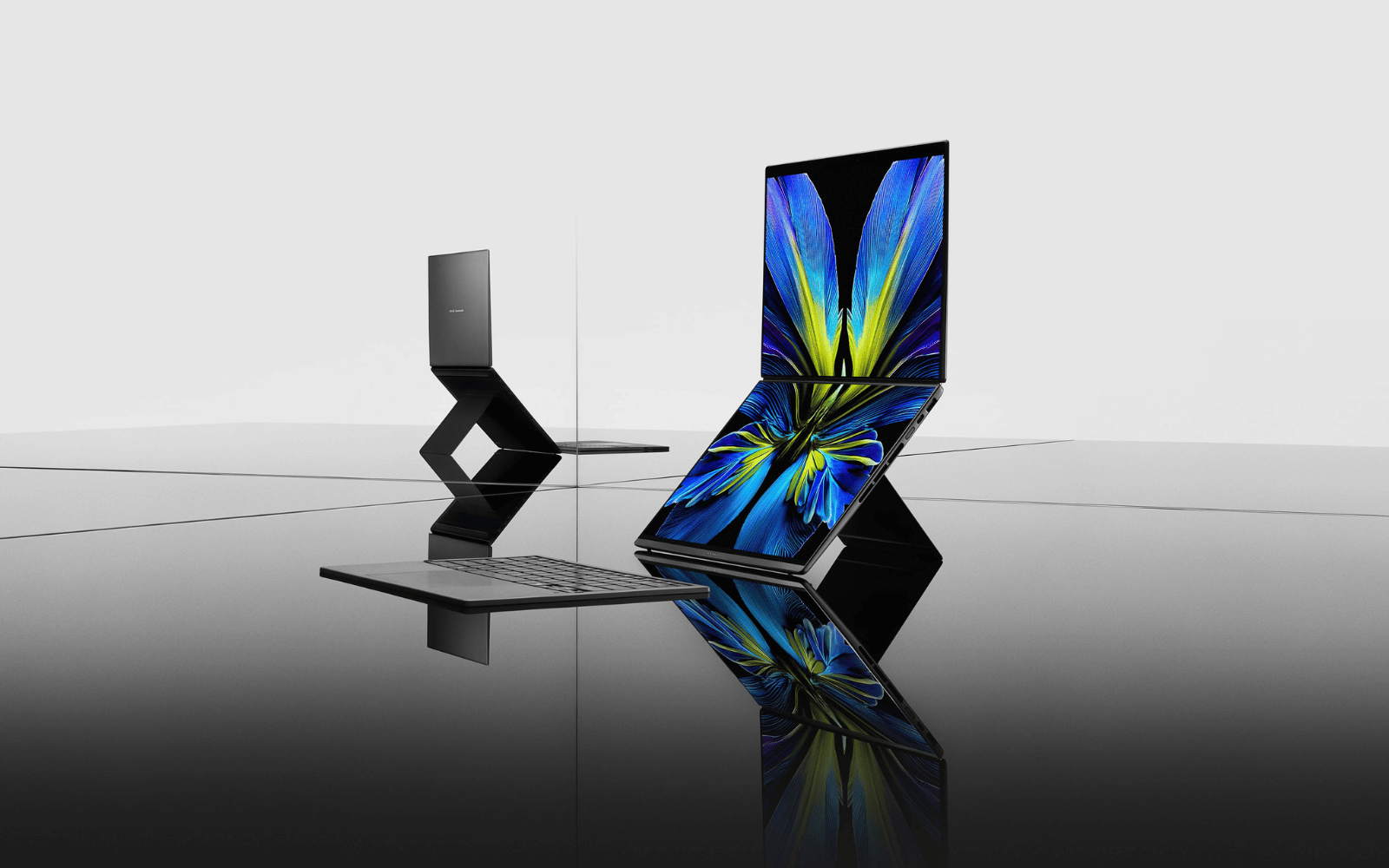
Asus’ Zenbook Duo lineup has languished over the past couple of years, but that’s about to change. The company announced a new version of its fully double-screened notebook for launch later in 2026. The good news for fans of the somewhat unusual? South Africa will get a crack at it, too.
Exactly when and how much it’ll cost is up in the air, but it should be here before the middle of the year. The last time we saw one like this was in 2024, when the hardware was priced at R43,000. We can probably expect similar levels of cost when it eventually launches here.
Setting up a Zenbook Duo
When Asus brings the new Zenbook Duo to market, it’ll follow the same pattern as the previous model. Two full-sized displays, one of which can be topped by a wireless keyboard to create a standard laptop configuration. Or… you can use both 14in 2880 x 1800 OLED panels in whichever configuration you choose to do… something. The right setup will knock the socks off the fogeys in the boardroom, for instance.
Of course, the oldsters won’t appreciate the 0.2ms response time, the masses of colour certifications, and everything else Asus has lobbed at the Zenbook Duo UX8407AA‘s screen. They’ll be similarly mystified by the Core Ultra X9 388H processor from Intel, should you opt for the speediest. The slowest chipset will be Intel’s Core Ultra 7 355, a 2.3GHz chip that’ll still chew through anything you throw at the Duo.

16GB and 32GB LPDDR5X RAM models will exist, with M.2 NVMe storage options from 512GB to 2TB. Intel’s Arc graphics will prevent this one from being a gaming powerhouse, but an Intel neural processing unit will soften the blow somewhat. The UX8407AA is here to work. It’s not really playing around.
Asus is using its Ceraluminum composite material for the chassis and is packing a 99Wh battery inside to keep those dual 3K displays powered. The keyboard will dock more securely thanks to a system the company calls MagLatch (it’s the sort of thing that gets a ™), and Asus says that its upgraded hardware “redefines multi-display computing by integrating dual OLED displays into a unified, fluid workspace.”
Once you look past the meaningless corporate fluff, it’ll be interesting to see what lessons the company learned from the original Zenbook Duo. That one was a decent slab of kit, but it had its faults. We’re looking forward to seeing if there’s been any improvement. Oh, and the 2026 model also has Microsoft’s Copilot, if anyone cares.